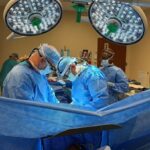
Advances in technology are revolutionizing medical research, health care and forensics. Popular television shows like E.R. and CSI showcase these technological advances nightlywhether its a case solved from a single hair left at a crime scene, or doctors viewing a full cross-section of a patients internal organs with an MRI scan.
Fans of these shows might be surprised to learn that careers in technology can take them from viewer to active participant in these exciting fields. While some students might be discouraged from pursuing medical careers because of the extensive education required, the reality is undergraduate healthcare technology degree programs could be an alternative. According to Julio Torres, president of DeVry Universitys South Florida campus, “You dont need an M.D. or a Ph.D. to begin a career in healthcare or medical research fields. In fact, there are a number of bachelors degree programs that prepare you for entry-level positions in the biomedical and health care industries.” Three such degree programs are available at DeVry University/South Florida. DeVry University offers a bachelors degree program in biomedical informatics, which draws on computer technology, information technology, the biosciences and health care systems. The biomedical informatics degree program prepares students for professional positions in two fields, both of which improve the healthcare system. Healthcare informatics combines information systems and healthcare industry knowledge to enhance healthcare systems, reduce cost and improve the quality of care. Bioinformatics focuses on searching genetic databases, managing information systems to create new treatments for diseases, improve medical care, and identify criminals using DNA analysis. DeVry University also offers a bachelors degree program in biomedical engineering technology, which involves the design, implementation and maintenance of health services components, such as medical imaging systems or computer-based systems used during surgery or intensive care. This program is designed to give students an understanding of biological processes as well as skills in both engineering software and hardware. Graduates will use engineering technology principles to create solutions in the fields of medicine and biology. Finally, DeVry University/South Florida recently began offering an associate degree program in health information technology. The program educates students to analyze and manage health care data, implement applications software to support health care data analysis and management, as well as perform complex clinical coding tasks. “As technology plays a bigger role in medical research and care, demand rises for computer programmers to design the software that supports medical research, IT experts to build, implement and manage medical networks, and engineers to build and maintain equipment used in surgery and patient care,” said Torres. From electronic intensive care units (eICUs) where off-site technicians monitor patients around-the-clock via data, video and audio telecommunications, to surgical robots that allow unprecedented surgical control and precision, medicine is being transformed by technology. And this new health care environment cannot function without computer programmers, engineers, and network and database administrators.