Everything changed in the summer of 2019 when I had a candid conversation with Claudine Raymond, my colleague at VITAS Healthcare. One day in the cafeteria of the hospital where we both work as hospice admission nurses, she shared about her husband’s kidney disease, his deteriorating health and the stress it was causing on the entire family, including their three children, ages 2-14. At a young age of 39, her husband, Junior Raymond, was facing dialysis three times a week and had been told by his doctors that he needed a kidney transplant.
I asked Claudine what Junior’s blood type was. Her answer: O positive.
I’m O positive.
Without even second guessing, I said that if Junior and I were a match, he could have my kidney.
I’m a cautious person. Yet, even in the moment when I offered my one healthy kidney to a total stranger, I didn’t have my typical reaction. Instead I kept thinking about Claudine, Junior, and what their family had been through. Donating my kidney seemed like the right thing to do.
At VITAS, we have corporate values that we live by: “We take care of each other” and “I am proud to make a difference.” And this couldn’t be truer of how we feel about our colleagues – in addition to how we serve patients.

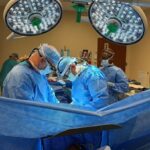
On January 13, 2020, specialists from the Memorial Transplant Institute at Memorial Hospital in Hollywood, Florida, removed my kidney and transplanted it to Junior. It started functioning immediately.
A day later, Junior walked into my hospital room; healthier, happier and completely overjoyed with his new reality.
This amazing feat was possible because I had the support to make it happen, an opportunity that presented itself, the inner wisdom to agree to a sacrifice I never would have considered if not for Claudine and Junior, the full support of my family and an amazing healthcare team of transplant specialists.
Even though I work in a medical specialty that cares for seriously ill patients and their families at the end-of-life, I had never before encountered anyone who needed an organ transplant and didn’t really understand the burden it creates on both the patient and family.
After experiencing the process, I ache at the stories of patients and families who have waited months and years for life-saving transplants. My wish stemming from this experience is that more people have the same opportunity and make a similar decision to “take care of each other” by donating, whether it’s bone marrow, tissue or a major organ.
By doing so, they’re making sure that thousands of others like Junior, who simply need the right donor match, can go home to their loved ones to continue living productive and healthy lives.
By donating a part of myself to someone else, I gained so much more: a connection between two families in ways that only we—and other organ donors and recipients—can fully understand.
As Claudine now says when people ask how it all happened, her response is simple: “We really did take care of each other. We truly did.”