According to the Bureau of Labor Statistics, surgical technologists are projected to increase by 12% from 2016 to 2026, faster than the average for all occupations. Advances in medical technology have made surgery safer, and more operations are being performed to treat a variety of illnesses and injuries. The need for health services professionals like surgical technologists is growing in tandem with the aging population of the baby-boom generation. Workforce Development Area 23, which includes Miami-Dade and Monroe Counties, will need approximately 682 employees in the Surgical Technology field per year between 2018 and 2026, according to the Florida Department of Economic Opportunities. To meet this demand, Miami Dade College, a leader in addressing the workforce needs of the community, is dedicated to preparing students for the ever-changing field of health sciences.
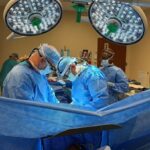
Surgical technologists, also called “operating room technicians,” assist in different surgical procedures. Surgical technologists are an integral part of the team of medical practitioners providing surgical care to patients in a variety of settings. Surgical technologists prepare operating rooms, arrange equipment, and help surgeons during surgeries. Surgical technologists are responsible for preparing the sterile field using sterile techniques; assembling, counting, and passing surgical instruments; and making sure there are no breaks in sterile techniques to prevent patients from getting an infection in the surgical site.
Surgical technologists are vital members of the surgical team during surgery, as they assist in the operating room under the direct supervision of surgeons. According to the Association of Surgical Technologists (AST), the primary role of the surgical technologist is the first scrub role. In this role, the Certified Surgical Technologist (CST) has the knowledge and technical skills needed to handle the surgical instruments and supplies that are necessary to perform the specific surgical procedure. Therefore, the CST must have detailed knowledge of the surgical procedure in order to meet the needs of the surgeon. Students completing this program will be eligible to sit for the Certified Surgical Technologist Exam through the National Board of Surgical Technology and Surgical Assisting (NBSTSA). Obtaining this associate degree and passing the certification exam demonstrates that the student is competent to perform entry-level job duties of a Surgical Technologist.
Miami Dade College, School of Health Sciences developed a 64 credit hour Florida Department of Education (FLDOE) approved Associate in Science (AS) degree in Surgical Technology. The degree in Surgical Technology is designed to educate and prepare graduates with the skills required for entry-level employment as a member of the surgical healthcare team. The Commission on Accreditation of Allied Health Education Programs (CAAHEP) Accreditation Standards for Surgical Technology projects that by August 1, 2021, “all sponsoring institutions should award a minimum of an Associate Degree at the completion of the Surgical Technology program.” Students in this program at Miami Dade College will also acquire extensive knowledge of legal and ethical responsibilities, anatomy, physiology, pathophysiology, microbiology, aseptic techniques, patient care procedures, surgical technology procedures, patient safety, and use and care of equipment and supplies, preoperatively, intraoperatively, and postoperatively.
In developing a Surgical Technology Program to address the workforce needs in Miami Dade County, Miami Dade College, School of Health Sciences is preparing students to become highly skilled healthcare professionals while improving their quality of life and allowing them to become an integral part of healthcare teams. By training the next generation of healthcare providers, the School of Health Sciences turns career dreams into reality for thousands of students every year.



.jpg) According to the Bureau of Labor Statistics, surgical technologists are projected to increase by 12% from 2016 to 2026, faster than the average for all occupations. Advances in medical technology have made surgery safer, and more operations are being performed to treat a variety of illnesses and injuries. The need for health services professionals like surgical technologists is growing in tandem with the aging population of the baby-boom generation. Workforce Development Area 23, which includes Miami-Dade and Monroe Counties, will need approximately 682 employees in the Surgical Technology field per year between 2018 and 2026, according to the Florida Department of Economic Opportunities. To meet this demand, Miami Dade College, a leader in addressing the workforce needs of the community, is dedicated to preparing students for the ever-changing field of health sciences.
According to the Bureau of Labor Statistics, surgical technologists are projected to increase by 12% from 2016 to 2026, faster than the average for all occupations. Advances in medical technology have made surgery safer, and more operations are being performed to treat a variety of illnesses and injuries. The need for health services professionals like surgical technologists is growing in tandem with the aging population of the baby-boom generation. Workforce Development Area 23, which includes Miami-Dade and Monroe Counties, will need approximately 682 employees in the Surgical Technology field per year between 2018 and 2026, according to the Florida Department of Economic Opportunities. To meet this demand, Miami Dade College, a leader in addressing the workforce needs of the community, is dedicated to preparing students for the ever-changing field of health sciences.