


By Daniel Casciato
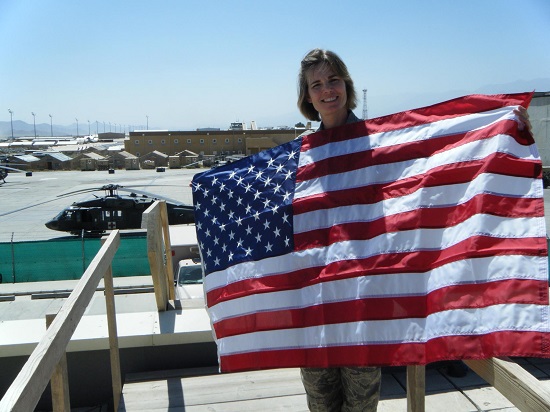
For Dr. Candy Wilson, retired U.S. Air Force Colonel and associate dean for nursing research and scholarship at Florida Atlantic University’s Christine E. Lynn College of Nursing, June 12—Women Veterans Recognition Day—is both personal and profound.
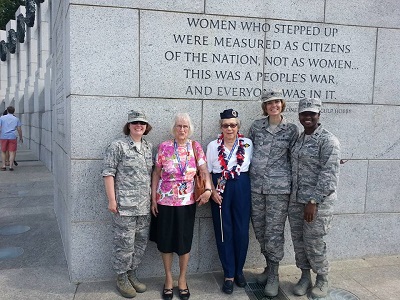
Nurses who served during Vietnam in front of the WWII memorial in Washington DC.
“The fact that women can serve our country is such an honor,” Dr. Wilson says. “I have been stationed and deployed with women with amazing grit and drive to protect our great nation.”
Wilson, who served 30 years in the Air Force before retiring in 2022, says she never imagined her military journey would span three decades.
“My family and I would stay in as long as I was ‘having fun,’ and then the day came that I reached high year tenure and had to retire,” she shares. “I honestly thought I would last four years, but to make it to 30 years is unreal.”
Dr. Wilson reflects on the unity forged through military service.
“Having served alongside some of the most amazing men and women, who do not see gender but another well-trained service member committed to the mission, is truly an honor,” she adds.
Nurses in Uniform: History and Hurdles
Women have served or supported every major U.S. conflict, most often as nurses. But their path has rarely been free of challenges.
“Serving in the military is a matter of heart, not gender,” Dr. Wilson explains. “The challenges I faced as a woman in the military, particularly when it came to going to war, was from my parents and community at home.”
She recalls her father’s concern.
“My father was not supportive of his little girl going to war. He even said, ‘You have a PhD, why would they send you?’ But my response to him was, ‘This is what I trained for, this is what I do.’”
Support was also limited for military spouses, particularly her husband, raising their children during deployments.
“As a service member, we are only as good as our family is. The family sacrifices too,” she emphasizes.
Research with a Mission
At Forida Atlantic University, Dr. Wilson leads several groundbreaking research initiatives focused on active-duty service members and women in uniform, particularly those in the reserves and National Guard.
“I am collaborating with a colleague at the University of Colorado, where we are identifying research gaps that provide medical evidence for supporting women in the reserve and guard,” she explains.
This study builds on earlier research that contributed to the landmark decision by the Secretary of Defense to open all military jobs to women. Other projects include the development of a mobile app for reproductive health tailored to military environments, and studies on eating behaviors and pain management interventions for military personnel.
“While on active duty, the final 16 years of my career were focused on research. I secured over $22 million while active duty for clinical research that helped inform commanders and leaders with the best evidence to support ALL under their leadership, men and women.”
Addressing Gaps in Care
When it comes to healthcare disparities, Dr. Wilson points to one area in particular.
“I would say the greatest disparity is the lack of research evidence to support women in the reserve and National Guard,” she says. “Women serving in these capacities uproot their lives and careers, often in a moment’s notice. This will take time to remedy through funding and designing research to identify the differences in health outcomes.”
Educating for Impact
Dr. Wilson believes academic institutions have a vital role in improving veteran healthcare, especially through education and advocacy.
“At the Christine E. Lynn College of Nursing, we educate nurses at all levels to be good consumers of research and generate the evidence to inform practice,” she says. “This skill is needed in any population.”
Through military and veteran support services, universities can also ease the transition into civilian life and recognize the value veterans bring to the classroom.
“Other ways are to see veterans as individuals with special key skills that often provide real-life experiences that enhance college knowledge,” she notes.
A Message to Those Who Served
When asked what she wants women veterans—and the public—to remember on June 12, Dr. Wilson keeps it simple.
“Women veterans are honored to serve their country.
”And while she hears “thank you for your service” often, her reply reflects humility.
“This statement is very humbling for me. My usual response is, ‘Thank you for your support.’”
She adds that the strength of servicewomen is deeply tied to the encouragement they receive.
“Women serving in the military are only as good as the support we have from the public.”
For more information, visit nursing.fau.edu.























