By Vanessa Orr
While the Helen & Jacob Shaham Cancer & Blood Disorders Institute at Nicklaus Children’s Hospital was designed to transform pediatric cancer care by ensuring that no child had to leave Florida for leading-edge cancer treatment, it has also become a haven for families from other countries seeking innovative cancer care.
While the hospital has always treated international patients, this population increased significantly during the pandemic, when hospitals in other countries closed due to the COVID-19 pandemic.
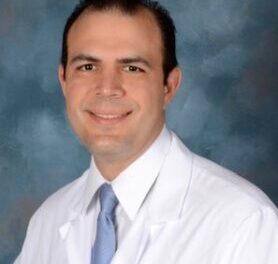
“While you had hospitals in the U.S. that postponed elective cases, some hospitals outside the country basically shut down, putting patients on hold and causing their families to look elsewhere for their child’s cancer treatment,” explained Dr. Guillermo De Angulo, a KIDZ Medical Services pediatric hematologist/oncologist.
KIDZ Medical Services is a private, physician-owned multispecialty healthcare organization committed to excellence in neonatal, pediatric, and women’s healthcare whose team of more than 400 clinicians and team members care for patients and families across dozens of hospital partner sites and medical practice locations throughout South Florida.
“In other countries, particularly in Latin America, there is also a significant disparity in survival in oncology—and even more so in pediatric oncology,” Dr. De Angulo added. “They have excellent physicians, but we have certain tools at our disposal that are not readily available to them. That’s why many patients come here—for treatments that they can’t get where they live.”
These treatments include various forms of immunotherapy, such as Blinatumomab anti-CD19/CD22 treatment, among others, which target specific cells or stimulate certain cells in the body to attack those that express antigens or flags.
“Cancer cells are very smart, and some have the ability to become invisible to the body’s immune system,” said Dr. De Angulo. “Some checkpoint inhibitors and other forms of immunotherapy can get rid of a tumor’s invisibility, which allows the body’s own immune system to attack those cells.”
These “smart drugs” also don’t cause as many undesired side effects as conventional chemotherapy, which Dr. De Angulo said has changed the outcome in patients with recurrent refractory leukemia and the outcome of high-risk or standard-risk patients.
“All leukemia patients who are at standard risk or high risk now get at least two cycles of immunotherapy in their treatment regimen, following the gold standard in the United States,” said Dr. De Angulo. “A year ago, this was not occurring, but the change is based on clinical trials that were held here and elsewhere in the U.S.”
The center has also held Phase 1 and 2 trials for recurrent solid tumors or sarcomas, neuroblastoma, and brain tumors.
Dr. De Angulo notes that gene therapy is also changing the landscape for sickle cell and thalassemia patients through the use of CAR-T therapy, in which a patient’s lymphocytes are engineered to target and attack cells that express the CD19 protein.
Making the Trip Less Taxing
Most of the institute’s international patients come from Latin America and the Caribbean, although some also come from Central America and South America. Recurrent malignancies – whether leukemia, sarcoma, or neuroblastoma – affect the majority of patients, though the center also treats newly diagnosed patients.
“We have a success rate of 95 percent for leukemia; in some of these countries, it averages less than 50 percent,” said Dr. De Angulo, who is often invited to give talks in these areas to share information on cutting-edge treatments.
He notes that he is not in competition with oncologists from other countries; instead, they work as a team. “We collaborate on a video conference call, and if the doctor feels that what the patient needs can’t be done in their country, they send their patient to us to do the heavy lifting, and after treatment, we send the patient back.”
The process is not as easy as just checking into the hospital, however. Families often require VISAs to enter the U.S., and the center will provide a letter explaining the necessity of the U.S. visit. If there are financial issues, the clinic may reach out to philanthropic individuals or foundations to help find coverage. These same institutions, such as the Ronald McDonald House, may help with or provide lodging for family members. For more severe pediatric cases, the clinic may arrange for an air ambulance to transport the child.
“While there are always challenges with these patients, one of our biggest hurdles is dealing with the bacterial infections they bring with them,” said Dr. De Angulo. “The flora, or bacteria in the intestine, is very different over there. There are theories that it may come from the water, or that some patients there are overtreated with antibiotics, so they build up a resistance, but regardless, it makes it tough to fight these infections.”
As pediatric oncology continues to evolve, an increasing number of international patients may find themselves traveling to Nicklaus Children’s Hospital for treatment.
The Helen & Jacob Shaham Cancer & Blood Disorders Institute is waiting to welcome them.