By Daniel Casciato
At Baptist Health Miami Cardiac & Vascular Institute, a major milestone in cardiac care was reached less than a year after launching a new robotic cardiac surgery program. World-renowned Makoto Hashimoto, M.D., a cardiac surgeon with Baptist Health Miami Cardiac & Vascular Institute and professor and director of robotic cardiac surgery at Florida International University (FIU) Herbert Wertheim College of Medicine, and Tom C. Nguyen, M.D., chief medical executive of Baptist Heart & Vascular Care, director of minimally invasive surgery, and professor and chair of the Department of Cardiovascular Sciences at FIU, recently completed the Institute’s 100th robotic heart surgery, only months after the program began in January 2025.
Also, within this short amount of time, Baptist Health is now a dedicated training center for surgeons around the country wanting to learn robotic surgery. The rapid achievement positions Baptist Health as Florida’s highest-volume center for robotic cardiac surgery and one of the fastest-growing programs of its kind in the United States. It also signals a significant shift in how complex heart procedures are being performed, with minimally invasive, robot-assisted techniques moving from the margins toward the mainstream.

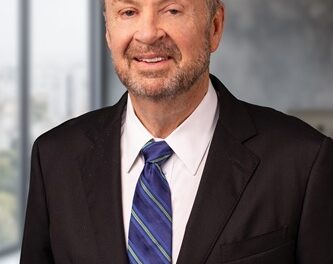
Makoto Hashimoto, M.D
Dr. Hashimoto was recruited from Japan to establish and direct the program at Baptist Health Miami Cardiac & Vascular Institute and FIU Herbert Wertheim College of Medicine. His arrival brings decades of global expertise to South Florida and accelerates the region’s adoption of advanced surgical technologies.
“Robotic heart surgery is very attractive as a surgical approach,” Dr. Hashimoto says. “Even the word ‘robot’ sounds like the future. But it has not yet been widely adopted worldwide. Less than one percent of heart surgeries globally are performed robotically. Despite that, there is clear demand here in Miami, from patients and from cardiologists, which is why we were able to grow at this pace in our first year.”
Demand, Precision and a Team-Based Model
The milestone reflects not only patient demand, but also a highly coordinated, multidisciplinary effort behind the scenes. According to Dr. Nguyen, the program’s success is rooted in preparation, institutional support and teamwork.
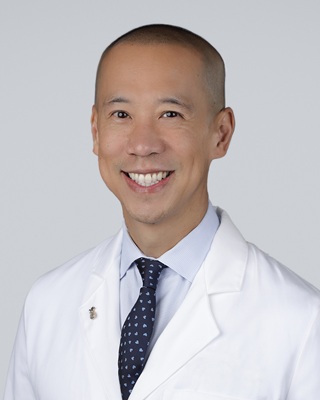
Tom C. Nguyen, M.D.
“This milestone says a lot,” Dr. Nguyen says. “First, it reflects how quickly the team comes together and works almost seamlessly. Like a dance, every movement is choreographed. Everyone knows the next step with minimal communication. It’s actually beautiful to watch.”
Dr. Nguyen notes that while robotic heart surgery remains technically demanding and requires extensive additional training beyond traditional cardiac surgery, interest is accelerating nationwide. Data from the Society of Thoracic Surgeons show robotic cardiac surgery as one of the fastest-growing procedural categories in the field, even though overall adoption remains relatively low.
“If you build it, they will come,” Dr. Nguyen says. “Patients want minimally invasive surgery, and they want robotic surgery. The challenge is that not many surgeons are trained to do it.”
Tangible Benefits for Patients
Robotic cardiac surgery offers several well-documented advantages over conventional open-heart procedures, including smaller incisions, less pain, reduced blood loss and significantly shorter hospital stays. Patients typically stay two to three days compared to five to eight days for traditional surgery.
Dr. Hashimoto points to both clinical outcomes and patient recovery as key differentiators.
“In my experience, approximately 80 percent of patients are able to return to their normal daily lives within two to three weeks,” he says. “With standard open surgery, recovery often takes six to eight weeks. That difference is very meaningful.”
Beyond recovery time, Dr. Hashimoto emphasizes surgical precision as one of the greatest advantages of robotic systems.
“With robotic surgery, I can perform extremely precise work, more precise than with my own hands alone,” he says.
Dr. Nguyen adds that the recovery experience has been transformative.
“Some patients are walking around the ICU just a few hours after surgery,” he says. “That’s unheard of. They’re often discharged within two or three days.”
He also highlights the psychological impact of minimally invasive approaches.
“A large chest scar carries emotional weight,” Dr. Nguyen says. “Patients see it every day and are reminded they had open-heart surgery. With robotic surgery, the incisions are barely visible. Patients look and feel more like themselves.”
Outcomes, Cost, and Societal Impact
Clinical data continue to support robotic approaches. Dr. Nguyen references research involving more than 8,000 patients showing shorter ICU stays, lower readmission rates and higher rates of successful valve repair among robotic surgery patients.
While robotic systems involve higher upfront operating room costs, overall expenses are often lower due to reduced length of stay.
“You catch up quickly on cost when patients go home sooner,” Dr. Nguyen says. “Each hospital day is expensive.”
He also points to a broader economic benefit.
“When patients return to work in weeks instead of months, that has real societal value,” he says.
Building a Program at Record Speed
Launching a program of this scale typically takes years. Both physicians credit Baptist Health’s culture of innovation and disciplined implementation for the accelerated timeline.
“Robotic heart surgery is fundamentally a team effort,” Dr. Hashimoto says. “We focused on keeping everything as simple and consistent as possible so the team could perform at the highest level.”
Before the first case, Dr. Hashimoto met extensively with operating room staff, walking through every step in detail. Early cases were performed with the same core team to ensure consistency and confidence.
Dr. Nguyen adds that education and awareness were also key challenges.
“Some surgeons still see robotic surgery as futuristic or unproven,” he says. “But once you see the outcomes, it’s hard to imagine doing some procedures any other way.”
Looking Ahead: Growth, Training, and Innovation
With the first 100 cases complete, the focus now shifts to scaling access, expanding procedure types and building the next generation of robotic cardiac surgeons.
The program plans to train additional surgeons, deepen its partnership with FIU, host national and international visitors and serve as a teaching hub for robotic and minimally invasive cardiac surgery. Future ambitions also include pediatric applications, advanced robotic platforms and the eventual integration of artificial intelligence and telesurgery.
“This is just the beginning,” Dr. Nguyen says. “Our goal is not just to build a program—but to redefine what’s possible in cardiac surgery.”
For more information, visit.baptisthealth.net/services/heart-and-vascular-care.