
By Rabbi Allison B. Cohen, BCC
When patients are at end-of-life, my greatest prayer is for their sacred transition to be one of peace and not of physical suffering or spiritual distress. It is one thing if a loved one is dying with dignity in the comfort of their own home or in a hospice facility, but what about when a loved one makes their transition in the hospital setting? How do we ensure a respectful environment for a time of such importance?
This year, I implemented “The Butterfly Project” – an indicator of life transitions. As butterflies symbolize transition, a laminated butterfly symbol serves as an indicator that is placed by the nurse on the doorframe of a room. It alerts staff, prior to entering a room, that the patient is near end-of-life or has already passed away.
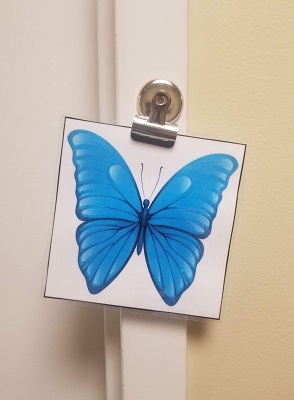
In the fast-paced Cardiovascular Intensive Care Unit (CV-ICU), where a patient’s status can quickly shift, I saw a need for a more immediate way to inform the multidisciplinary team of a status change. If we were truly going to create and maintain a respectful environment for end-of-life patients and their loved ones, we would need to inform staff of this update in a timely manner. Only then could we prevent the shock to loved ones entering a room that they were not adequately prepared to enter. Only then could we prevent accidental intrusions from hospital services that were no longer necessary (e.g., nutritional services, labs, environmental services). Researcher Rana Sagha Zadeh, Ph.D., has affirmed that “lack of patient privacy was shown to subject patients to stress, compromise their dignity, and diminish their personhood, as well as prevent family from properly grieving and gaining closure” at the hospital bedside (Zadeh 2018). I felt there was a way we could do better.
At Holy Cross Health, “The Butterfly Project” has been piloted in the CV-ICU and is currently being expanded to the rest of the hospital. It has helped staff adapt their demeanor before entering such a sacred space and has provided families and patients with a calmer environment during a time of transition and grief. When a butterfly is put up onto a doorframe, staff have been trained to contact the Spiritual Care Department, if they have not done so already. This is perhaps the primary outcome of the indicator itself: the integration of spiritual care into the clinical setting.
Still, the butterfly indicator can only serve as a universal hospital symbol if everyone is knowledgeable of its meaning. I partnered with the nursing staff to provide in-service training to the Critical Care Team. In addition, an education sheet was sent out to all ancillary services so that they too could identify and understand the butterfly indicator. Continuing education will help to promote the use of the butterfly, as well as foster an environment of holistic healthcare.
Over the past few months, the nursing staff has increasingly called upon the Spiritual Care Department to provide support, even before it has been time to place a butterfly indicator. They are the liaisons to Spiritual Care. They enable chaplains to help nurture wholeness where physical healing is no longer obtainable. As the integration of spiritual care is strengthened, together, may we strive to safeguard sacred transitions through “The Butterfly Project.”
Rabbi Allison B. Cohen, BCC, is Manager of Spiritual Care at Holy Cross Health.
References:
Zadeh PhD, Rana Sagha. 2018. ‘Environmental Design for End-of-Life Care: An Integrative Review on Improving the Quality of Life and Managing Symptoms for Patients in Institutional Settings’.
Journal of Pain and Symptom Management 55 (3).