By Christopher Chang, MD
Artificial intelligence (AI) is rapidly transforming healthcare. From clinical decision support and diagnostic imaging to predictive analytics, ambient documentation, scheduling, and patient engagement, AI is reshaping the way medicine is practiced. The question is no longer whether AI will become part of our daily work, but whether physicians will help shape its future or simply adapt to decisions made by others.
As President of the Broward County Medical Association (BCMA), I have made physician education on AI one of my priorities. Throughout my career, I have enjoyed speaking with medical students, residents, and practicing physicians about AI, each approaching this technology from a different perspective. Students embrace innovation, residents are learning to integrate AI into clinical training, and experienced physicians want practical ways to improve patient care without compromising clinical judgment. Bringing these groups together creates a shared understanding as medicine enters a new technological era.
The BCMA offers two educational opportunities this year featuring AI topics. On August 29, BCMA will host The Business of Medicine, where two sessions will focus on practical AI applications for physicians and medical practices. Then, on October 17, we will present Artificial Intelligence Conference 2026: Exploring the Future of AI in Healthcare, bringing together physicians, healthcare leaders, technology experts, and innovators to examine clinical applications, ethics, cybersecurity, data privacy, and the future of AI in medicine. Sponsor and exhibitor opportunities remain available for both events, providing organizations committed to physician education with an opportunity to support these important conversations while engaging directly with South Florida’s medical community. For organizations looking to hire future physicians, this is an opportune time to meet medical students and residents.
Artificial Intelligence must also be viewed through the lens of governance. As policymakers examine transparency, patient privacy, algorithmic accountability, informed consent, liability, and the responsible use of AI-generated recommendations, physicians cannot be passive observers. We must work alongside legislators, regulators, medical societies, and technology developers to ensure regulations protect patients while encouraging responsible innovation.
That is why BCMA’s commitment extends beyond education to advocacy. Working closely with the Florida Medical Association and the American Medical Association, BCMA advocates for policies that protect patients, preserve physician-led care, and ensure innovation advances responsibly. Through legislative advocacy, physician fly-ins to Tallahassee, and collaboration with policymakers, we are committed to ensuring physicians have a meaningful voice as AI becomes more deeply integrated into healthcare. The AMA has reaffirmed that AI should support, not replace, physician judgment, emphasizing transparency, accountability, and physician oversight.
Artificial Intelligence also affects practices differently. Large health systems are investing in enterprise platforms with predictive analytics and workflow automation, while independent physicians need affordable tools that reduce administrative burdens, improve documentation, streamline billing and prior authorization, and strengthen patient communication. AI should help level the playing field, making high-quality care more efficient regardless of practice size.
No matter how sophisticated AI becomes, physicians must remain at the center of medical decision-making. AI can analyze data and identify patterns, but it cannot replace clinical judgment, compassion, ethics, or the trust at the heart of the physician-patient relationship. The future of medicine is being written today, and physicians must help write the next chapter.
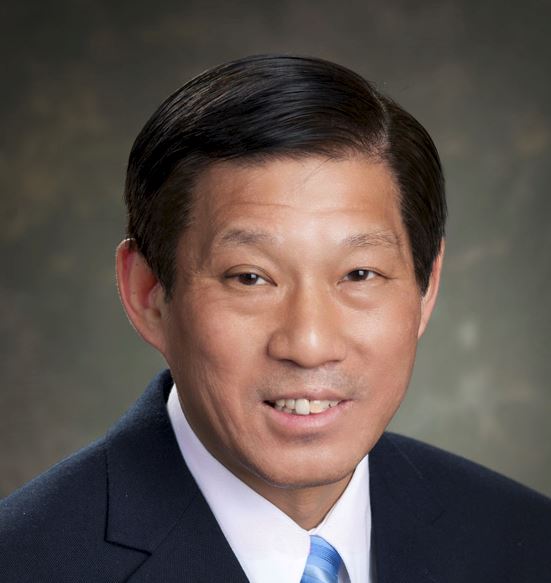
Dr. Christopher Chang is President, Broward County Medical Association.