
July 28, 2026– Memorial Regional Hospital and Joe DiMaggio Children’s Hospital are advancing congenital heart care by completing their first implantation of the innovative VenusP-Valve System, a minimally invasive treatment option for patients who need pulmonary valve replacement. Memorial Healthcare System is the only hospital system in the Southeast United States and just the fifth in the nation with approval to use the VenusP-Valve System, offering new hope for children and adults with complex congenital heart disease.

The procedure was performed in Joe DiMaggio Children’s Hospital’s state-of-the-art Cardiac Catheterization Laboratory as part of an early feasibility clinical trial evaluating the next-generation transcatheter pulmonary valve. Memorial Regional Hospital and Joe DiMaggio Children’s Hospital are part of only 10 institutions in the United States selected to participate in the groundbreaking research.

“We are proud to collaborate with our Memorial Healthcare System and Joe DiMaggio Children’s Hospital colleagues, along with our international partners, to bring this innovative valve technology to patients with congenital heart disease,” said Dr. Brian Boe, Medical Director of Pediatric Cardiac Interventional Services. “Expanding access to advanced treatment options like the VenusP-Valve System allows us to provide more personalized care for our community.”

Unlike traditional transcatheter pulmonary valves, the VenusP-Valve System is designed to better accommodate the unique anatomy of each patient. Available in multiple sizes, the valve allows physicians to treat patients whose heart anatomy may not have been compatible with previously available valve technologies.

“This represents a significant advancement in the care we can provide patients with congenital heart disease,” said Dr. Thomas Forbes, Chief of Pediatric Cardiac Services at Joe DiMaggio Children’s Hospital. “Every patient’s heart is different. Having a valve available in multiple sizes allows us to better match their unique anatomy, expanding the number of patients who may qualify for a valve replacement. Research like this allows us to bring innovative treatment options to families throughout South Florida and beyond.”


The VenusP-Valve System is intended for patients with right ventricular outflow tract dysfunction, a condition commonly seen in children and adults born with certain congenital heart defects who require pulmonary valve replacement.

By participating in this early feasibility study, physicians at Memorial Regional Hospital and Joe DiMaggio Children’s Hospital are helping evaluate the safety and effectiveness of the device while giving eligible patients access to leading-edge technology years before it becomes widely available.

The minimally invasive procedure was performed in the cardiac catheterization laboratory using a catheter inserted through a blood vessel rather than open-heart surgery. This approach can reduce recovery time while restoring proper blood flow through the heart.

Together, Memorial Regional Hospital and Joe DiMaggio Children’s Hospital continue to lead in congenital cardiovascular innovation, offering advanced catheter-based therapies, hybrid procedures and comprehensive care for infants, children and adults with congenital and acquired heart disease.

About Memorial Healthcare System 

South Florida-based Memorial Healthcare System is a national leader in quality care and patient, physician and employee satisfaction. Its commitment to deeper caring, smarter health and community outreach prioritizes a person-centered approach that has delivered safe, positive outcomes for more than 70 years.

Memorial is committed to healing the body, mind and spirit of those in its care. For more information, visit mhs.net and connect on Facebook, X, Instagram, YouTube and LinkedIn.
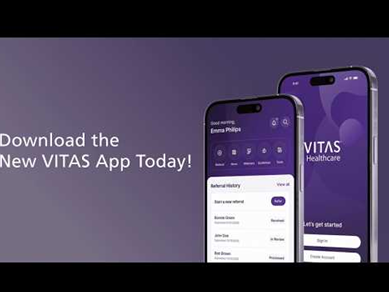


MIRAMAR, Fla., Aug. 5, 2026 — VITAS Healthcare, the nation’s leading provider of hospice and palliative care, today announced the launch of its enhanced mobile app, a digital platform designed to streamline hospice referrals and expand access to trusted hospice care resources for healthcare professionals, patients and families across the country.

CLICK ON IMAGE ABOVE TO PLAY VIDEO

The VITAS Healthcare mobile app is available for download in the App Store® and Google Play™. Visit VITASapp.com.

The VITAS Healthcare mobile app brings hospice referrals, eligibility tools and expert-developed education into one secure, mobile-friendly experience. By making it easier to submit referrals and access hospice guidance anytime, anywhere, the app helps support timely, informed decision-making in moments that matter most.

“Timely access to hospice care depends on clear communication and efficient coordination,” said Patrick Hale, chief information officer at VITAS. “The VITAS mobile app simplifies referral workflows and puts trusted hospice expertise directly in the hands of clinicians, patients and families, helping improve access to care and the overall experience.”

“Too often, patients are referred to hospice later than they could fully benefit from it,” said Joseph Shega, MD, chief medical officer at VITAS. “By giving healthcare professionals immediate access to eligibility resources, educational content and referral tools, the VITAS mobile app supports timely conversations about end-of-life care.”

Supporting Healthcare Professionals
Designed for real-world clinical environments, the VITAS mobile app helps healthcare professionals manage hospice referrals more efficiently while staying informed throughout the process.

Key features include:

  • Submitting hospice referrals directly from a mobile device
  • Tracking hospice referral status in real time
  • Accessing tools to assess hospice eligibility
  • Viewing short educational videos created by VITAS hospice experts
  • Reading clinician-written articles on end-of-life care
  • Joining free educational webinars focused on best practices and clinical scenarios

The app supports physicians, nurses, discharge planners, social workers and care teams with reliable information from a national hospice leader.

Guidance and Support for Patients and Families
The VITAS mobile app also serves as a trusted resource for patients and families navigating hospice care. Through accessible education and clear guidance, the app helps families understand care options and make informed decisions with confidence.

Patients and caregivers can:

  • Learn what hospice care is and how it supports comfort and quality of life
  • Request a hospice consultation or referral
  • Watch videos that explain services and care options
  • Read articles addressing common end-of-life questions
  • Participate in free educational webinars led by hospice specialists

All content is developed by VITAS clinicians and educators with extensive experience supporting patients and families through advanced illness.

Expanding Digital Access to Hospice Care
VITAS is nationally recognized for clinical excellence, compassionate service and evidence-based education. The relaunch of the VITAS mobile app reflects the organization’s continued commitment to innovation and digital tools that improve access, communication and care coordination across the hospice journey.

Availability
The VITAS mobile app is available for download in the App Store® and Google Play™. For more information, visit VITASapp.com.

About VITAS® Healthcare
VITAS Healthcare is the nation’s leading provider of end-of-life care. For almost 50 years, VITAS (pronounced VEE-tahs) has delivered compassionate hospice and palliative care to seriously ill patients and their families. Headquartered in Miramar, Florida, the company operates 60 service areas across 15 states (Alabama, California, Connecticut, Delaware, Florida, Georgia, Illinois, Kansas, Missouri, New Jersey, Ohio, Pennsylvania, Texas, Virginia and Wisconsin) and the District of Columbia. VITAS cares for more than 23,000 patients daily, primarily wherever they call home, as well as in its inpatient hospice settings and through partnerships with hospitals, nursing homes and assisted living communities. With a team of nearly 12,000 employees, VITAS was recognized as a 2026 Top Workplace. Visit www.vitas.com.


AUGUST 3, 2026  — The American Medical Association (AMA) today announced the launch of AMA Honors, a new national awards program recognizing individuals whose work is helping shape the future of healthcare.

Beginning in 2027, AMA Honors will present three marquee awards celebrating transformative innovation, public health leadership, and trusted communication. Each award includes a $25,000 prize that may be directed to the recipient or a charitable organization of their choice.

“Medicine is evolving at an extraordinary pace, driven by advances in technology, bold public health leadership, and trusted communication that helps patients make informed decisions,” said AMA President Willie Underwood III, MD, MSc, MPH. “The AMA created these awards to recognize the individuals whose work is driving that progress and making a meaningful difference in the lives of patients and communities. By celebrating extraordinary achievement, these awards will shine a national spotlight on the leaders and ideas shaping the future of healthcare.”

The awards include:

  • Tech Innovator Award: Recognizing an individual whose innovation has advanced healthcare through transformative impact, real-world application, and a commitment to safety, trust, and transparency.
  • Public Health Champion Award: Honoring impactful leadership that advances population health and improves health outcomes.
  • Excellence in Communication Award: Recognizing an individual whose work has advanced public understanding, engagement, or perception of health and medicine through accurate, responsible communication that reaches broad audiences.

Award recipients will be selected by a six-person committee composed of AMA leaders and external members, who will evaluate nominations through a rigorous, independent review process using the published evaluation criteria.

The inaugural awards ceremony will be held Feb. 23, 2027, at the National Portrait Gallery in Washington, D.C., during the AMA National Advocacy Conference. The event will bring together award recipients and leaders from across medicine, public health, technology, and healthcare.

Nominations for the inaugural awards are now open and will be accepted through Nov. 2, 2026. To learn more about eligibility requirements and the nomination process, visit the AMA Honors web page.

About the American Medical Association

The American Medical Association is the physicians’ powerful ally in patient care. As the only medical association that convenes 190+ state and specialty medical societies and other critical stakeholders, the AMA represents physicians with a unified voice to all key players in health care.  The AMA leverages its strength by removing the obstacles that interfere with patient care, leading the charge to prevent chronic disease and confront public health crises and, driving the future of medicine to tackle the biggest challenges in health care.


CMS Launches New State Toolkit to Protect Children with Autism, Strengthen Oversight of Applied Behavior Analysis Services

Resource supports child-centered, evidence-based care while strengthening program integrity, protecting children from inappropriate treatment, and safeguarding Medicaid and Children’s Health Insurance Program (CHIP) resources

AUGUST 4, 2026 – Children with autism deserve care that is individualized, effective, and free from fraud and financial exploitation. To help states meet that standard, the Centers for Medicare & Medicaid Services (CMS) released the State Medicaid and Children’s Health Insurance Program (CHIP) Applied Behavior Analysis (ABA) Toolkit, a comprehensive resource to help state Medicaid and CHIP agencies address growing concerns about increasing expenditures, inconsistent clinical practices, and fraud schemes targeting autism services.

“We are helping states shut down fraud schemes that exploit children with autism and misuse funds from American taxpayers,” HHS Secretary Robert F. Kennedy, Jr., said. “This toolkit gives states practical tools that may be used to identify bad actors, protect families, and hold providers accountable. President Trump has made protecting both vulnerable children and taxpayer dollars a top priority, and we are delivering on that commitment.”

“Every dollar lost to fraud or waste is a dollar that cannot reach a child who genuinely needs it,” said CMS Administrator Dr. Mehmet Oz. “Families deserve confidence that ABA services are clinically appropriate, personalized, and delivered by qualified providers, and this toolkit is our commitment to help states make that a reality.”

CMS data shows that between 2021 and 2025, ABA spending in Medicaid and CHIP increased 421%, far outpacing the 67% growth in the number of children with an autism spectrum disorder (ASD) diagnosis receiving services. That disparity is not just a fiscal concern. It raises important questions about whether Medicaid resources are consistently supporting medically appropriate care. It also signals that rapid program growth requires stronger oversight to ensure children receive services based on medical need rather than financial incentives. A troubling number of investigations, prosecutions, and convictions related to kickbacks and harm to children have raised serious fiscal and oversight concerns.

This toolkit is not a restriction on autism services. It does not establish new federal requirements; reduce Early and Periodic Screening, Diagnostic, and Treatment (EPSDT) obligations; endorse any single treatment approach to ABA; or direct states to limit access to medically necessary care. Rather, it gives states practical tools to help ensure that every child receiving ABA services gets individualized, evidence-based care that is free from fraud and financial manipulation and is delivered by qualified providers.

The ABA toolkit provides states with useful information and suggested practices across key policy and operational areas, including:

  • Helping ensure children receive ABA services that are medically necessary, individualized, and appropriate for their clinical needs.
  • Helping states support treatment intensity that reflects each child’s clinical needs rather than standardized service models.
  • Protecting families by helping states ensure ABA providers are qualified and properly supervised.
  • Promoting responsible stewardship of taxpayer dollars by discouraging unnecessary or inappropriate services.
  • Helping to ensure states’ ability to identify fraud, waste, and abuse, and other improper billing practices.
  • Helping states continue providing medically necessary autism services to eligible children through Medicaid.

The toolkit addresses a wide range of operational and policy considerations — from clinical standards and Medicaid benefit design to payment methodologies, provider enrollment, credentialing, utilization management, and program integrity strategies designed to identify fraud, waste, and abuse. A checklist is included to help states assess whether their ABA policies support effective implementation, strong oversight, and responsible stewardship of Medicaid funds. States are encouraged to use this toolkit to inform decision-making with the understanding that solutions will vary based on their unique program structures, populations, and priorities.

The toolkit is informed by Medicaid data, peer-reviewed literature, and broad stakeholder engagement. It draws on a targeted review of more than 40 literature sources; an assessment of more than 240 publicly available state-level Medicaid coverage and policy references; and qualitative input from a broad range of state agencies, providers, advocates, and other stakeholders.

CMS will continue working with states to strengthen oversight of ABA services, protect children and families, promote evidence-based care, and ensure Medicaid resources are directed toward medically necessary services that improve outcomes for children with autism.

The ABA toolkit is available at: https://www.medicaid.gov/medicaid/downloads/autism-services-aba-toolkit.pdf


AUGUST 3, 2026 – The U.S. Department of Health and Human Services (HHS) today marked National Health Center Week by announcing that Health Resources and Services Administration (HRSA)-funded health centers served more than 32.7 million patients in 2025 — an increase of more than 350,000 patients from 2024 and the highest number of patients served in the Health Center Program’s 61-year history.

“America’s health centers are proving that prevention works,” said HHS Secretary Robert F. Kennedy, Jr. “They’re helping deliver President Trump’s vision to Make America Healthy Again by preventing chronic disease before it starts, expanding access to high-quality primary care, and putting patients — not bureaucracy — at the center of our health system. This record shows that when we invest in prevention and address the root causes of disease, we build a healthier, stronger America.”

HRSA-funded health centers provide comprehensive primary care at more than 16,000 service sites nationwide, serving 1 in 8 children, 1 in 5 rural residents, and 1 in 15 adults age 65 and older. Under the Trump Administration, the greatest areas of patient growth in 2025 occurred in rural communities, with health centers serving an additional 308,000 rural patients, underscoring health centers’ critical role in improving access to care where it is needed most.

“Health centers are on the front lines of preventing chronic disease and restoring the health of the American people,” said HRSA Administrator Tom Engels. “Under the leadership of President Trump and HHS Secretary Robert F. Kennedy, Jr., this Administration is empowering health centers to expand access to high-quality primary care and deliver better health outcomes for the American people. As a result, health centers are serving more Americans than ever before while expanding access to preventive care and improving chronic disease outcomes. These record-breaking achievements underscore the role health centers play in our mission to Make America Healthy Again. HRSA remains committed to ensuring every American has access to affordable, high-quality health care, no matter where they live.” Hear more from Administrator Engels.

In 2025, health centers continued to drive extraordinary results in preventing and managing chronic disease, a cornerstone of the Make America Healthy Again initiative:

  • Nearly 713,000 additional adults received body mass index (BMI) screening and follow-up services.
  • More than 126,000 additional patients achieved controlled diabetes.
  • More than 163,000 additional patients achieved controlled hypertension.
  • Nearly 119,000 additional children received weight assessment and nutrition counseling.
  • More than 10.5 million patients were screened for colorectal, breast, and cervical cancers, including substantial increases in colorectal and breast cancer screening.

Health centers also delivered major gains in behavioral health and oral health, serving 1.1 million patients with mental health services, up nearly 7 percent; more than 7 million dental patients, up more than 211,000; and more than 332,000 patients with substance use disorder services, up 6 percent.

Building on this momentum, HRSA announced more than $125 million through the Expanded Nutrition Services initiative — a direct investment in food-based interventions and evidence-based nutrition services that get to the root causes of chronic disease, rather than merely treating symptoms. This initiative is a centerpiece of President Trump’s directive to Make America Healthy Again and reflects a fundamental shift toward healthcare that prioritizes prevention.

Health centers also play a vital role in developing the nation’s future health workforce. In 2025, 85 percent served as training sites, supporting more than 68,000 pre- and post-graduate trainees while nearly 32,000 health center staff served as preceptors and educators.

To further recognize health centers’ outstanding clinical quality during National Health Center Week, HRSA is also awarding Community Health Quality Recognition (CHQR) badges to over 1,200 health centers. Of these, more than 400 earned Health Center Quality Leader status, with the top 30 percent of health centers honored with gold, silver, or bronze badges for improving health outcomes and providing high-quality care for their patients.

Learn more about the Health Center Program.

Find a health center near you.