By Daniel Casciato

Work-Related Musculoskeletal Disorders (WRMSDs) are painful injuries affecting the muscles, nerves, ligaments, and tendons of up to 90% of sonographers and other users of diagnostic medical sonography, according to the Society of Diagnostic Medical Sonography.

Aside from the lasting personal toll, sonographer injury intensifies workforce shortages, which can cause unexpected operational and financial challenges for an ultrasound department. An injured sonographer’s direct and indirect costs have been estimated at $771,500 for employers, which includes worker’s compensation, the average cost of medical expenses, lost revenue and recruiting a new or temporary sonographer.

An injured sonographer can be detrimental to institutions and clinics facing financial strain and lack of workforce readiness due to COVID-19, notes Jennifer Diaz, an Account Executive in the Equipment Sales Department of Med-Lab, an Advanced Partner of Siemens Healthineers in South Florida.
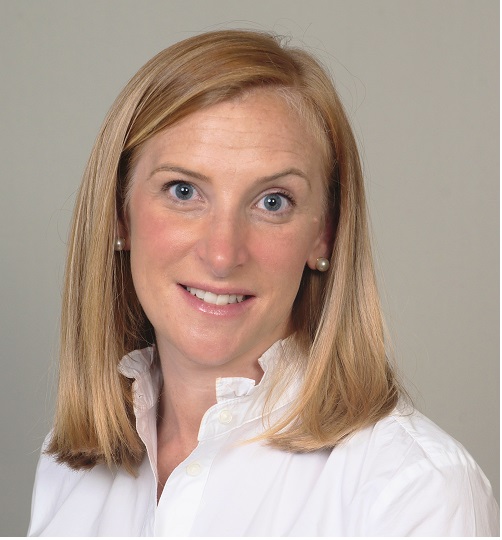
Jennifer Diaz, an Account Executive in the Equipment Sales Department of Med-Lab, an Advanced Partner of Siemens Healthineers in South Florida.

One of the biggest causes of WRMSD is patient obesity. It is the most significant barrier to practicing ergonomic scanning techniques according to a recent publication on the ergonomic scanning techniques for sonographers. Although equipment position changes and modifications of work postures can reduce injury risk, one factor in which sonographers have no control over is patient body habitus. Sonographers often need to exert excessive transducer pressure while scanning to provide diagnostic-quality images of obese patients.

“A main key trend in ultrasound technology is a lack of diagnostic imaging quality for obese patients,” says Diaz. “This is due to a lack of depth in transducers, and it is leading to another key trend – high occurrence of injury for sonographers. Due to lack of depth, sonographers need to apply extra pressure to the abdominal area of obese patients, which leads to a high incidence of shoulder, hand, and wrist pain.”

Throughout a sonographer’s career, the additional force required by traditional transducers will have a cumulative negative impact on the arm and shoulder muscles. When this force is added to the muscle firing required to maintain arm abduction or excessive reach to the patient, the injury risk increases significantly.

“When speaking with ultrasound experts, we hear time and time again that as patients get larger, they are challenged to get reliable and diagnostic images in an ergonomic and economic way,” says Diaz. “The deeper the ultrasound signal needs to penetrate; the more attenuation occurs resulting in image quality degradation and sometime results in an inconclusive image or repeat exams, sometimes in another modality.”

The ACUSON Sequoia, the flagship ultrasound system from Siemens Healthineers, is able to address this challenge.

“The ACUSON Sequoia seeks to solve this problem by powering the patented and industry exclusive Deep Abdominal Transducer (DAX), enabling unprecedented imaging of 40 cm depth through an advanced form of Multi-D beam formation,” says Diaz. “This level of penetration is a 30 percent improvement compared to conventional ultrasound. This novel approach enables the DAX to obtain clinically relevant information on high body mass index (BMI) patients when conventional transducer technology fails.”

In an ergonomic assessment by Sound Ergonomics, an analog pull-push force gauge by M&A Instruments, Inc., was used to provide a quantitative estimation of the amount of transducer pressure exerted while scanning. The DAX transducer required approximately 70 percent less force than the conventional transducer on a large model patient. Using the ACUSON Sequoia with DAX transducer can help to reduce the transducer pressure and decrease muscle strain when scanning high BMI patients compared to conventional transducer technology.

A patient’s varied physical characteristics and user dependent variabilities can negatively impact a clinician’s ability to deliver an accurate diagnosis.

“With the ACUSON Sequoia, Siemens Healthineers provides users with a solution to confidently image varying patient types, including those with high BMI,” notes Diaz. “In addition, it enables powerful automation in each major mode to reduce user variability and deliver high quality imaging with no user interaction. In order to address these challenges, ACUSON Sequoia was built from the ground up with a new architecture called BioAcoustic imaging technology; designed to deliver more image clarity and penetration than the conventional ultrasound system.”

The ACUSON Sequoia is also equipped with AutoDoppler technology. Immediately upon freeze, AutoDoppler will automatically optimize relevant Doppler parameters with no user interaction and all those parameters, including the scale, can be adjusted in post-processing.

Finally, the ACUSON Sequoia also has the advantage of being early in its product lifecycle. According to Diaz, this helps to maximize return on investment as there will be a pathway of sustained innovation and upgradability for years to come.

“It’s about confident imaging in the most challenging cases,” Diaz says. “Our DAX transducer is just one example of how the ACUSON Sequoia can help deliver diagnostic confidence often limited by conventional technology. Another major focus is on reducing ultrasound variability. Powerful automation helps to reduce variability amongst users and improve image quality with no user interaction. Remember, ease of use not only pertains to the control panel, buttons and probe placement; but also, the ease and ergonomics of acquiring the image. ACUSON Sequoia ushers in a new era in ‘ultrasound ergonomics’.”

For more information, visit med-lab.com.


By Priscilla Bartolone, DNS, RN

Nursing education has exploded over the years, and rightfully so – the need is tremendous. Baccalaureate nursing degrees like Bachelor of Science in Nursing (BSN) programs are designed to provide students with a solid educational foundation that prepares individuals for entry into the nursing profession. Graduates are able to incorporate the concepts of caring, communication, critical thinking, professionalism, and holism to provide care for individuals, families and communities. The comprehensive theoretical and clinical practice components aim to allow BSN graduates to make a smooth transition into professional nursing practice. Nursing program graduates are encouraged to continue the educational process and are prepared for the challenges of graduate study (SouthUniversity.edu, 2021).

At South University, West Palm Beach, the BSN degree program is designed for the non-registered nursing student. Students may complete prerequisite courses in as few as six quarters and then apply for admission to the nursing program, which is taught over seven quarters. The program allows highly motivated full-time students to complete the program of study in nursing in a concentrated period of time. After successful completion of the nursing program, the graduate must pass the National Council Licensure Examination Registered Nurse (NCLEX-RN) in order to obtain licensure and begin practice as a registered nurse.

Dr. Priscilla Bartolone has been the South University BSN Program Director for the past twenty years. She has continually witnessed hundreds of nursing graduates with something “special” to offer. The following individuals are two examples of outstanding nursing graduates practicing nursing in Palm Beach County. Coincidentally, both of these nurses opted to follow the career path of their mothers.

Geena Singh, MSN, RN,

Geena Singh, MSN, RN, graduated from the South University, West Palm Beach with a Bachelor of Science in Nursing in 2007 and from the Master of Science in Nursing program in 2013. Geena has worked extensively in hospitals throughout Palm Beach County and credits her education at South University with preparing her to think critically, solve problems, make appropriate clinical decisions and nursing judgements when caring for acutely and critically ill patients. Singh added that her education taught her to integrate caring, cultural sensitivity and to view patients holistically while providing patient-centered care. While working as a staff RN in various hospitals, Geena worked with South University nursing students and realized her passion for teaching. This led to her being hired as Clinical Faculty where she continues to inspire students with her compassion, competence, dedication and professionalism. Geena believes that nursing is a “work of the heart”. She added, “I pride myself on the philosophy that helping my community at the most vulnerable times is a privilege.”

Bradly Bartlett, BSN, RN,

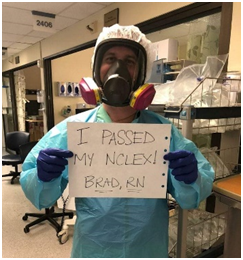
Bradly Bartlett, BSN, RN, graduated from South University, West Palm Beach with a Bachelor of Science in Nursing in June 2020. Bradly started his career in healthcare as a Paramedic but realized that he wanted to do more. Immediately upon graduation, Brad started to work on a high acuity nursing unit in Palm Beach County. Sharing his perspective of nursing education, Mr. Bartlett said, “Early on in the program the basic pillars of Nursing were pounded in our heads and built upon to make us the best nurses we could possibly be. The clinical rotations that perfectly coincided with what we were learning in lecture solidified in our minds the skills necessary to care for our patients. As a new grad I consistently get compliments on a daily basis on how great my skills are. I can only attribute that to South University and the ability of their staff to not just teach us to be nurses but for us to critically think on our patient’s behalf. I am forever grateful to South University and its staff for teaching me how to be the best nurse I can be.”

For more information, visit www.southuniversity.edu.

Programs, credential levels, technology, and scheduling options vary by school and are subject to change. Not all programs are available to residents of all U.S. states. South University, West Palm Beach, University Centre, 9801 Belvedere Rd., Royal Palm Beach, FL 33411. © 2021 South University. All rights reserved.


By Mark S. Nash, Ph.D., FACSM, FASIA

Declining health and fitness are commonly known to accompany spinal cord injuries and disorders (SCI/D). Physical deconditioning and weakening of the upper limbs make essential daily activities such as wheelchair propulsion and body transfers more difficult to perform, thus challenging the activity and independence that persons with physical disabilities require throughout their lives. During the past few decades, attention has also focused on so-called cardiometabolic risk factors, including five critical health hazards: overweight/obesity, insulin resistance, hypertension, and lipid abnormalities. Evidence now suggests that these health risks appear soon after discharge from initial rehabilitation, tend to cluster, and in doing so represent more severe health hazards. They are also more challenging for stakeholders with SCI/D, their caregivers, and health care professionals to manage within the first year of living with a SCI/D and after that throughout their lifespans.

Current health guidelines designed for persons with SCI/D all recommend incorporating physical activity to a level permitted by their ability. Outdoor exercise is an option to fulfill this need. However, it may expose the individual to temperature extremes and uneven rolling surfaces that risk a fall from the wheelchair and ensuing injury. Thus, recent evidence suggests that home-based exercise is preferred for those with SCI. Home-based exercise also circumvents exercise barriers involving transportation, lack of physical access, and exercising in facilities that serve, have staff trained for, and use equipment designed for persons without a disability.

Equipment that satisfies the broad health needs of persons with SCI/D is challenging to find. Selected specialized exercise systems have used surface electrical stimulation to initiate the contraction of paralyzed muscles located below the injury level. These muscle contractions can be sequenced under microprocessor control to create purposeful movement such as cycling, although generally with poor motor efficiency and coordination. These electrically stimulated devices often exclude persons with injuries below the T10 spinal level and require special medical clearance and ongoing supplies such as electrodes and wire leads. Those with injuries and disorders that spare their sensation often find the electrical current uncomfortable, if not painful. While generally considered safe for home use, there is a need for electrode placement before each session. Risks of use include lower extremity fracture or bouts of autonomic dysreflexia. Importantly, there is limited transfer of lower extremity electrically stimulated exercise to benefit upper limb conditioning. It has long been clear that voluntary contractions of muscles above the injury level result in higher physical conditioning levels, and better risk reduction for cardiometabolic disease.

The arm crank ergometer has been a longstanding staple of upper extremity exercise for those with SCI/D. Essentially a table or platform mounted arm cycle, the device typically uses a rudimentary forward propulsion motion against resistance, with the upper limbs propelling the device while 180 degrees out of phase with one another. Few arm crank devices allow adjustment of the axis of rotation, meaning there is one set length for motion. Even fewer devices allow reverse propulsion against resistance. The continuous forward cranking imposes imbalanced forces that condition and tightens the anterior shoulder and chest while not similarly benefitting the posterior shoulder. The imbalance of the anterior and posterior shoulder actions may represent a cause of shoulder pain for persons with SCI/D. As the upper limbs of persons with SCI/D are essential for maintaining daily activities, the pain caused by cycle ergometry may exceed the benefit of physical conditioning.

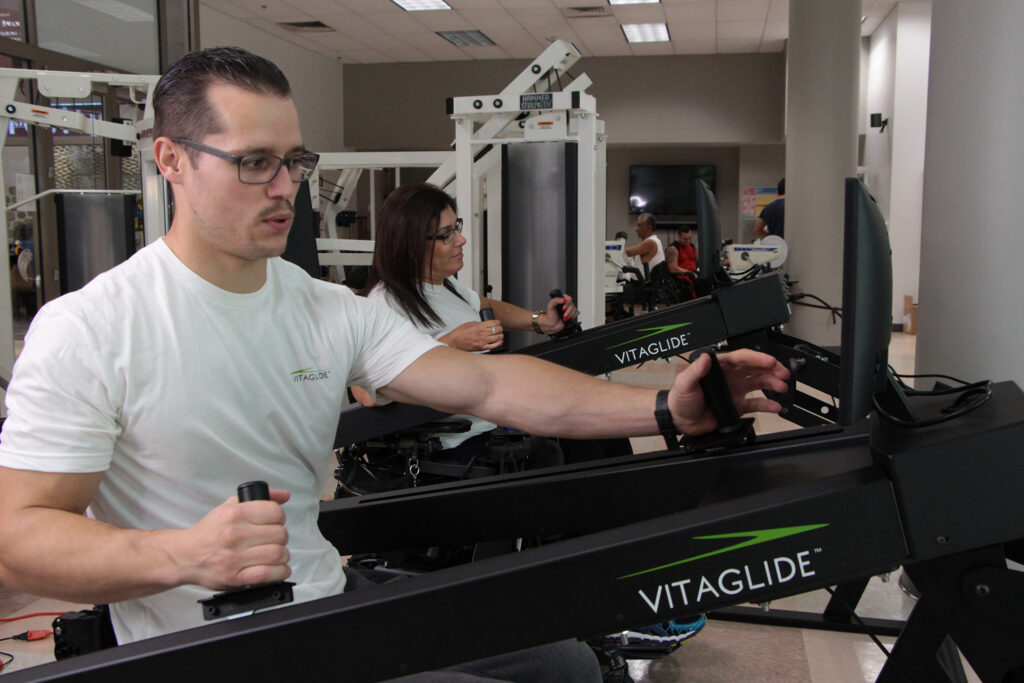
To meet the complex needs of upper extremity conditioning without the hazards imposed by standard arm ergometry, the newly upgraded and technologically advanced Vitaglide better serves as an exercise mode after SCI/D. The device is a reciprocating ergometer with the arms moving near horizontally instead of in a cyclical pattern. The movement of the limbs are balanced between a forward pushing motion on one side of the body and a pulling action on the other side. In this way, the device maintains the anterior and posterior muscle balance for conditioning of the chest, shoulders, and back. Its features also permit synchronous rowing where both limbs move together in the same forward and backward direction. Unlike a cycling ergometer, the resistance for each arm can be set independently and spans work intensities that will develop both endurance and strength. The side arms allow the user to determine their preferred range of exercise motion instead of the device.

The Miami Project to Cure Paralysis at the University of Miami Health System has used the Vitaglide for several years as part of our comprehensive SCI/D lifestyle program and has been preferred by our program participants, so much so that they seldom use our cycle ergometers. The individualized resistance adjustment permits us to select optimum exercise intensities when the strength and endurance of the arms may be unequal. We have also found it easier to customize exercise programs and maintain records of performance incorporating time and work performed. Our ultimate goal is to encourage health-sustaining physical activity after SCI/D without injury.

Dr. Mark S. Nash is Associate Scientific Director for Research, Miami Project to Cure Paralysis, University of Miami Miller School of Medicine.

Suggested callout box:

“To meet the complex needs of upper extremity conditioning without the hazards imposed by standard arm ergometry, the newly upgraded and technologically advanced Vitaglide better serves as an exercise mode after SCI/D.”


By Priscilla Bartolone, DNS, RN

Nursing education has exploded over the years, and rightfully so – the need is tremendous. Baccalaureate nursing degrees like Bachelor of Science in Nursing (BSN) programs are designed to provide students with a solid educational foundation that prepares individuals for entry into the nursing profession. Graduates are able to incorporate the concepts of caring, communication, critical thinking, professionalism, and holism to provide care for individuals, families and communities. The comprehensive theoretical and clinical practice components aim to allow BSN graduates to make a smooth transition into professional nursing practice. Nursing program graduates are encouraged to continue the educational process and are prepared for the challenges of graduate study (SouthUniversity.edu, 2021).

At South University, West Palm Beach, the BSN degree program is designed for the non-registered nursing student. Students may complete prerequisite courses in as few as six quarters and then apply for admission to the nursing program, which is taught over seven quarters. The program allows highly motivated full-time students to complete the program of study in nursing in a concentrated period of time. After successful completion of the nursing program, the graduate must pass the National Council Licensure Examination Registered Nurse (NCLEX-RN) in order to obtain licensure and begin practice as a registered nurse.

Dr. Priscilla Bartolone has been the South University BSN Program Director for the past twenty years. She has continually witnessed hundreds of nursing graduates with something “special” to offer. The following individuals are two examples of outstanding nursing graduates practicing nursing in Palm Beach County. Coincidentally, both of these nurses opted to follow the career path of their mothers.

Geena Singh, MSN, RN

Geena Singh, MSN, RN, graduated from the South University, West Palm Beach with a Bachelor of Science in Nursing in 2007 and from the Master of Science in Nursing program in 2013. Geena has worked extensively in hospitals throughout Palm Beach County and credits her education at South University with preparing her to think critically, solve problems, make appropriate clinical decisions and nursing judgements when caring for acutely and critically ill patients. Singh added that her education taught her to integrate caring, cultural sensitivity and to view patients holistically while providing patient-centered care. While working as a staff RN in various hospitals, Geena worked with South University nursing students and realized her passion for teaching. This led to her being hired as Clinical Faculty where she continues to inspire students with her compassion, competence, dedication and professionalism. Geena believes that nursing is a “work of the heart”. She added, “I pride myself on the philosophy that helping my community at the most vulnerable times is a privilege.”

Bradly Bartlett, BSN, RN,

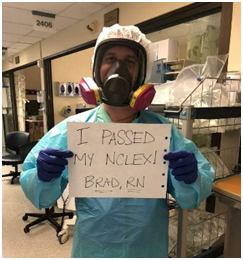
Bradly Bartlett, BSN, RN, graduated from South University, West Palm Beach with a Bachelor of Science in Nursing in June 2020. Bradly started his career in healthcare as a Paramedic but realized that he wanted to do more. Immediately upon graduation, Brad started to work on a high acuity nursing unit in Palm Beach County. Sharing his perspective of nursing education, Mr. Bartlett said, “Early on in the program the basic pillars of Nursing were pounded in our heads and built upon to make us the best nurses we could possibly be. The clinical rotations that perfectly coincided with what we were learning in lecture solidified in our minds the skills necessary to care for our patients. As a new grad I consistently get compliments on a daily basis on how great my skills are. I can only attribute that to South University and the ability of their staff to not just teach us to be nurses but for us to critically think on our patient’s behalf. I am forever grateful to South University and its staff for teaching me how to be the best nurse I can be.”

For more information, visit www.southuniversity.edu.

Programs, credential levels, technology, and scheduling options vary by school and are subject to change. Not all programs are available to residents of all U.S. states. South University, West Palm Beach, University Centre, 9801 Belvedere Rd., Royal Palm Beach, FL 33411. © 2021 South University. All rights reserved.


By Ileana Leyva, MD

When clinicians and family caregivers recognize ongoing signs of decline in a patient or loved one with Alzheimer’s disease/dementia, they often arrive at a difficult decision point: Should we place Mom or Dad in a nursing home or memory care facility, and how will we know it’s time?

To those of us who specialize in hospice and palliative care, the questions should be expanded to:

• When are patients with Alzheimer’s/dementia eligible for hospice care?

• What kind of care will cause the least amount of disruption to a patient who struggles to make sense of what’s happening in their world?

• What kind of care honors the wishes of an Alzheimer’s patient who prefers to be cared for and die at home?

Hospice supports aging in place

“Aging in place” is a well-accepted concept in the long-term and residential-care industry. Hospice accommodates aging in place through supportive care teams who deliver expert end-of-life care, equipment, medications, and supplies to patients and their families.

Patients with Alzheimer’s/dementia can receive hospice care from specially trained teams in the places they already call home: their own homes, nursing homes, assisted living communities, and more.

Aging-in-place hospice care includes a physician, nurse, and aide who oversee an individualized care plan focused on managing symptoms and pain. The medical team also provides caregiver education so that families feel confident caring for a loved one at home. A hospice social worker, chaplain, and bereavement specialist provide emotional and spiritual support to families and caregivers.

The Medicare hospice benefit covers up to 100% of the costs of care related to a patient’s Alzheimer’s/dementia diagnosis. It also delivers comfort-focused medications and supplies, including hospital beds, bedside commodes, and over-bed tables, to the patient and family.

With nearly 70% of Americans saying they would prefer to die at home (2017 Kaiser Family Foundation survey), hospice care for Alzheimer’s/dementia honors patients’ wishes and provides the resources their families and caregivers need to honor those wishes.

Hospice can have a profound impact

Studies show that hospice for Alzheimer’s/dementia patients leads to:

• 50% reduction in hospitalizations; fewer care transitions near the end of life

• Increased satisfaction with care

• Improved pain and symptom management

• Less depression/anxiety and improved overall health for patients’ families and caregivers (Mitchell, S., et al. (2009); Shega, J., et al. (2008))

Studies also show that hospice care can prevent costly, unnecessary, or unwanted care transitions in a patient’s final months: fewer admissions to the emergency department, intensive care unit, or a skilled-care facility. A 2017 study (Wang, S., et al.) found that 80% of Medicare beneficiaries 66 and older experienced at least one healthcare transition in the last six months of life; 33% had four or more disruptive transitions.

Look for signs and symptoms of hospice eligibility

Hospice should be considered if a patient spends more than 50% of their time in bed, or if family members are considering ordering a hospital bed at home. Clinically, patients with Alzheimer’s or dementia are eligible for hospice if these two factors are present:

• Functional disability in three of six activities of daily living

• Any one of these complications: pneumonia, pyelonephritis/urinary tract infection, sepsis, febrile episode, difficulty eating or swallowing, poor nutritional status, feeding tube decision, pressure sores, hip fracture, delirium at time of hospital discharge, or recurrent hospitalization for disease-related complications.

Clinicians can play an important role in decision-making by initiating advance care planning conversations with patients and their families with a few simple questions early in the disease:

• What do you understand about your loved one’s prognosis?

• What does a good day look like?

• What are your/your loved one’s preferences for care as the end of life approaches?

• Are you interested in healthcare that meets those goals?

At VITAS Healthcare, our hospice professionals are available 24/7 to facilitate patient-family discussions and to support consultations, admissions, and seamless transitions to hospice care in a patient’s preferred setting. To refer a patient or for information, call (800) 93-VITAS (available 24/7/365) or download the VITAS mobile referral app for interactive hospice eligibility guidelines.

Dr. Ileana Leyva is regional medical director for VITAS® Healthcare, the nation’s leading provider of end-of-life care.