
Aug. 31, 2021 at 8:30 a.m. ET— Lee Health, one of the largest public health systems in the U.S. is pleased to announce its partnership with DispatchHealth, a leading provider of in-home medical care. Through the partnership, patients in Southwest Florida will now have a convenient way to receive high-quality, in-person medical care in the comfort of their home.

Beginning Aug. 26, Lee Health is supporting this new in-home healthcare option to community members throughout Lee County in Florida. DispatchHealth provides in-home medical care for a wide range of common to complex injuries and illnesses including viral infections, COPD exacerbations, congestive heart failure and more.

“At Lee Health, we pride ourselves on thinking outside of the box when it comes to how we care for patients throughout our communities,” said Kris Fay, chief officer population health and physician services of Lee Health. “Our goal is to provide our patients the right care at the right time and through DispatchHealth’s innovative platform, high-quality care can now come right to the patient’s front door. By removing obstacles and bringing care to the home with DispatchHealth, we are providing patients another way to receive effective, convenient, and affordable care.”

Patients can request care via phone or by visiting DispatchHealth’s mobile app or website, no referral needed. Once requested, an expertly trained medical team typically arrives at the patient’s home within a few hours, equipped with the necessary tools and treatments, including on-site diagnostics and a CLIA-certified lab. In addition to the on-site care, DispatchHealth also coordinates additional patient needs such as prescriptions, ongoing care with their physician and billing with insurance companies.

“We are thrilled to partner with Lee Health to expand our unique care model in Florida to the Fort Myers community,” said Mark Prather, co-founder, and chief executive officer of DispatchHealth. “DispatchHealth’s proven approach to high acuity, in-home care not only improves patient outcomes it also reduces medical costs. With a shared commitment to value-based care, our partnership empowers Lee Health to go beyond traditional care settings and meet patients where they are.”

DispatchHealth began operations in Florida in September 2020 and over the last year has rapidly increased the number of markets it serves throughout the state. The partnership with Lee Health will expand the company’s reach to more patients in Florida. DispatchHealth is open seven days a week, 365 days a year, including holidays. For more information, visit DispatchHealth.com.

About Lee Health

Since the opening of the first hospital in 1916, Lee Health has been a health care leader in Southwest Florida, constantly evolving to meet the needs of the community. A non-profit, integrated health care services organization, Lee Health is staffed by caring people, inspiring health, who are committed to the well-being of every individual served, focused on healthy living and maintaining good health. Services are conveniently located throughout the community in four acute care hospitals, two specialty hospitals, outpatient centers, walk-in medical centers, primary care and specialty physician practices and other services across the continuum of care. Learn more at www.LeeHealth.org.

About DispatchHealth

DispatchHealth is building the world’s largest in-home care system in order to deliver trusted and compassionate care to all. DispatchHealth offers on-demand acute care and an advanced level of medical care for people of all ages in the comfort of their own homes. DispatchHealth’s emergency medicine and internal medicine trained medical teams are equipped with all the tools necessary to treat common to complex injuries and illnesses. DispatchHealth works closely with payers, providers, health systems, EMS, employer groups and others to deliver care in the home to reduce unnecessary emergency room visits, hospital stays and readmissions. Acute care medical teams are available seven days a week, evenings and holidays and can be requested via app, online or a quick phone call. DispatchHealth is partnered with most major insurance companies. For more information, visit DispatchHealth.com.


An investigational HIV vaccine tested in the “Imbokodo” clinical trial conducted in sub-Saharan Africa posed no safety concerns but did not provide sufficient protection against HIV infection, according to a primary analysis of the study data. The Phase 2b proof-of-concept study, which began in November 2017, enrolled 2,637 women ages 18 to 35 years from five countries.

The Imbokodo primary analysis was conducted 24 months after participants received their first vaccinations. The study’s primary endpoint was based on the difference in the number of new HIV infections between the placebo and vaccine groups from month seven (one month after the third vaccination timepoint) through month 24. When comparing the number of new HIV infections between study participants who were randomly assigned to receive either placebo or the investigational vaccine, statisticians found that 63 participants who received the placebo and 51 participants who received the experimental vaccine acquired HIV infection. Therefore, the investigational vaccine’s efficacy was 25.2% (95% confidence interval of vaccine efficacy -10.5% to 49.3%). The study vaccine was found to be safe with no serious adverse events associated with it. Study participants are being informed of the findings and will have follow-up visits with the study investigators. Further analysis of the Imbokodo study will continue, and the study is thought to have provided sufficient data for further immunological correlates research.

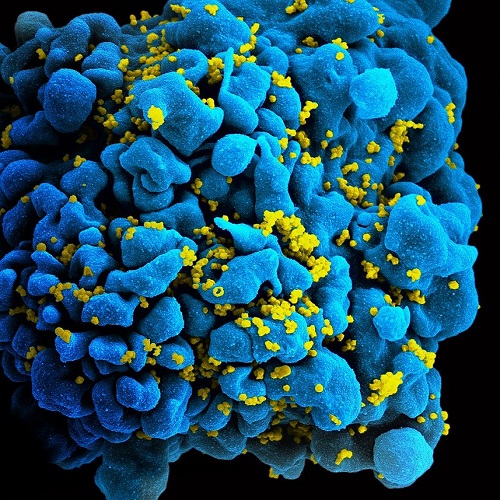
Scanning electromicrograph of an HIV-infected T cell. NIAID

The Imbokodo study, also known as HVTN 705/HPX2008, is sponsored by Janssen Vaccines & Prevention B.V., part of the Janssen Pharmaceutical Companies of Johnson & Johnson. It is funded by two primary partners, the Bill & Melinda Gates Foundation (BMGF) and the National Institute of Allergy and Infectious Diseases (NIAID), part of the National Institutes of Health.

“The development of a safe and effective vaccine to prevent HIV infection has proven to be a formidable scientific challenge,” said NIAID Director Anthony S. Fauci, M.D. “Although this is certainly not the study outcome for which we had hoped, we must apply the knowledge learned from the Imbokodo trial and continue our efforts to find a vaccine that will be protective against HIV.”

The investigational vaccine tested in the Imbokodo study is based on “mosaic” immunogens—vaccine components designed to induce immune responses against a wide variety of global HIV strains. The vaccine candidate used a strain of common-cold virus (adenovirus serotype 26, or Ad26), engineered to not cause illness, to deliver four (quadrivalent) mosaic antigens to spur an immune response. Earlier research indicated the vaccine was both well-tolerated and could induce an anti-HIV immune response. Imbokodo participants received four vaccinations during a one-year period. This included four doses of the investigational quadrivalent vaccine. The final two doses were administered together with doses of an HIV protein, clade C gp140, and an adjuvant to boost immune responses. Participants were followed for at least two years. The primary analysis occurred one year after the last study participant’s final vaccination.

Study participants were offered pre-exposure prophylaxis medication to prevent HIV infection during the clinical trial. The women who acquired HIV infection were directed to medical care and offered antiretroviral treatment.

NIAID provided funding for preclinical and early phase clinical development of the investigational mosaic HIV vaccine, which was initially developed by the laboratory of Dan H. Barouch, M.D., Ph.D., at Beth Israel Deaconness Medical Center, together with Janssen and other partners. The mosaic immunogens used in the experimental vaccine were designed by the Los Alamos National Laboratory. The Imbokodo study was conducted by the NIAID-funded HIV Vaccine Trials Network (HVTN), based at the Fred Hutchinson Cancer Research Center in Seattle. Additional support for the trial was provided by the U.S. Army Medical Research and Development Command; and the Ragon Institute of MGH, MIT and Harvard. The South African Medical Research Council helped to implement the study in South Africa.

In addition to its primary review of the Imbokodo study, the partners in consultation with an independent data and safety monitoring board (DSMB) determined that a complementary Phase 3 HIV vaccine study called Mosaico (HVTN 706/HPX3002) should continue. That clinical trial is testing the safety and efficacy of a different investigational HIV vaccine among a different patient population (men who have sex with men and transgender populations) and in different geographical locations (the Americas and Europe) than the Imbokodo trial. The Mosaico study is estimated to be completed in March 2024.

NIAID conducts and supports research—at NIH, throughout the United States, and worldwide—to study the causes of infectious and immune-mediated diseases, and to develop better means of preventing, diagnosing and treating these illnesses. News releases, fact sheets and other NIAID-related materials are available on the NIAID website.

About the National Institutes of Health (NIH): NIH, the nation’s medical research agency, includes 27 Institutes and Centers and is a component of the U.S. Department of Health and Human Services. NIH is the primary federal agency conducting and supporting basic, clinical, and translational medical research, and is investigating the causes, treatments, and cures for both common and rare diseases. For more information about NIH and its programs, visit www.nih.gov.


61 Women in Need Diagnosed with Breast Cancer

August 31, 2021 – The Promise Fund Mammography Screening Center at FoundCare in West Palm Beach recently screened their 1000th patient. The milestone comes less than a year after the new service at FoundCare opened in late October 2020, far exceeding the two nonprofits’ initial goals. Of those screened, more than 60 women across the Promise Fund of Florida Network have been diagnosed with cancer. More than 80% of the cancer was detected in stages 0-2, far earlier than the cancer would likely have been caught without the availability of the screening center.

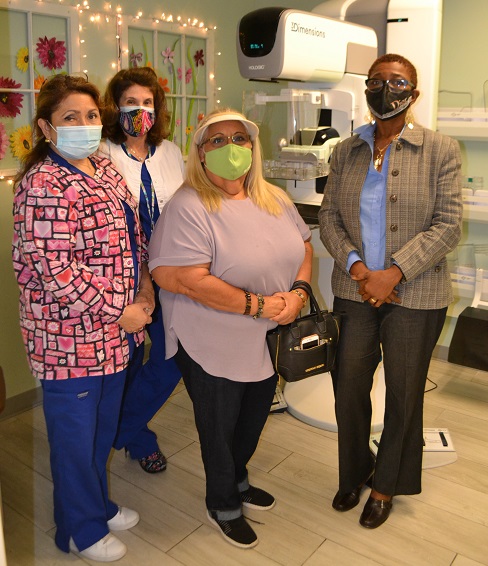
Left to Right: Janet Abramowitz (Mammography Coordinator), Staci Shapiro (Mammography Technologist), Virginia Flores, Kettly Laybonne (Promise Fund Navigator)

Longtime FoundCare patient, 65-year-old Virginia Flores became the 1000th patient to be screened after putting off getting a mammogram for the past three years. She says even though she has insurance, the co-pay would have cost her $200 for the mammogram, making the vital breast cancer screening unaffordable for her. The Promise Fund Mammography Screening Center provides subsidized screenings to enable uninsured and underinsured women the opportunity to get their potentially life-saving yearly exams. FoundCare serves every patient who comes through the doors, regardless of insurance status or ability to pay.

“It’s very important because cancer can pop-up at any time,” says Flores. “I don’t have any family members with cancer, but I have friends that lost friends that said, ‘If only I could have gotten screened.’”

The Promise Fund of Florida helped fund the Promise Fund Mammography Screening Center and secure the state-of-the-art 3D mammography machine. FoundCare is one of seven partner health providers in the Promise Fund of Florida Network that helps provide breast and cervical screenings, diagnostic and cancer care to underserved women. A Promise Fund of Florida Navigator also works at each health partner to guide patients through the healthcare system, and help eliminate all barriers to care including financial assistance, transportation, translation, finding childcare and food assistance.

In addition to exceeding their mammogram screening goals, Promise Fund of Florida Navigators have also helped more than 1800 patients this year, 10% more than their targeted goal. Nearly 3600 underserved patients have also been helped through community outreach and education, exceeding their goal by 35%, a significant increase given the limitations of COVID-19.

“We are extremely thankful for the support of our community who made these tremendous milestones possible, but our work has just begun. We look at this success as just the beginning in our goal to bring health equity to the more than 85,000 uninsured and underserved women in Palm Beach County. It is our mission to bring peace of mind to every woman, knowing that we are there to help them get the vital breast and cervical screenings, diagnostic and cancer care they need. Our hope is that the Promise Fund of Florida’s continuum of care will serve as model for systemic change in women’s healthcare to communities across the nation,” says Nancy Brinker, Co-Founder, Promise Fund of Florida.

Left to Right: Virginia Flores with Rose Philius (Women’s Health Director)

“Adding our Women’s Health Program and the Promise Fund Mammography Screening Center to our one-stop health center has been a game changer for new and longtime FoundCare patients like Virginia,” said Yolette Bonnet, FoundCare, Inc., CEO. “Women who put off their mammography screenings because they cannot afford them, or are limited on time, can now find help at FoundCare. Thanks to support from the Promise Fund, we have a state-of-the-art 3D mammography unit, generously donated by Hologic, Inc., that has and will continue to save many women’s lives through preventative care. Women whose results come back abnormal are no longer expected to navigate the process alone. We have a support system through our Promise Fund of Florida Navigators who will be there for them every step of the way. We are sincerely grateful for this incredible partnership.”

FoundCare accepts most insurance plans, Medicaid, Medicare and self-pay on a sliding fee scale based on household size and income. For more information about FoundCare’s services, please call 561-HEALTHY (561) 432-5849 or visit http://foundcare.org.

About the Promise Fund of Florida:

Promise Fund of Florida is a nonprofit organization dedicated to eliminating barriers to quality healthcare and reducing deaths from late-stage breast and cervical cancer for residents of South Florida through early detection, diagnosis and treatment. The Promise Fund of Florida supports uninsured and underinsured women who are at risk of or battling breast and cervical cancer. The Promise Fund of Florida creates a culture of health by helping women obtain preventative cancer screenings and become more informed agents of their healthcare journey. The Promise Fund of Florida is redefining the care model by serving as a liaison between patients and all of the service providers they require – from screening, to treatment, to remission. The organization was co-founded by Susan G. Komen founder Nancy G. Brinker, Julie Fisher Cummings and Laurie Silvers. For more information, visit www.promisefundofflorida.org

About FoundCare:

To help further its mission of fulfilling unmet healthcare and social service needs of individuals and families in Palm Beach County, FoundCare offers pediatric and adult primary care, chronic disease management, behavioral health services, dentistry, laboratory services, women’s health (including screening mammography), X-rays, and an on-site pharmacy. FoundCare’s services are accessible throughout their locations in Palm Beach County, with their Palm Springs center conveniently offering all services in one location. By providing quality healthcare to the Palm Beach County community, FoundCare serves as a healthcare home to patients of all ages.


Neurofibromatosis type 1, or NF1, is the most common cancer predisposition syndrome, affecting 1 in 3,000 people worldwide.

August 31 2021 – People with an inherited condition known as neurofibromatosis type 1, or NF1, often develop non-cancerous, or benign, tumors that grow along nerves. These tumors can sometimes turn into aggressive cancers, but there hasn’t been a good way to determine whether this transformation to cancer has happened.

Researchers from the National Cancer Institute’s (NCI) Center for Cancer Research, part of the National Institutes of Health, and Washington University School of Medicine in St. Louis have developed a blood test that, they believe, could one day offer a highly sensitive and inexpensive approach to detect cancer early in people with NF1. The blood test could also help doctors monitor how well patients are responding to treatment for their cancer.

The findings are published in the August 31 issue of PLOS Medicine.  

NF1 is the most common cancer predisposition syndrome, affecting 1 in 3,000 people worldwide. The condition, caused by a mutation in a gene called NF1, is almost always diagnosed in childhood. Roughly half of people with NF1 will develop large but benign tumors on nerves, called plexiform neurofibromas.

In up to 15% of people with plexiform neurofibromas, these benign tumors turn into an aggressive form of cancer known as malignant peripheral nerve sheath tumor, or MPNST. Patients with MPNST have a poor prognosis because the cancer can quickly spread and often becomes resistant to both chemotherapy and radiation. Among people diagnosed with MPNST, 80% die within five years.

“Imagine going through life with a cancer predisposition syndrome like NF1. It’s kind of like a ticking bomb,” said study co-author Jack F. Shern, M.D., a Lasker Clinical Research Scholar in NCI’s Pediatric Oncology Branch. “The doctors are going to be watching for cancerous tumors, and you’re going to be watching for them, but you really want to discover that transformation to cancer as early as possible.”

Doctors currently use either imaging scans (MRI or PET scan) or biopsies to determine if plexiform neurofibromas have transformed into MPNST. However, biopsy findings aren’t always accurate and the procedure can be extremely painful for patients because the tumors grow along nerves. Imaging tests, meanwhile, are expensive and can also be inaccurate.

“What we don’t have right now is a tool to help us determine if within that big, bulky benign plexiform neurofibroma, something bad is cooking and it’s turning into an MPNST,” Dr. Shern said. “So we thought, ‘What if we developed a simple blood test where instead of a full-body MRI or a fancy PET scan, we could just draw a tube of blood and say whether or not the patient has an MPNST somewhere?’”

In pursuit of this goal, Dr. Shern and study co-leads Aadel A. Chaudhuri, M.D., Ph.D., and Angela C. Hirbe, M.D., Ph.D., of Washington University School of Medicine, and their collaborators collected blood samples from 23 people with plexiform neurofibromas, 14 patients with MPNST that had not yet been treated, and 16 healthy people without NF1. Most of the study participants were adolescents and young adults, the age group in which MPNST most often develops. The researchers isolated cell-free DNA — that is, DNA shed from cells into the blood — from the blood samples and used whole-genome sequencing technology to look for differences in the genetic material among the three groups.

The cell-free DNA in patients with MPNST had several features that distinguished it from the DNA in the other two groups. For example, patients with MPNST had pieces of cell-free DNA that were shorter than those in people with plexiform neurofibromas or without NF1. In addition, the proportion of cell-free DNA that comes from tumors—called the “plasma tumor fraction”—in the blood samples was much higher in people with MPNST than in those with plexiform neurofibromas. Together, these differences allowed the researchers to differentiate, with 86% accuracy, between patients with plexiform neurofibromas and those with MPNST.

In the study participants with MPNST, the plasma tumor fraction also aligned with how well they responded to treatment. In other words, if their plasma tumor fraction decreased following treatment, the size and number of their tumors (as measured by imaging scans) also decreased. An increase in plasma tumor fraction was associated with metastatic recurrence.

“You can imagine treating a patient with a chemotherapy regimen. This blood test could easily and rapidly allow us to determine whether the disease is going down or maybe even going away entirely,” Dr. Shern said. “And if you had done surgery and taken out an MPNST, and the blood test was negative, you could use that to monitor the patient going forward to see if the tumor returns.”

Dr. Shern noted that one limitation of the current study is its small size, even though it included people with NF1 from two large hospitals. The researchers are planning to conduct a larger trial with more patients. Dr. Shern said the team’s goal is to increase the accuracy of the blood test from 86% to closer to 100%. One approach would be to refine the genetic analysis to focus on genes known to be involved in MPNST.

A simple and inexpensive blood test to detect MPNST early in NF1 patients would be especially useful in developing countries and other resource-poor areas, where access to the equipment and expertise needed to perform imaging is limited, Dr. Shern said.

Blood tests of this type also have applications in the early detection and monitoring of patients with other cancer-predisposing genetic disorders, such as multiple endocrine neoplasia, in which benign tumors can turn cancerous, or Li-Fraumeni syndrome, which increases one’s risk for developing several types of cancer.

“This is the perfect opportunity to apply these technologies where we can use a simple blood test to screen an at-risk population,” said Dr. Shern. “If the test shows something abnormal, that’s when we know to act and go looking for a tumor.”

The study was supported by the Intramural Research Program of NCI and the National Institute of General Medical Sciences, another part of NIH.

About the Center for Cancer Research (CCR): CCR comprises nearly 250 teams conducting basic, translational, and clinical research in the NCI intramural program—an environment supporting innovative science aimed at improving human health. CCR’s clinical program is housed at the NIH Clinical Center—the world’s largest hospital dedicated to clinical research. For more information about CCR and its programs, visit ccr.cancer.gov. 

About the National Cancer Institute (NCI): NCI leads the National Cancer Program and NIH’s efforts to dramatically reduce the prevalence of cancer and improve the lives of cancer patients and their families through research into prevention and cancer biology, the development of new interventions, and the training and mentoring of new researchers. For more information about cancer, please visit the NCI website at cancer.gov or call NCI’s contact center, the Cancer Information Service, at 1-800-4-CANCER (1-800-422-6237).

About the National Institutes of Health (NIH): NIH, the nation’s medical research agency, includes 27 Institutes and Centers and is a component of the U.S. Department of Health and Human Services. NIH is the primary federal agency conducting and supporting basic, clinical, and translational medical research, and is investigating the causes, treatments, and cures for both common and rare diseases. For more information about NIH and its programs, visit www.nih.gov.


RSV is a life-threatening, hidden epidemic for growing population of adults 60+

with over 177,000 hospitalizations — and 14,000 deaths — every year

Highly contagious, RSV spreads like COVID-19 and exacerbates chronic medical conditions —

 including COPD, asthma, heart failure and lung disease — making it difficult to breathe

CDC issues health advisory about current RSV surge in U.S.

August 31, 2021 – The Alliance for Multispecialty Research (AMR) in Miami — a leading clinical research company that attracted national attention for leading the first community-based phase one COVID-19 vaccine trial — has been awarded Adult RSV (Respiratory Syncytial Virus) vaccine clinical research studies in each of its 14 research centers across the U.S. AMR Miami is now enrolling study volunteers — adults 60 years and older — to participate in the phase 3 RSV vaccine clinical trials to begin in August, in advance of the cold and flu season.

“Unfortunately, most people don’t know about RSV and how this highly contagious respiratory virus can be deadly for adults 60 and older,” said AMR Chief Medical Director Dr. Jeffrey Rosen. “From the COVID-19 pandemic, we saw how fast deadly viruses can spread — particularly among senior communities and multi-generational families. Pursuing an adult RSV vaccine is the next critical step for public health.”

With relaxed restrictions for the coronavirus, a surge in RSV cases is expected. In fact, the CDC recently issued an RSV Health Advisory to notify clinicians and caregivers about increased RSV cases in the U.S.

RSV: A hidden epidemic for senior adults

Pediatricians have known about RSV in children for decades, but the virus has flown under the radar for doctors caring for senior adults. While RSV causes mild cold-like symptoms in healthy adults who recover in a week or two, RSV infections in adults 60+ can become life-threatening — particularly if the virus enters the lower respiratory tract, making it difficult to breathe.

  • An estimated 177,000 older adults are hospitalized — and approximately 14,000 die each year in the U.S. alone due to an RSV infection, according to the CDC.
  • RSV statistics for older adults are widely considered to be significantly higher. When an older or high-risk patient is admitted to the hospital for respiratory insufficiency, some doctors test for RSV, but a majority do not.
  • Physicians often don’t recognize the difference between RSV and the flu, coding patient records  with influenza or pneumonia.

Similar to the coronavirus, RSV is a fast-spreading virus that transmits through respiratory droplets when an infected person coughs or sneezes and droplets enter the eyes, nose or mouth of a healthy person. Unlike the coronavirus, RSV can remain infectious on hard surfaces for up to six hours.

Currently, there is no commercially available RSV vaccine. “With a growing adult population, AMR recognizes the urgent need for an RSV vaccine to prevent hospitalization and death in older adults,” said Dr. Terry Klein, AMR-Wichita.

RSV risk for 60+ expected to increase

Adults ages 60 and older are at greater risk for severe RSV, largely due to the gradual deterioration of the immune system due to aging. Known as immunosenescence, even the most active older adults have a weakened immune system as a consequence of aging.

The risk for RSV in older adults is expected to increase. By 2050, the number of Americans 65+ is expected to nearly double, from 46 million to almost 90 million. RSV risk is compounded by the nearly 60 percent of grandparents and older relatives who participate in caring for children under 13 years old, according to the National Association of Childcare Resource & Referral Agencies. Children who are frequently exposed to RSV in school and childcare facilities can transmit RSV to their older caretakers.

RSV risk higher for people with chronic conditions

People with underlying health conditions also are at increased risk for RSV. The virus can exacerbate chronic medical conditions, including:

Asthma Cystic fibrosis
Chronic obstructive pulmonary disease (COPD) Heart disease
Chronic bronchitis/emphysema Lung disease
Congestive heart failure Sleep apnea

People with immunodeficiency — such as organ transplant recipients, chemotherapy patients or  HIV/AIDS patients — are also at risk for severe RSV infections.

Among adults 65 and older, 85 percent have at least one chronic medical condition; 68 percent have two or more, according to the National Council on Aging. More than 16.4 million people have COPD, the third leading cause of death by disease in the U.S. according to the American Lung Association.

“For people with chronic medical conditions, there is a profound probability that an RSV infection will exacerbate their condition,” said Dr. Klein. “With no specific RSV treatment available, doctors can only provide supportive care which may include intubation. This is why our clinical research trials for a vaccine to prevent RSV are critical.”

Volunteers are key to vaccine success

While continuing COVID-19 and other medical research studies, AMR will begin its RSV adult vaccine clinical trials this summer in advance of cold and flu season to maximize data collection. With the success of phase 1 and 2, the investigational RSV vaccine has been approved as safe to begin the large-scale phase 3 vaccine research — becoming one of AMR’s largest volunteer clinical trials.

Adults ages 60 and older who qualify for AMR’s RSV vaccine study will receive, at no cost, study-related medical exams, lab work and an investigational RSV vaccine or placebo. Insurance is not required; compensation may be available for time and travel.

To inquire about becoming an RSV study volunteer,

contact 1-888-259-1231 or visit www.AMRLLC.com/open

“We simply cannot help save lives without the heroic participation of healthy clinical research volunteers,” added Dr. Rosen. “Volunteers are key to our success to find vaccines to protect and save lives — including their own.”

ABOUT AMR

Founded in 1994 as a network of clinical research sites, Alliance for Multispecialty Research (AMR) consolidated in 2017 and operates across the United States in 14 research centers. In March 2020 during the global pandemic, AMR attracted national attention for its leadership to conduct one of the first community-based COVID-19 vaccine trials. AMR is a three-time recipient of the World Vaccine Congress’s Vaccine Industry Excellence (ViE) Award for “Best Clinical Trial Site or Network” (2013, 2015, 2017) and was a finalist for this prestigious award in 2016 and 2018. AMR has conducted more than 7,750 clinical research trials with over 145,550 research participants (volunteers). For more about AMR, visit www.AMRLLC.com.