
August 31, 2021 – According to the Centers for Disease Control and Prevention, ovarian cancer is the second most common gynecologic cancer and accounts for more deaths than any other cancer of a woman’s reproductive system. 

With September as Ovarian Cancer Awareness Month, it’s also important to note that the risk of getting ovarian cancer is one in 78 women, and the chance of a woman dying in her lifetime from ovarian cancer is about one in 108, according to the American Cancer Society.

Often referred to as the “silent killer,” ovarian cancer is difficult to detect early as there are no screenings or tests. Patients are typically asymptomatic until the disease has become very aggressive. Among the symptoms that can appear non-threatening and are often overlooked are bloating, pelvic or abdominal pain, decrease in appetite, unusual feelings of fullness or frequent urination.

“Even though ovarian cancer is difficult to detect and can present as something that may be a minor ailment, we would always encourage women to make sure they schedule their annual gynecological appointments and see their physician if unusual symptoms persist,” said Scott E. Jordan, M.D., a specialist in gynecology, oncology and robotic surgery with the Broward Health Physician Group. “Early detection is always the key to positive patient outcomes.”
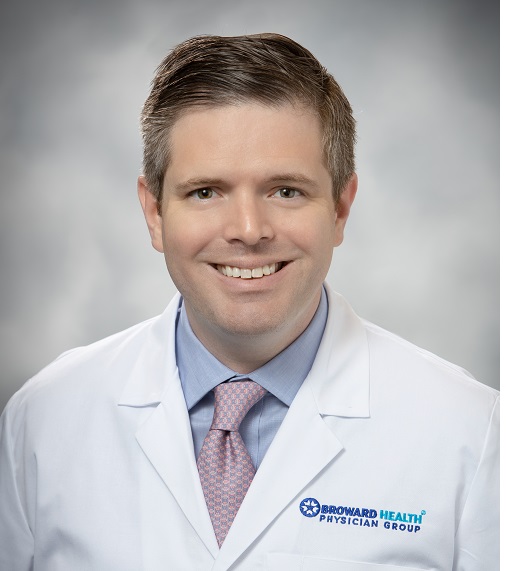
Scott E. Jordan, M.D.

The highest risks are a family history of ovarian cancer and a known genetic mutation, such as BRCA1, BRCA2 or lynch syndrome. Most women diagnosed with ovarian cancer are post-menopausal who are in their 50s and 60s. But women in their 40s are not immune to it.

“Ovarian cancer became a specialty in 1969,” said Dr. Jordan. “We’ve come a long way since then with molecular testing and personalized care. Another example of advancements in ovarian cancer is that we have had 13 new approvals for drugs in the last five years compared to the previous 45 years during which time we also had 13 new approvals.” 

There continues to be several breakthrough studies and clinical trials for ovarian cancer.

“The SOLO-1 trial in 2019 was a home run in the care for patients with BRCA-mutated ovarian cancer,” added Dr. Jordan. “Initial data indicates that patients with advanced BRCA-mutated ovarian cancer who were treated with platinum-based chemotherapy followed by maintenance olaparib (Lynparza), which is a treatment option for advanced ovarian cancer, experienced a 70% reduction in the risk of progression or death versus those who received placebo. This is yet another example of how far we’ve come.”

For more information, visit BrowardHealth.org/BeatCancer or call 954-888-3453.

About Broward Health

Broward Health, providing service for more than 80 years, is a nationally recognized system in South Florida that offers world-class healthcare to all. The Broward Health system includes the statutory teaching hospital Broward Health Medical Center, Broward Health North, Broward Health Imperial Point, Broward Health Coral Springs, Salah Foundation Children’s Hospital, Broward Health Weston, Broward Health Community Health Services, Broward Health Physician Group, Broward Health Urgent Care, Broward Health International, and Broward Health Foundation. For more information, visit BrowardHealth.org.


UHealth is the first hospital system in Florida to adopt cutting-edge tumor detection system.

August 30 2021 – Neurosurgeons in the Sylvester Comprehensive Cancer Center, part of the University of Miami Health System, are the first in Florida to adopt the Reveal fluorescence-guided system. This head-worn device provides better illumination, giving surgeons more precise guidance to differentiate between brain tumors and healthy tissue.

Michael Ivan, M.D.

“We know from the data that the more we resect, the better patients do,” said Michael Ivan, M.D., who co-directs the Sylvester Comprehensive Cancer Center’s Brain Tumor Initiative at the University of Miami’s Miller School of Medicine. “But it’s exceptionally difficult in the operating room to distinguish the boundary between tumor and normal brain.”

A High-Tech Headlamp

The system is essentially a super high-tech headlamp that shines light wherever the surgeon is looking. The system magnifies the surgical area and offers different light options to light up tumor cells. Also, because the technology is no longer fixed, surgeons can better orient themselves while working in the brain.

It’s a benefit because brain tumors are shaped more like a sea anemone than a ball, generating small finger-like projections that infiltrate surrounding tissue as the cancer grows. In some areas, tumor cells are highly concentrated, making them relatively easy to remove. In other parts, the concentrations may be low – 100, 10 or even one cell per cubic inch.

This puts neurosurgeons in a challenging position – they want to remove as much tumor as possible but can’t risk damaging the brain. The solution comes in day-glow pink.

“Before surgery, patients take a drug that becomes a fluorescent metabolite and is only picked up by tumor cells,” said Dr. Ivan. “When we shine a blue light on the tumor, it glows bright pink, while the surrounding tissue looks purple. The intensity of the pinkness highlights how much tumor is left, allowing us to keep going in areas where we might otherwise not realize we’re leaving tumor behind.”

Providing Mobility
Ricardo Jorge Komotar, M.D.

Neurosurgeons have been using fluorescence to delineate tumors for several years but have needed better tools to see these glowing cancer cells. Until now, surgeons used a special microscope to see the fluorescing cells; however, this device is expensive, bulky and challenging to maneuver, making it difficult to get good sight lines during surgery.

“It’s hard to see around corners with the microscope, which is incredibly important because the fluorescence will only glow when the light is directly on it,” said Ricardo Jorge Komotar, M.D., who co-directs the Brain Tumor Initiative. “When you’re working in a deep cavity, you may not realize you’re leaving tumor behind because it’s not glowing, but that’s just because it’s hard to get the light to it.”

Reveal fixes that by adding mobility.

The new system also gives neurosurgeons a better tool to identify and remove cancer cells, taking much of the guesswork out of these procedures, and will likely elevate the quality of cancer neurosurgery.

“I think this will help the neurosurgical community provide a higher standard of care that’s more consistent across the board,” Dr. Komotar said. “We feel it’s a much more effective method,  allowing us to provide better resections for our patients and hopefully better outcomes and survivability.”


August 30, 2021 – Boca Raton resident and philanthropist Ena Kane has become the latest million-dollar donor to Keeping the Promise…The Campaign for Boca Raton Regional Hospital. Her $1 million gift is one of many seven- and eight-figure donors to a campaign that has already surpassed $210 million raised.

“Mrs. Kane is special to all of us here at the hospital,” said Lincoln Mendez, CEO of Boca Raton Regional Hospital.  “She is a long-time donor who understands the nature of our campus initiative and wants others to benefit from her giving.  Indeed, Mrs. Kane is an integral part of our Boca Regional family and we continue to be grateful for her participation and generosity.”

Ena Kane’s gift will be recognized in the naming of the retail pharmacy to be located steps from the main entrance on the first floor of the new Gloria Drummond Patient Tower, one of the hallmark projects of the campus initiative and Keeping the Promise capital campaign. Mrs. Kane’s generosity includes prior gifts cumulatively totaling in excess of $500,000. Boca Regional has acknowledged this altruism with significant recognition, which is visible in the waiting area of the Marcus Neuroscience Institute, as well as locations in the Emergency Department and in the Lynn Women’s Institute. Naming of facilities is particularly meaningful for Mrs. Kane, as her gifts have been made in memory of her late husband, Robert, and daughter, Odette, both of whom tragically died in a car accident in 2010.

“I love the hospital and all the people who have cared for me throughout the years,” said Mrs. Kane. “It comforts me when people tell me they’ve seen my family’s names in the various buildings and departments here. I am grateful for these opportunities to attach something positive to their memory.  So, when the chance arose to utilize my resources to support the hospital’s efforts, I immediately called the Foundation.”

Robert and Ena Kane retired to Boca Raton some 30 years ago from New York. Odette followed them in 1995. Mrs. Kane has a rich and fascinating family history.  She was born 1935 in Managua, Nicaragua to parents General Bartolome Viquez and Deyfilia Pollex Viquez. Her father was Commander-In-Chief of the Nicaraguan armed forces, as well as vice president, governor and senator in Nicaragua. He was even acting president at one time in 1974.  Ena’s mother was the first woman Consul General of Nicaragua.

“Ena Kane is an inspiration to all of us,” said Stan Barry, co-chair of Keeping the Promise. “She has experienced life as part of an illustrious family in Nicaragua, has endured suffering, and then given so generously of herself so that others may reap the benefit of a new generation of medicine here at Boca Regional. We are so grateful to be a part of her life.”

The $250 million Keeping the Promise Campaign is the largest fund-raising initiative in Boca Regional’s history and is supporting its most ambitious period of growth and expansion. The campus redevelopment plans include at the centerpiece, the new Gloria Drummond Patient Tower where patients will be

welcomed in the inviting new Louis B. and Anne W. Green Lobby with plans for retail, dining, meeting space, a sanctuary, outdoor courtyards and other conveniences for visitors. The new tower features all new surgical suites and all private patient rooms exceeding the latest safety standards for patient care. In the current hospital building, all existing rooms will be converted to private in a comprehensive renovation of all patient units including maternity, oncology, and orthopedics. An expansion of the Marcus Neuroscience Institute is well underway with emphasis on neurovascular/stroke, central nervous system tumors, spine, and epilepsy/seizure disorders. The recently opened 972-car Schmidt Family Parking Facility will be connected to the Marcus Neuroscience Institute once the new tower construction is complete. Also underway is the new Toby and Leon Cooperman Medical Arts Pavilion with outpatient surgery, physician offices and adjacent parking.

About Boca Raton Regional Hospital Foundation

The Boca Raton Regional Hospital Foundation, Inc. is a not-for-profit organization for Boca Raton Regional Hospital. Boca Raton Regional Hospital is part of Baptist Health South Florida, the largest healthcare organization in the region, with 11 hospitals, nearly 23,000 employees, more than 4,000 physicians and more than 100 outpatient centers, urgent care facilities and physician practices spanning across Miami-Dade, Monroe, Broward and Palm Beach counties. Baptist Health has internationally renowned centers of excellence in cancer, cardiovascular care, orthopedics and sports medicine, and neurosciences. In addition, it includes Baptist Health Medical Group; Baptist Health Quality Network; and Baptist Health Care On Demand, a virtual health platform. Baptist Health has been recognized by Fortune as one of the 100 Best Companies to Work For in America and by Ethisphere as one of the World’s Most Ethical Companies.

Boca Raton Regional Hospital is supported by philanthropy to strengthen its mission to deliver the highest quality patient care, satisfaction and safety. If you would like to learn more about supporting the mission of Boca Raton Regional Hospital, visit our website at donate.brrh.com.


August 27, 2021 – ImmunoBrain Checkpoint Inc. (“IBC”) an innovative biopharmaceutical company developing potential disease-modifying immune therapies that harness the power of the immune system to help protect and repair the brain to combat neurodegenerative diseases, announced today that the National Institute on Aging (NIA) of the US National Institutes of Health (NIH) has awarded the Company a grant totaling $5 million over three years to support a first-in-human clinical study of IBC-Ab002, for the treatment of Alzheimer’s disease.

IBC-Ab002 is a proprietary anti-PD-L1 antibody developed and engineered with differentiating characteristics tailored to treat Alzheimer’s disease, based on a unique mechanism of action that has the potential to arrest, slow-down or even stop Alzheimer’s disease progression. Its development is based on studies carried out at the Weizmann Institute of Science, Israel, demonstrating that the immune system is needed for the maintenance of healthy brain function and repair, but may be impaired in patients with Alzheimer’s disease. IBC-Ab002 aims to empower the immune system to help defeat the disease and, thereby, to change the disease course and slow-down its progression.

In pre-clinical studies, treatment with an anti-PD-L1 antibody has been shown to reduce both amyloid-beta and tau, two key toxic proteins, alteration in the inflammatory milieu of the brain, preservation of synapses and neurons, and improvement in cognition as measured by learning/memory tests.

The phase 1b safety and proof-of-mechanism study of IBC-Ab002 in patients with mild Alzheimer’s disease is expected to start in the first half of 2022 in the UK, the Netherlands and in Israel. In addition to the NIA funding, the study will be funded in part by a grant received from the Alzheimer’s Association under the 2020 Part the Cloud + Bill Gates Partnership Grant Program.

Dr. Eti Yoles, IBC’s Chief Operating Officer, said: “We are grateful to the NIA for this vote of confidence in our novel approach. IBC is committed to finding a therapy that will bring relief to the millions of patients struggling with Alzheimer’s disease and their families.”

Dr. Jesse Cedarbaum, IBC’s Chief Medical Officer, said: “Aging is the major risk factor for the development of Alzheimer’s disease. With aging comes the seemingly paradoxical phenomena of ‘inflammaging’ and ‘immune exhaustion and senescence’. IBC-Ab002 is an antibody that has been designed with the goal of rebalancing the immune system to provide neuroprotection against Alzheimer’s disease and perhaps other neurodegenerative disorders. After a rigorous review process by scientists, clinicians, and key opinion leaders, we thank the NIA for its recognition that augmenting the body’s natural defenses could be an important avenue for treating Alzheimer’s disease.”

Professor Michal Schwartz, IBC’s Chief Scientific Officer, said: “Seeing the robustness of the effect in so many animal models, and on both symptoms and disease pathology, reinforces my optimism that we have the potential to activate a general mechanism needed for brain repair that will overcome many of the unique complexities of Alzheimer’s disease. I am very grateful to the NIA for its belief in and support of our novel therapy.”

Dr. Philip Scheltens, Director of the Alzheimer Center at the VU University Medical Center in Amsterdam and Principal Investigator for the planned clinical study, said: “I am pleased that the NIA recognizes the innovative approach of IBC, supporting its progress to the clinic. I am confident that these funds will help the IBC team to progress its therapeutic target through the clinical study here at Amsterdam UMC.”

There are no approved therapies for Alzheimer’s disease that have been shown to have a major impact on the clinical course of the disease. If successful, IBC’s therapy will be a first-of-its kind approach with the potential to change the course of Alzheimer’s disease and arrest its progression. The success of IBC’s approach would lead to better understanding of how the immune system helps protect the brain, would contribute to the understanding of the biology of Alzheimer’s disease, and could ignite a new era in developing therapies to combat this family of devastating diseases.

About ImmunoBrain Checkpoint

ImmunoBrain Checkpoint (IBC) is a biopharmaceutical company focused on developing novel disease-modifying immune therapies to combat neurodegenerative diseases, and in particular, Alzheimer’s disease. IBC’s IP platform emerged from the laboratory of Professor Michal Schwartz and licensed from Yeda, the commercialization arm of the Weizmann Institute of Science in Israel. IBC’s technology is based on more than 20 years of studies by Schwartz’s team, who pioneered the idea that the brain engages in a life-long dialogue with the immune system for its maintenance and repair, and that this communication is compromised in aging and Alzheimer’s disease. Schwartz’s team’s results in preclinical studies indicate that loosening the restraints from the immune system using antibodies that target inhibitory immune checkpoints (commonly expressed by exhausted immune cells), can rewire brain/immune communication, and thereby protect the brain from functional loss.

Previously, IBC received a $500,000 grant from the ALS Association to pursue a novel immunotherapeutic approach to treat ALS and identify optimal immune-checkpoint pathways to target, a $1,000,000 grant from the Alzheimer’s Association under the 2020 Part the Cloud + Bill Gates Partnership Grant Program, and additional support from the Israel Innovation Authority. www.immunobrain.com

About IBC-Ab002

IBC’s therapeutic approach seeks to harness the body’s own immune mechanism of repair to optimize the communication between the body and the brain. IBC-Ab002 is a proprietary antibody developed by IBC’s team led by Drs. Eti Yoles and Carol David, specifically optimized for IBC’s therapeutic mechanism of action. It is designed to transiently inhibit the activity of certain immune system molecules that act as “checkpoints” to restrain the activity of the immune system, and thereby enable a neuroprotective immunological cascade to combat the effects of neurodegenerative proteinopathy. In preclinical studies, anti-PD-L1 treatment was found to be effective in five different animal models of Alzheimer’s disease, including both amyloid and tau transgenic mice. In these studies, anti-PD-L1 antibody treatment reduced both cognitive deficits and toxic pathological proteins that accumulate in the brain.

IBC-Ab002 has also been engineered to have an improved safety profile relative to other antibodies with respect to inducing immune-mediated adverse effects. IBC plans to start its phase 1b clinical trial in the first half of 2022 in patients with early Alzheimer’s disease.  


Aug. 27, 2021 – Golisano Children’s Hospital’s Mobile Pediatric Vaccination Clinic will be making stops around Southwest Florida next week to vaccinate children 12 years-old and older for COVID-19.

The Mobile Pediatric Vaccination Clinic is walk-up only, and there is no cost for the COVID-19 vaccine, which will be Pfizer. 

The mobile clinic will be at the following locations next week:

  • Monday, August 30, 3-7 p.m., Shell Factory, 16554 N. Cleveland Ave., North Fort Myers
  • Tuesday, August 31, noon-4 p.m., Sanibel and Captiva Islands Chamber of Commerce, 1159 Causeway Blvd, Sanibel
  • Friday, Sept. 3, 3-7 p.m., Goodwill Resource Center, 4126 Palm Beach Blvd., Fort Myers

A parent or authorized guardian must accompany a minor for vaccination. The second dose will be set for the same location or one nearby.

Anyone 12 years old and older can also receive their COVID-19 vaccine at no cost at Lee Health’s Community Vaccination Clinic, located at Gulf Coast Medical Center. For more information, visit www.leehealth.org.

About Lee Health

Since the opening of the first hospital in 1916, Lee Health has been a health care leader in Southwest Florida, constantly evolving to meet the needs of the community. A non-profit, integrated health care services organization, Lee Health is committed to the well-being of every individual served, focused on healthy living and maintaining good health. Staffed by caring people, inspiring health, services are conveniently located throughout the community in four acute care hospitals, two specialty hospitals, outpatient centers, walk-in medical centers, primary care and specialty physician practices and other services across the continuum of care. Learn more at www.LeeHealth.org