New provisional code created for potential third dose of Pfizer vaccine

July 30 2021 – The American Medical Association (AMA) today announced that the Current Procedural Terminology (CPT®) code set has been updated by the CPT Editorial Panel to include a new  administration code that is unique to a potential third dose of the current COVID-19 vaccine offered by Pfizer.

The provisional CPT code will be effective for use on the condition that a third dose shot of the Pfizer COVID-19 vaccine receives regulatory approval or authorization from the U.S. Food and Drug Administration (FDA). The AMA is publishing the CPT code update now to ensure electronic systems across the U.S. health care system are prepared in advance if the FDA approves or authorizes a third dose of the Pfizer COVID-19 vaccine.

“The FDA and the U.S. Centers for Disease Control and Prevention (CDC) have analyzed data indicating that at this time individuals do not need to exceed the standard two doses authorized for Pfizer’s COVID-19 vaccine,” said AMA President Gerald Harmon, M.D. “The AMA supports the position of the CDC and FDA since it is based on a careful consideration of the available evidence to date. We are confident that federal health agencies will continue to review emerging evidence on a potential third dose of the Pfizer COVID-19 vaccine. The CPT code set stands ready to meet the immediate needs of the health system if third dose shots are considered necessary.” 

For quick reference, the vaccine administration CPT code and long descriptor assigned to the third dose of the current Pfizer COVID-19 vaccine is:

0003AImmunization administration by intramuscular injection of severe acute respiratory syndrome coronavirus 2 (SARS-CoV-2) (coronavirus disease [COVID-19]) vaccine, mRNA-LNP, spike protein, preservative free, 30 mcg/0.3 mL dosage, diluent reconstituted; third dose

This CPT code and descriptor are used to report the actual work of administering the vaccine, in addition to all necessary counseling provided to patients or caregivers and updating the electronic record.

Short, medium and long descriptors for all the new vaccine-specific CPT codes can be accessed on the AMA website, along with several other recent modifications to the CPT code set that have helped streamline the public health response to the SARS-CoV-2 virus and the COVID-19 disease.

Changes to the CPT code set are considered through an open editorial process managed by the CPT Editorial Panel that collects broad input from the health care community and beyond to ensure CPT content reflects the coding demands of digital health, precision medicine, augmented intelligence, and other aspects of a modern health care system. This rigorous editorial process keeps the CPT code set current with contemporary medical science and technology so it can fulfill its vital role as the trusted language of medicine today and the code to its future.

Questions on CPT coding and content should be directed to the CPT Network, the authoritative source for CPT coding answers. Also consult the AMA online library of COVID-19 CPT coding and guidance.



By Sean O’Donnell, MD, and Brijesh Mehta, MD

Sean O’Donnell, MD
Brijesh Mehta, MD

Collaboration among physicians with differing expertise in a multi-disciplinary approach to care, and ensuring the optimal treatment for specific conditions, is one of the most gratifying aspects of medicine. That was certainly the case when a new procedure being done within Memorial Healthcare System brought together vascular and neurointerventional surgical teams to reduce a patient’s risk of stroke.

Probable Cause

Strokes are both cardiovascular and neurological incidents, occurring when the blood supply from the heart to the brain is interrupted or reduced. This deprives the brain of oxygen and nutrients and causes cells to die. Stroke is the 5th leading cause of death in the U.S. and more than 15 million people worldwide are affected by strokes each year, with many passing away or becoming permanently disabled.

While there are several potential causes for a stroke, it’s estimated that nearly a third are brought on by carotid artery disease, a buildup of plaque in one or both of the arteries in the neck that can affect the flow of blood to the brain. When portions of plaque from a diseased carotid artery travels to a small artery in the brain, blood flow is interrupted and a stroke occurs. 

Latest Technology

“TCAR,” short for TransCarotid Artery Revascularization, is an option for patients with severe plaque buildup that are beyond the point where medication or lifestyle changes will help. In these situations, where the risk of stroke is significant, the traditional approach would be carotid endarterectomy (CEA) surgery, an open surgical procedure to unblock arteries. Some patients, however, may not be candidates for this surgery, either because of age, anatomic issues, heart disease, or other comorbidities. Additionally, as with any invasive procedure, the patient’s recovery period is longer and more arduous than those whose repairs are done with less invasive methods.  

TCAR, a procedure pioneered by Silk Road Medical, which Memorial recently became the first in Broward County to perform, also involves direct access to the carotid artery, but through a much smaller incision at the base of the neck, just above the clavicle. During the procedure, a tube inserted into the artery is connected to a system that temporarily reverses blood flow, directing it away from the brain and keeping dangerous plaque debris from flowing in that direction. While the brain still receives blood through other arteries, surgeons filter the blood from the carotid artery and implant a stent to open the narrowed artery and prevent future strokes. Blood is returned from a tube connected to the carotid artery, passes through a filter, and returns from the other end of the tube into a vein in the groin, with the normal direction of flow resumed following the procedure. When compared to CEA, there is less stress on the heart and the risk of the patient having a stroke or heart attack during the process is significantly decreased.

First Patient

Following a review of clinical information and imaging studies by vascular and neurointerventional teams, we performed our first TCAR procedure on Reynold, an 81-year-old man with advanced coronary disease. He had an almost completely blocked carotid artery and was somewhat fortunate to have not already had a stroke by the time he came to the Memorial Cardiac & Vascular Institute. Because of his age and a recent bout with COVID-19, he was not a realistic candidate for CEA.

Following the procedure, the patient spent just one night at the hospital for observation and was walking immediately after. He reported feeling “like a new man” and is now taking nothing stronger than aspirin as a blood thinner and a cholesterol-lowering medication to help prevent future issues.

While CEA is recognized as a safe, effective surgery, it’s still a fairly major operation that takes time and usually requires general anesthesia. We’ve found TCAR to be an important, new option in the fight against strokes that is particularly suited for patients like Reynold that are at higher risk of complications from the traditional treatment of carotid artery disease.

Dr. Sean O’Donnell is a vascular surgeon and the medical director of Vascular and Endovascular Surgery at Memorial Cardiac & Vascular Institute. Dr. Brijesh Mehta is a neurointerventional surgeon and medical director of the Comprehensive Stroke Program and Neurointerventional Surgery at Memorial Neuroscience Institute. For more information about Memorial Healthcare System, visit www.mhs.net.


I have one message for August … GET VACCINATED NOW! If you’re over the age of 12, have no underlying medical conditions that prevent vaccination, then it’s time to stop playing Russian Roulette with your life and the lives of your families, friends and community. Florida is facing another Pandemic surge. We currently live in one of three states responsible for 40 percent of all COVID cases. And even though we don’t have exact statistics available through the State, just look at the actions of our local healthcare systems. Once again, many are adjusting visitation policies, looking at limiting elective surgeries, as well as realizing the “buck needs to stop” with their own employees —and requiring mandatory vaccinations.

We need to acknowledge that we all live in a country with thousands of roads and millions of cars, so we have stop signs, traffic lights and laws. And the alternative to these laws would be inevitable car crashes at every intersection. So, while thousands of Floridians are adamantly against mandatory vaccination and believe it won’t happen to them or it’s worth the gamble; guess what everyone (especially the 20 – 40-year-olds), time’s up. This is no longer a potentially fatal illness of just the 65 and over population. You can’t negotiate your way out of COVID-19 and its Delta variant. It’s your turn to make a difference … and it just might save your life or the person you breathe on next.

Charles can be reached at charles@southfloridahospitalnews.com.


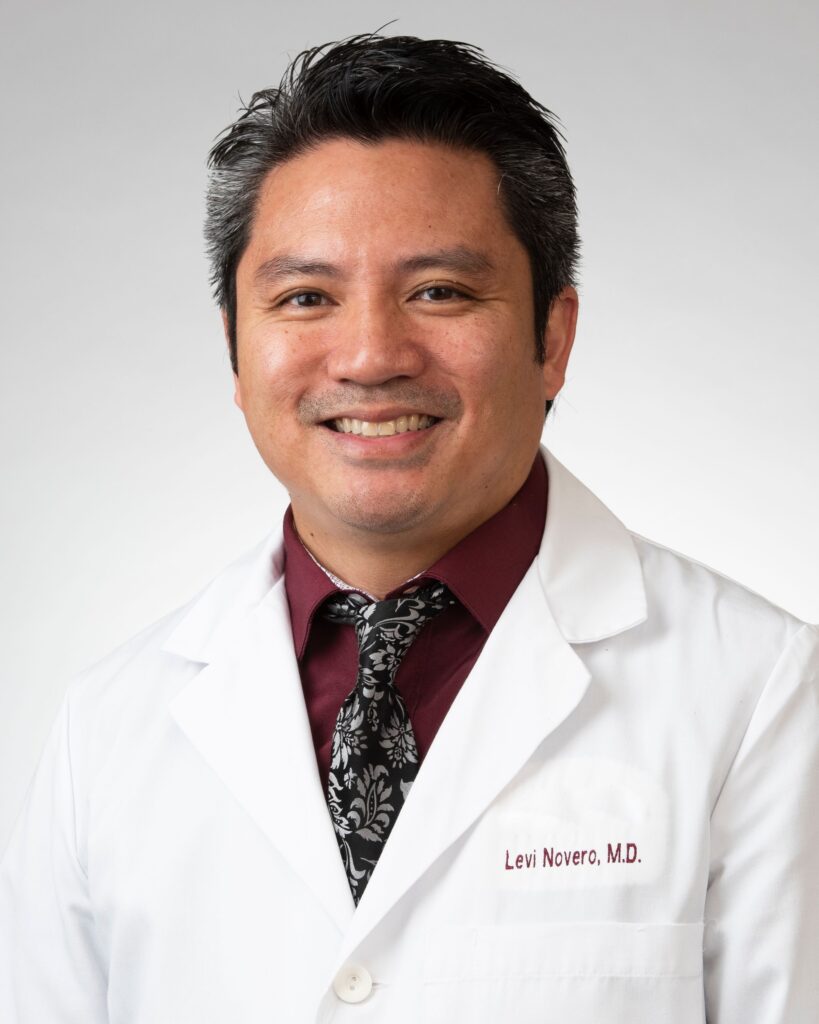
By Levi Novero, MD

Every few weeks in the news there’s another terrifying incident of a student athlete losing consciousness on the field, leaving parents and physicians wondering what underlying health condition they have. These incidents can lead to permanent injury and even death, but many of them are preventable. As athletes start to take to the field again this coming school year, parents can play an active role in injury prevention.

Symptoms and signs that serve as an alert

Sometimes an athlete’s medical incident on the field was the result of an untreated heart condition. In certain cases, these conditions have signs and symptoms coaches and parents can watch for (and tragically, sometimes not). In particular, coaches should alert the parents to any of the following symptoms, and parents should promptly report these symptoms to the pediatrician:

● Chest pain

● New-onset fatigue

● Shortness of breath

● Lack of stamina

● Heart palpitations/racing heart

● Passing out or syncope

● Feeling dizzy

● High blood pressure

● Heart murmur

Don’t wait to see how any of these symptoms progress, but instead make an appointment with the pediatrician and simply say, “I’m concerned about Johnny’s heart, because when he plays, he is short of breath.” Don’t be shy to ask for a cardiac referral.

Preventing tragedies that had no signs or symptoms

The toughest cases are those where there were missed or no warning signs. For example, heart conditions can manifest without warning, and the first major incident is the first time parents or the athlete knew there was a problem. This type of incident is what led to the deployment and widespread training of school personnel in defibrillators. Know your school and sports programs’ policy and access to these life saving devices ahead of time.

In addition, parents can investigate their own family history of heart conditions to know their student athlete’s risk for developing one on the field. Consider whether anyone in the family tree has had an unexpected death before age 50, or a history of other heart problems, such as a heart attack at a younger age as well. Talk to multiple generations, including grandparents, aunts, uncles, and other children to identify if there is a family history. If so, bring up these cases with your pediatrician or heart specialist to figure out the safest way for your student athlete to proceed through their sports career. Non-athletes may also have difficult-to-spot symptoms if they are not regularly asserting themselves.

And don’t forget about the need to hydrate

In July, a Florida law took effect that requires public and private schools to have defibrillators, but also cold immersion tubs or other means of quickly lowering the body temperature for any student athlete going through heat stress. Verify that your program has personnel that knows how to recognize the signs and symptoms of heat stress, but also be proactive in ensuring your child is staying well-hydrated and cool enough in the hot summer months.

Some commons signs of heat stroke, which can be serious, include:

● Headache or dizziness

● Excessive sweating and pale skin

● Fast breathing or pulse

● Extreme thirst

● Confusion

● High body temperature

Take immediate action to hydrate, cool, and calm your child and follow up with your pediatrician promptly.

Through each of these actions, parents can ensure the best possible outcome medically for your child to get back on the field safely.

Dr. Levi Novero is a Pediatric Cardiologist at KIDZ Medical Services in Naples, Florida.


James “Jim” Moffett has been named president of the Holy Cross Medical Group. Moffett also will serve on the Holy Cross Health Senior Leadership Team.

Most recently Moffett served as president and CEO of AdventHealth Medical Group’s Central Florida Division, where he was previously chief operating officer. During his time there, Moffett launched a team-care model resulting in improved documentation, access, quality, patient, physician and staff satisfaction, as well as reached top quartile primary care performance in diabetes, hypertension and preventive care.

Moffett earned a Bachelor of Science in Industrial Engineering from Geneva College in Pennsylvania and an MBA from the University of Scranton.