Inspired by a desire to make a meaningful difference in the lives of both patients and healthcare professionals, Alberto Garcia, MS, RN, NE-BC, serves as chief nursing officer at Memorial Hospital Miramar. With more than 20 years of nursing leadership experience spanning critical care, emergency and transplantation medicine, he brings expertise from both academic and community healthcare settings to advance patient care and evidence-based practice.

Garcia’s advice to emerging leaders is simple: remember that behind every difficult decision are patients and employees. “Success isn’t about winning – it’s about solving problems,” Garcia said. “Creating a culture where people feel valued is the win.”

He believes exceptional leaders create cultures where people feel valued, lead with integrity and transparency and invest in the growth of every team member. Looking ahead, Garcia sees flexibility and adaptability as essential to navigating an evolving workforce while continuing to deliver high-quality patient care.


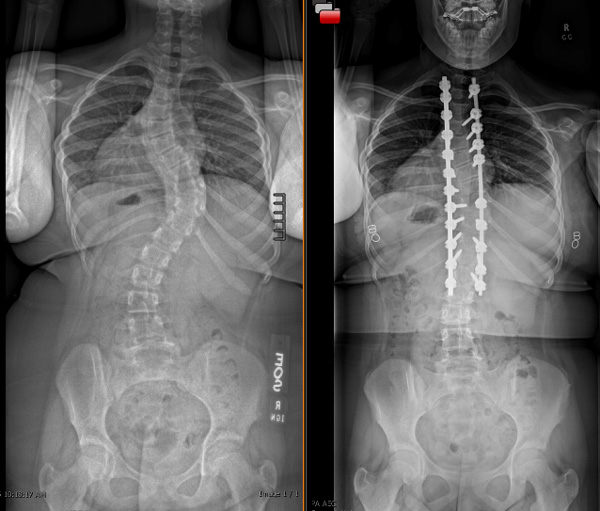
July 27 2026 – Adriana grew up watching her older sister, Ariadna, navigate the challenges of hip dysplasia and other orthopedic conditions. From special braces and custom-fitted boots to various corrective treatments, Ariadna’s medical journey was a familiar part of family life. What Adriana didn’t know was that her own health journey was about to take an unexpected turn.

During an annual physical with her pediatrician, Adriana’s mom, Yirina, was caught by surprise to learn that it was Adriana who would soon face life-altering surgery. “I am no longer worried about Ariadna,” she recalled the doctor saying. “Adriana has a serious scoliosis curve. You need to see a specialist as soon as possible.”

Faced with an unexpected diagnosis, Yirina began searching for the best possible care for her daughter. After a few recommendations and a referral from another pediatric hospital, Adriana’s parents decided to knock on the doors of Nicklaus Children’s Hospital Orthopedic, Sports Medicine & Spine Institute. The institute is a specialized destination for spine care, treating conditions ranging from scoliosis to the most complex spinal disorders, and performs more spine surgeries than any other pediatric facility in South Florida.

“Scared, nervous and anxious about this big step for my daughter, I wasn’t sure if we were making the right choice. This is a major surgery that we didn’t know what to expect,” said Yirina. “What I did know and what comforted me was the attention, the explanation of details, and the time Dr. Jaime Gomez’s team took with us. They made sure I knew what was going to happen and assured me that in his hands, the only outcome was the best one.”

After five hours of surgery, Adriana was out of the operating room, and within 24 hours she was already walking on her own.

“Adriana did very well, and her recovery progressed just as we hoped,” said Dr. Jaime Gomez, spine surgeon. “At Nicklaus Children’s Hospital, our decisions are made with one goal in mind, getting these kids back on their feet healthier and stronger. In many children, scoliosis can become more noticeable during periods of rapid growth, even when they do not have pain or other symptoms. Adriana’s curve was significant and surgery gave us the opportunity to safely straighten and stabilize her spine.”

Although Adriana never experienced pain, she notices a difference in her posture and the way her clothes fit since surgery. “I feel good, I have no pain and I’m glad we did this. The staff was very comforting, and their care and attention made me feel at home,” Adriana reflected on her experience at Nicklaus Children’s Hospital.

“I always thought it would be my sister, little did I know it would end up being me.”

Dr. Jaime Gomez is a pediatric spine surgeon who sees patients at the Nicklaus Children’s locations in Davie and Miramar. Nicklaus Children’s Hospital’s Center for Spinal Disorders, part of the Orthopedic, Sports Medicine & Spine Institute, is nationally and internationally recognized for spine care for children and teens up to age 21. The program offers comprehensive diagnosis and treatment, from observation and bracing to advanced surgical options, with access to pediatric spine specialists and care teams focused on supporting recovery and achieving the best possible outcomes.


Ashley Dabalsa, PharmD, MBA, is the pharmacy clinical and operations coordinator at Broward Health Coral Springs, where she oversees clinical pharmacy services, pharmacy operations, regulatory compliance and sterile compounding. In just two years, she advanced from pharmacy resident to pharmacy leader, demonstrating exceptional dedication to servant leadership and operational excellence.

A Lean Six Sigma Green Belt, Dabalsa has led initiatives that strengthen medication safety, improve operational efficiency and support financial stewardship while building successful teams. She is passionate about mentoring future leaders and fostering a culture of collaboration and accountability.

“I believe we are called to lead by serving others,” said Dabalsa. “True leadership is measured by how many people you empower to grow, lead and make a lasting impact.”


Anne Marie Leahy, Katherine L. Pinard at the Katherine L. Pinard Clinical Simulation Center

Gift from Katherine L. Pinard supports advanced, hands-on training to strengthen clinical excellence, workforce readiness, and patient safety 

July 30, 2026 – Jupiter Medical Center (JMC), the region’s only independent, not-for-profit hospital system, today announced a $3 million gift from Katherine L. Pinard to support its state-of-the-art Clinical Simulation Center. This investment aims to strengthen patient safety and prepare the next generation of clinicians through hands-on, real-world training.

In recognition of the gift, the space will be named the Katherine L. Pinard Clinical Simulation Center. Located within Jupiter Medical Center’s new five-story, 92-bed Tim and Jayne Donahue Patient Care Tower, the Simulation Center features realistic patient care environments modeled after the hospital’s own medical/surgical, critical care/cardiac, and obstetrics/NICU units. The center also includes a dedicated skills-based practice area, such as for blood draws, and supports hands-on training for both new and experienced clinical team members.

Across the country, leading health systems are increasingly investing in simulation centers as a strategic tool to advance workforce readiness, enhance patient safety, and incorporate emerging technologies into clinical education. This advanced level of training is most often associated with large academic medical centers and major health systems.

“As health care continues to evolve, it is vital that our teams have opportunities to practice, learn, and innovate in an environment that reflects the complexity of real patient care,” said Amit Rastogi, MD, MHCM, President and CEO of Jupiter Medical Center. “Simulations enable our clinicians to prepare for both routine and high-acuity situations, enhance communication during critical moments, and continually improve the care experience for every patient we serve. We are grateful to Katherine L. Pinard for the ability to have such an advanced resource right here on our main campus.”

The Katherine L. Pinard Clinical Simulation Center supports Jupiter Medical Center’s Novice Nurse Program, which pairs first-time nursing graduates with education teams for a full year of guided training. The program is designed to build confidence, improve clinical skills, and promote professional growth as nurses transition into practice. Additionally, the Center provides experienced team members with opportunities to refresh and expand their skills through realistic scenarios, including mock emergencies, labor and delivery simulations, neonatal care exercises, and team-based communication training.

“Philanthropy has always played a vital role in enabling Jupiter Medical Center to provide the highest quality of care to our community,” said Traci Simonsen, Chief Philanthropy Officer of Jupiter Medical Center Foundation. “Katherine L. Pinard’s generosity and vision enable us to invest in the people behind that care—our nurses, physicians, and clinical teams—by giving them access to advanced simulation technology right here on our campus. We are grateful for her dedication to promoting health care for all through this investment.”

This gift reflects the continued impact of philanthropy in advancing Jupiter Medical Center’s mission and long-term vision for its Generational Health capital campaign: to deliver the right care, at the right time, for every moment that matters. Through investments in advanced technology, expanded services, and next-generation facilities, Jupiter Medical Center continues to strengthen access to world-class care for patients and families across Palm Beach County and the Treasure Coast.

For more information about Jupiter Medical Center, visit jupitermed.com, call (561) 263-2234, or follow Jupiter Medical Center on Facebook and Instagram @jupitermedicalcenter or on ‘X’ @JupiterMedCtr.

ABOUT JUPITER MEDICAL CENTER 
Rated #1 in the region for quality, safety and patient experience, Jupiter Medical Center is the leading destination for world-class health care in Palm Beach County and across the Treasure Coast. Jupiter Medical Center’s state-of-the-artfacilities and leading-edge technologies enable its award-winning physicians to provide a comprehensive continuum of inpatient and outpatient health care services. Jupiter Medical Center’s specialty centers of excellence include:comprehensive cancer care, cardiovascular care, orthopedics, neurosciences, and women’s and children’s services. For more information about Jupiter Medical Center, please call 561-263-2234 or visit www.jupitermed.com.



On July 29, 2026, the Centers for Medicare & Medicaid Services (CMS) issued a final rule to update Medicare payment policies and rates for Inpatient Psychiatric Facilities (IPFs) under the IPF Prospective Payment System (PPS) (CMS-1847-F) for fiscal year (FY) 2027. CMS is publishing this final rule consistent with its statutory authority to update Medicare payment policies for IPFs annually.

This fact sheet discusses the provisions of the final rule, including annual updates to the prospective payment rates, the outlier threshold, the wage index, and associated impact analysis. In addition, the rule finalizes a policy effective for FY 2028 (October 1, 2027) to limit outlier payments at the facility level to no more than 20% of an IPF’s total IPF PPS payments in a year, for IPFs with at least 50 stays per year. For the IPF Quality Reporting Program, CMS is removing two measures from the program, as well as implementing a standardized IPF patient assessment instrument.

 Changes to Payments Under the IPF PPS

Updates to IPF Payment Rates 

For FY 2027, CMS is updating the IPF PPS payment rates by 2.3%, based on the 2021-based IPF market basket increase of 3.2% less a 0.9 percentage point productivity adjustment. Additionally, CMS is updating the outlier threshold so that estimated outlier payments remain at 2% of total IPF PPS payments. Total estimated payments to IPFs would increase by 2.3%, or $60 million, in FY 2027, relative to IPF payments in FY 2026.

Reform of IPF PPS Outlier Payment Policy 

The IPF PPS includes an outlier adjustment to promote access to IPF care for those patients who require expensive care and to limit the financial risk of IPFs treating unusually costly patients. Providing additional payments to IPFs for extremely costly cases strongly improves the accuracy of the IPF PPS in determining resource costs at the patient and facility level. Outlier payments are determined by comparing the estimated cost of an IPF stay to a threshold value. The outlier fixed dollar loss threshold is set each year so that estimated outlier payments equal 2% of total IPF PPS payments. In recent years, the outlier threshold has increased significantly, and commenters have expressed concerns that it is increasingly difficult to receive outlier payments for costly IPF stays.

Our analysis of IPF PPS outlier payments has shown that certain IPFs have exceptionally high reported costs and receive outlier payments on many of their claims. We note that these providers’ high overall costs are primarily driven by high routine costs (for example, labor, real estate, or overhead), which are fixed at the provider level and do not vary from one patient to another. We are finalizing the proposal to cap outlier payments at the provider level to minimize the impact of these high-cost facilities on the outlier pool. However, we are deferring the effective date of this policy until FY 2028 to provide additional time to evaluate the cost drivers identified by commenters. In addition, we are finalizing an exception to this cap policy for facilities with fewer than 50 stays per year.

Updates to the IPF Quality Reporting Program

The IPF Quality Reporting Program requires that all IPFs paid under the IPF PPS submit certain specified quality data to CMS, in a form and manner and within the timeframes that CMS prescribes. IPFs that do not submit the specified data on quality measures as required by the IPF Quality Reporting Program receive a 2-percentage-point reduction to their annual payment update. The IPF Quality Reporting Program aims to assess and improve the quality of care provided to IPF patients. By requiring IPFs to submit quality data to CMS and by CMS publicly reporting such data under the IPF Quality Reporting Program, CMS ensures that patients can make more informed decisions about their healthcare options.

In this final rule, CMS is making changes to quality measures in the IPF Quality Reporting Program. CMS is removing two measures beginning with the CY 2026 reporting period/FY 2028 payment determination: the Alcohol Use Brief Intervention Provided or Offered (SUB-2) and subset Alcohol Use Brief Intervention (SUB-2a) measure and the Tobacco Use Treatment Provided or Offered at Discharge (TOB-3) and subset Tobacco Use Treatment at Discharge (TOB-3a) measure.

CMS is also implementing a standardized IPF patient assessment instrument (IPF-PAI), as mandated by section 4125(b)(1) of the Consolidated Appropriations Act of 2023 (CAA, 2023). IPFs will have two methods to submit IPF-PAI data to CMS. IPFs can use a free CMS-developed web application called the Patient Assessment Reporting Interoperability Tool (PARIT) or can submit IPF-PAI data using Application Programming Interfaces (APIs) CMS has built from the Health Level Seven (HL7®) Fast Healthcare Interoperability Resources (FHIR®) specification. This will be the first CMS statutory quality reporting program to use the FHIR standard to support patient assessment data submission.

The final rule can be viewed at the Federal Register at https://www.federalregister.gov/d/2026-15588

Information on the Inpatient Psychiatric Facility PPS is available at: https://www.cms.gov/medicare/payment/prospective-payment-systems/inpatient-psychiatric-facility.

Information on the Inpatient Psychiatric Facility Quality Reporting Program is available at: https://www.cms.gov/medicare/quality/initiatives/hospital-quality-initiative/inpatient-psychiatric-facility-quality-reporting-ipfqr-program.