
The grants will install an interactive digital wall in the Greg & Meredith Balasco Day Hospital and support fertility preservation services for young cancer patients.

July 14, 2026 – The Tampa General Hospital Foundation has received another combined $200,000 impact grant and regional grant from Hyundai Hope on Wheels to support the academic health system’s pediatric oncology program in the fight against childhood cancer. The grants were announced Tuesday during a ceremony attended by system leadership, patients and physicians.

The impact grant will enable the Muma Children’s Hospital at TGH to install an Ouva Wall in the soon-to-be renovated Greg & Meredith Balasco Day Hospital, where pediatric oncology patients receive chemotherapy, infusions and ongoing treatment. The interactive digital wall transforms clinical spaces into immersive environments where children can play games, create art and engage in therapeutic activities through touch and movement.

The regional grant will support fertility preservation services, which provide critical financial assistance to pediatric oncology patients and families navigating the difficult decisions that accompany a cancer diagnosis.

Balasco, owner of Lakeland Hyundai, matches the grants annually through the Balasco Family Foundation.

“These grants will have a meaningful impact on children and families facing some of life’s most difficult challenges,” said Sarah Frahn, vice president of Women and Children’s Services at TGH. “By bringing innovative, interactive experiences into the Greg & Meredith Balasco Day Hospital and expanding access to fertility preservation services, we are helping support our patients’ emotional well-being today while protecting important opportunities for their future.”

Dr. Andrew Galligan, division chief of Pediatric Hematology/Oncology at USF Health, said the interactive element in the day hospital will provide a welcome distraction.

“The Ouva Wall will help transform the treatment experience for children receiving cancer care by providing opportunities for play, creativity and movement,” said Dr. Galligan. “By reducing anxiety and creating moments of joy during lengthy treatments, it supports both patients and their families.”

Hyundai Hope on Wheels helps kids fight cancer by raising awareness and funding research. Muma Children’s Hospital at TGH is at the forefront of that fight in West Central Florida. This mission is made possible in part by the ongoing support of the Hyundai Hope on Wheels.

“Advancing pediatric cancer research requires bold science and sustained commitment,” said John Guastaferro, executive director of Hyundai Hope on Wheels. “We are deeply grateful to Muma Children’s Hospital at TGH and its doctors and researchers whose dedication drives progress to the children and families who need it most.”

This is the fourth year that Tampa General has received these grants, which now total $800,000.

“We are deeply thankful to Hyundai Hope on Wheels and to Greg Balasco for helping bring these transformative resources to our pediatric cancer program,” said Frann Leppla, executive vice president of Tampa General and president of the TGH Foundation. “From creating moments of joy during treatment to supporting long-term quality of life, these grants will make a lasting difference for children and families facing cancer.”
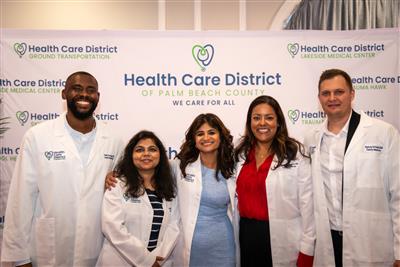


July 2026 – Four new family physicians are beginning the next chapter of their careers after graduating from our Family Medicine Residency Program at Lakeside Medical Center on June 25, 2026.

We celebrated the accomplishments of Michael Bereisha, MD; Anastasia Dihel, MD; Mahmoud Issa, MD; and Nyla Naeem, DO during a ceremony honoring our 14th graduating class.

Throughout their three years of training, the residents completed rotations in emergency medicine, critical care, women’s health, psychiatry, general surgery, inpatient and outpatient medicine, community medicine, sports medicine, cardiology, geriatrics and pediatrics. They also cared for patients at our Belle Glade Community Health Center, located alongside the hospital, where they built lasting relationships with patients and families throughout the Glades.

During the ceremony, our president and chief executive officer, Darcy J. Davis, reflected on what makes training in a rural family medicine program so meaningful.

“Family medicine is about more than diagnosing and treating patients. It’s about building trust. It’s about understanding the people and communities you serve. It’s about showing up consistently and making health care feel personal and accessible. I’m grateful for the care you’ve provided to this community and excited to see where your journeys take you next.”

Our executive vice president and chief medical officer, Belma Andrić, MD, reminded the graduates that while clinical knowledge is essential, compassion is what patients will remember most.

“You have spent the last several years learning how to treat disease. More importantly, you have learned how to care for people. Your patients will not remember every guideline you followed or every medication adjustment you made. But they will remember that you listened, that you cared and that you showed up when they needed you.”

Family medicine is a specialty devoted to providing comprehensive care for people of all ages. Throughout residency, our physicians care for patients with a wide range of health needs, many of whom have complex medical conditions and limited access to care. One of our program’s goals is to prepare physicians to practice in rural and underserved communities like the Glades. Two members of this graduating class will continue caring for patients in South Florida.

Keynote speaker Jose Hernandez, MD, FAAP a pediatrician at our West Palm Beach Community Health Center and pediatric preceptor for our residency program, reflected on how far the graduates had come while encouraging them to continue growing throughout their careers.

“Being a family medicine doctor is a noble calling. You are the front line. As you head into your independent practice, keep learning. Just because you have a diploma doesn’t mean you’re done with learning. Never stop being the curious intern who asks, ‘Why?'”

The ceremony concluded with remarks from Nergess Taheri, DO, MSBI a graduate of our Family Medicine Residency Program who now serves as program director.

“Your perseverance, resilience and commitment to caring for others has brought you to this remarkable moment. We’re proud of all you have achieved and excited to see the difference you’ll make in the future.”

One of the evening’s most meaningful traditions was the White Coat Ceremony, when the graduates welcomed the program’s five incoming residents by presenting each with a white coat, symbolizing the beginning of their own journeys in family medicine.

Supported by a grant from the Florida Agency for Health Care Administration, our Family Medicine Residency Program trains up to 15 residents and partners with Nova Southeastern University and the Florida Department of Health in Palm Beach County. The program earned accreditation from the Accreditation Council for Graduate Medical Education in 2020, demonstrating it meets the national quality standards for graduate medical education.

To learn more about our Family Medicine Residency Program, visit https://www.hcdpbc.org/for-patients/hospital/family-medicine-residency.


BY: Brianna DiPilato

PHOENIX – JULY 14, 2026- — Researchers at Mayo Clinic, in collaboration with the Terasaki Institute for Biomedical Innovation, have developed a real-time monitoring system designed to give transplant teams a more complete picture of a donor liver’s health during machine perfusion. Published in Nature Communications, the study represents an important step toward more accurate evaluation of donor livers, laying the groundwork for future advances in organ preservation and transplantation.

During machine perfusion, a donor liver is connected to a device that pumps oxygen-rich fluid through the organ while outside the body.

Portrait of Dr. Michelle Nguyen
Michelle Nguyen, M.D.

“Machine perfusion is opening the door to a future where we don’t just evaluate organs, we treat them and even improve them before transplant,” says Michelle Nguyen, M.D., a transplant surgeon at Mayo Clinic in Arizona and co-corresponding author of the study. “But to get there, we first need better ways to understand how an organ is performing in real time. That’s what this technology is built to provide.”

Today’s monitoring methods rely on manually collecting fluid samples from the organ every 30 to 60 minutes, testing them on point-of-care devices or sending them to a laboratory for analysis. Those periodic snapshots may miss important changes occurring between samples. Detecting biochemical changes or signs that organ health is declining early allows clinicians and perfusionists to intervene before permanent damage occurs.

To address this challenge, researchers developed a new wireless sensor platform that continuously measures glucose, lactate and pH in both the perfusion fluid and bile; streaming results to the care team in real time.

In the study, the sensor’s measurements closely matched standard laboratory testing while also detecting brief biochemical changes between routine sampling intervals. The findings suggest that real-time monitoring of bile, in addition to perfusion fluid, may provide valuable information about the health of the donated liver that current approaches may be unable to detect.

“Every organ donated is incredibly valuable,” Dr. Nguyen says. “By giving transplant teams a clearer understanding of an organ’s health, we’re working toward a future where more donated livers can safely reach the patients who need them most.”

Researchers note that larger studies will be needed to further evaluate the technology and its potential to improve donor organ assessment. Looking ahead, the team is working to expand the sensor platform to capture additional markers of organ health, creating a more comprehensive assessment panel. Researchers also plan to adapt the technology for other organs, including the kidney, heart and lung.

The study was co-led by Dr. Nguyen and Yangzhi Zhu, Ph.D., of the Terasaki Institute for Biomedical Innovation.

For a complete list of authors and disclosures, review the study.

About Mayo Clinic
Mayo Clinic is a nonprofit organization committed to innovation in clinical practice, education and research, and providing compassion, expertise and answers to everyone who needs healing. Visit the Mayo Clinic News Network for additional Mayo Clinic news.

About Mayo Clinic Transplant Center
Mayo Clinic Transplant Center is one of the largest and most comprehensive transplant programs in the world. With programs in Arizona, Florida and Minnesota, Mayo Clinic provides seamless, coordinated care across adult heart, lung, liver, kidney and pancreas transplantation. Guided by a commitment to innovation, research and education, Mayo Clinic Transplant Center delivers world-leading outcomes, compassionate patient care and advances that shape the future of transplantation worldwide.


Deployment across Mayo Clinic pathology practices integrates AI-enabled digital pathology with historical pathology images and clinical data in a unified workflow.

BY: Tom Millikin

JULY 15, 2026 – — Mayo Clinic and Techcyte today announced the implementation of Anatomic Pathology (AP) technology, a next-generation digital pathology platform developed through a co-development and intellectual property licensing agreement between the two organizations. This collaboration expands adoption of Mayo Clinic Digital Pathology innovations while advancing development of a next-generation digital pathology platform through a connected artificial intelligence (AI)-driven ecosystem.

Techcyte Fusion AP is a digital pathology solution that unifies whole-slide image (WSI) viewing, case information, workflow tools and AI into a single platform to support anatomic pathology processes. The rollout of Fusion AP builds on a multiyear collaboration between Mayo Clinic and Techcyte to advance digital pathology and laboratory medicine through technologies that support patients, pathologists, laboratories and researchers. Through the agreement, Techcyte has licensed Mayo Clinic-developed intellectual property, enabling the organizations to further develop and broaden access to innovations originating from Mayo Clinic’s digital pathology program.

Every advancement in digital pathology is ultimately intended to improve the experience of the patient. Bringing together a patient’s pathology images, clinical history and relevant case information into a single, integrated workflow helps pathologists access the information they need more efficiently to support timely, informed diagnostic decisions. For patients, this means pathology teams can spend less time navigating technology and more time focused on delivering the expert, coordinated care that is central to Mayo Clinic’s practice.

About Fusion

Fusion is an AI-driven platform shaped by input from Mayo Clinic pathologists and laboratory specialists to support the needs of enterprise anatomic and clinical pathology workflows. The Fusion AP platform streamlines complex pathology operations by bringing together WSI viewing, case information, workflow tools and integrated data sources within a clean, ultrafast, high-performance interface, all on one platform.

“The implementation of Fusion AP, developed through our collaboration with Mayo Clinic, is an important milestone in our shared work to advance digital pathology,” says Ben Cahoon, CEO of Techcyte. “Fusion AP brings AI into the pathology workflow in a way that supports efficiency for the pathologists doing the work.”

The use of the Fusion AP technology enables enterprise-wide access to over 22.6 million current and historical WSIs, providing pathologists real-time access to Mayo Clinic’s archive. Fusion AP is also integrated with Mayo Clinic’s electronic health record and Laboratory Information Systems, bringing relevant patient history, lab results, case information and associated WSIs into a single environment to support pathologist review.

“This implementation reflects years of collaboration between our pathology, laboratory and technology teams to co-develop a platform around the way pathologists practice,” says Eric Hsi, M.D., chair of the Department of Laboratory Medicine and Pathology at Mayo Clinic in Rochester. “By bringing together pathology images, clinical information and AI-enabled tools into a unified digital workflow, we’re helping create a more efficient, connected environment that supports high-quality patient care today.”

“Mayo Clinic’s work in digital pathology is guided by the needs of patients and shaped by the realities of clinical practice,” says Jim Rogers, CEO of Mayo Clinic Digital Pathology. “Our collaboration reflects a shared focus on building clinically relevant digital pathology solutions that fit into day-to-day pathology workflows.”

Throughout this strategic collaboration, Mayo Clinic and Techcyte will continue to co-develop technologies that enable pathologists to access and deploy AI tools within their existing workflows. The connected ecosystem is intended to support AI applications developed by Techcyte, Mayo Clinic and third-party innovators, creating a flexible framework for advancing diagnostic capabilities across pathology subspecialties.

About Mayo Clinic 
Mayo Clinic is a nonprofit organization committed to innovation in clinical practice, education and research, and providing compassion, expertise and answers to everyone who needs healing. Visit the Mayo Clinic News Network for additional Mayo Clinic news.

About Techcyte
Techcyte is transforming the practice of pathology through a unified, AI-powered digital platform that streamlines complex workflows, integrates with core lab systems, and enhances communication across the lab.

By partnering with leading laboratories, scanner manufacturers, diagnostic hardware providers, and AI developers, we deliver a unified digital pathology platform to labs and clinics around the world, furthering our mission to positively impact the health of humans, animals, and the environment.

Visit techcyte.com for more information.

Techcyte’s anatomic and clinical pathology platform is for Research Use Only in the United States.


July 14, 2026 – Advanced heart failure and transplant cardiologist Sanjeev Kumar Gulati, M.D., FACC, has joined Baptist Health Heart & Vascular Care, and will serve as executive deputy director and system chief of cardiovascular medicine. Dr. Gulati has a long and successful track record of leading large healthcare systems, bringing more than two decades of leadership and clinical experience in advanced heart failure, heart transplantation and mechanical circulatory support.

Prior to joining Baptist Health, Dr. Gulati served as chief of adult cardiology at Sanger Heart & Vascular Institute, part of Advocate Health. During his tenure, he helped expand cardiovascular services across the Southeast, developed innovative virtual cardiology and population health programs and implemented team-based care models focused on improving patient outcomes and operational efficiency, leading the growth and transformation of one of the largest cardiovascular programs in the country.

“We are ecstatic to welcome Dr. Gulati to Baptist Health Heart & Vascular Care,” said Tom C. Nguyen, M.D., system chief executive of Baptist Health Heart & Vascular Care and chief medical executive of Baptist Health Miami Cardiac & Vascular Institute, as well as director of minimally invasive surgery and the Barry T. Katzen Endowed Chair at Baptist Health Miami Cardiac & Vascular Institute, and chair and professor of the Department of Cardiovascular Sciences at Florida International University Herbert Wertheim College of Medicine. “Not only is Dr. Gulati a charismatic and inspirational leader, but he is beloved by colleagues from across the country and by those around him. We are excited about this transformative recruit. His colleagues admire him, look up to him and follow his lead.”

Throughout his career, Dr. Gulati has played a key role in developing specialty cardiovascular programs, including advanced imaging, cardiac critical care, heart failure and cardiac transplantation. He also led initiatives focused on reducing hospital readmissions, improving remote patient management and expanding access to cardiovascular expertise in underserved and rural communities.

“Dr. Gulati’s leadership reflects a deep commitment to innovation, collaboration and delivering high-quality cardiovascular care across complex healthcare systems,” said Ashford Denman, vice president of operations at Baptist Health Heart & Vascular Care. “His extensive experience in cardiovascular program development will be instrumental as we continue growing our cardiovascular services and enhancing patient access to specialized care.”

Dr. Gulati earned his medical degree from the University of Pennsylvania after graduating summa cum laude from George Washington University with a bachelor’s degree in electrical engineering. He completed his internal medicine residency at Johns Hopkins Hospital, where he also completed fellowships in cardiology and advanced heart failure as well as in transplant cardiology.

Grounded in a commitment to compassionate, patient-centric care, Dr. Gulati champions a dynamic collaboration between physicians, patients, and families as the cornerstone of clinical excellence. He is dedicated to developing highly individualized treatment plans in order to optimize clinical outcomes by empowering patients to navigate complex cardiovascular conditions through thorough clinical education, collaborative advocacy, and comprehensive support.

Dr. Gulati speaks English. He will see patients at 8950 North Kendall Dr., Suite 507W, Miami, 33176. To schedule an appointment, call 786-204-4204.

About Baptist Health
Baptist Health is the largest healthcare organization in the region, with 12 hospitals, more than 29,000 employees, 4,500 physicians and 200 outpatient centers, urgent care facilities and physician practices spanning Miami-Dade, Monroe, Broward and Palm Beach counties. Baptist Health has internationally renowned institutes specializing in cancer care, brain and spine care, heart and vascular care and orthopedic care. In addition, it includes Baptist Health Medical Group, Baptist Health Quality Network and the Baptist Health PineApp, a virtual health platform. Baptist Health is an academic and clinical affiliate of Florida International University Herbert Wertheim College of Medicine. A not-for-profit organization supported by philanthropy and committed to its charitable mission of medical excellence, Baptist Health has been recognized by Fortune as one of the 100 Best Companies to Work For in America and is the most awarded healthcare system in South Florida by U.S. News & World Report. For more information, visit BaptistHealth.net/Newsroom and connect with us on FacebookX (formerly Twitter), InstagramTikTok and LinkedIn.