
ASC CEO Patricia (Pat) Murphy will continue to serve as CEO of the combined organization

July 8, 2026 – Ann Storck Center (ASC) is proud to announce it has acquired Victory Living Programs (VLP), expanding its comprehensive network of services for individuals with intellectual and developmental disabilities across South Florida. Building on more than a year of successful collaboration, the acquisition brings VLP’s respected supported living, employment, community inclusion, and recreational programs into the ASC family, strengthening resources, enhancing opportunities, and ensuring long-term sustainability for the individuals and families both organizations proudly serve.

The acquisition follows more than 13 months of productive collaboration under a formal management agreement established in May 2025, through which ASC provided leadership, guidance and operational oversight to VLP. This partnership has proven to be both productive and inspiring, demonstrating the power of collaboration and a shared commitment to those served. Together, the organizations have built a strong foundation for long-term success. ASC CEO Patricia (Pat) Murphy will continue to serve as CEO of the combined organization.

As part of the acquisition, ASC recently acquired a new 3,473-square-foot facility located at 6090 Boulevard of Champions in North Lauderdale. The property will serve as a second location for the Adult Day Training Program when it opens in Fall 2026, expanding the organization’s capacity to serve more adults with disabilities throughout Broward County. A waiting list is now open for interested families.

This acquisition adds VLP’s supported living and employment programs to ASC’s service continuum and expands its capacity for adult day programming. ASC now spans the full spectrum of care and community integration, from early childhood learning and therapeutic services through adult day training, supported living, and employment support. Services across all locations will continue without interruption. Each program VLP has built will maintain its essential character while gaining access to ASC’s operational infrastructure and institutional depth.

The acquisition reinforces ASC’s position as a leading provider of services for individuals with intellectual and developmental disabilities in South Florida, built not on scale, but on the quality of its programs, the strength of its community relationships, and the lasting impact it delivers across every life it touches.

“This acquisition reflects the kind of growth that happens when mission, values and purpose are truly aligned,” said Murphy. “Victory Living Program has built something meaningful over the past 54 years: deep community ties, a dedicated staff, and a genuine commitment to those they serve. Together, we are expanding our programming to build a stronger, more sustainable future and ensure long-term stability for every individual and family we serve.”

“What became clear throughout this collaboration is that Ann Storck Center shares our organization’s commitment to the people we support,” said Deborah Day, Chairperson of the Board of Victory Living Program, that has now transitioned onto the ASC Board. “The VLP Board’s confidence in this unification was grounded in the trust built over the past year and a shared belief that joining Ann Storck Center provides Victory Living Programs with the resources, infrastructure, and community to continue growing and serving with the excellence our families deserve.”

ASC – a Fort Lauderdale-based private nonprofit organization dedicated to enriching the lives of children and adults with intellectual and developmental disabilities through an array of critical care, learning, and ability-focused programs – has served the South Florida community for more than 70 years. Originally established when pediatric nurse Ann Storck retired to South Florida to open her heart and home to a handful of marginalized children with developmental disabilities. Four years later, she opened the Pediatric Care Center to serve 55 children, which evolved into Ann Storck Center in 1981.

Today, ASC accommodates 96 residents in 10 homes and serves more than 300 clients daily through 14 programs over 11 locations with an array of critical care, learning, and ability-focused programs. The Center operates the All Heart Learning and Ability Center, the Hi Ability innovation therapy program, adult day training program, two intermediate care facilities offering specialized residential services, and four community-embedded group homes that support a more independent lifestyle. The Center’s expert services support complex individuals, working with their intellectual and physical strengths to promote personal growth in skills, creativity and independence.

VLP has been a valued presence in the South Florida community for 54 years. Founded in 1974 as Victory Villas, Inc. by Gloria Vaden, a newspaper editor and community activist who sought a more independent way of life for her son, the organization earned its 501(c)(3) status in 1975 and received state recognition and funding in 1977. Over the past five decades, VLP evolved from its group-home origins into Victory Living Programs, Inc., expanding toward a more inclusive, community-integrated model of care. For more than 25 years, former Executive Director Bobbi Wigand guided the organization, helping build the foundation.

VLP’s programs include a Supported Living program providing individualized coaching in budgeting, meal planning, household management, transportation, and social skills, assisting individuals with intellectual, developmental, and learning disabilities in living in their own homes. Its employment services include Supported Employment Phase I, covering job search support, interview preparation, and on-the-job training, as well as Supported Employment Phase II, which delivers long-term follow-along support beyond the 150th day of employment. VLP also offers a Community Inclusion/Adult Day Training program with instruction in cooking, gardening, crafts, computer skills, music, and volunteer engagement, along with a Social and Recreational Program that includes Special Olympics participation, cultural outings, and community events.

For more information or to join the waiting list, please email info@annstorckcenter.org.

About Ann Storck Center: 

Ann Storck Center (ASC) is a 501(c)(3) nonprofit organization dedicated to enriching the lives of children and adults with intellectual and developmental disabilities through an array of critical care, learning and ability focused programs. ASC has been serving the community for more than 70 years, originally known as the Pediatric Care Center, then in 1981 becoming ASC. Today, ASC accommodates over 300 individuals on eleven separate sites including a school/therapy center, adult day training program, two intermediate care facilities offering specialized residential services, as well as four group homes embedded in the community offering a more independent lifestyle. For more information, visit annstorckcenter.org/, or on social media visit

facebook.com/annstorckcenter, instagram.com/annstorckcenter/, twitter.com/annstorckcenter.

About Victory Living Programs: 

Victory Living Programs provides individualized services and opportunities to persons with disabilities so that they may experience life to its fullest and reach their highest level of independence. Victory Living Programs has created independent living environments for thousands of people with disabilities. Victory Living offers premier supported independent living programs that place clients in their own individual, apartments. In addition to the top-tier supported independent living programs, Victory Living also offers an extensive array of programming to assist clients with securing and maintaining employment, learning new skills, volunteering in the community and socializing with their peers – all of which make it possible to promote independence and transform the lives of people with disabilities. For more information, visit https://victoryliving.org/.
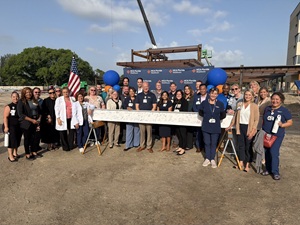


July 8, 2026 HCA Florida Palms West Hospital celebrated a major milestone in its expansion project with the placement of the final structural beam atop its new patient building. The ceremonial “topping out” marks the completion of the building’s structural framework and reflects the hospital’s continued investment in expanding access to high-quality healthcare for western Palm Beach County.

Before the beam was lifted into place, hospital colleagues, physicians, leaders and construction partners signed it, recognizing the teamwork and shared commitment that have made the project possible.

The new patient building will add 42 private patient beds, expanding the hospital’s capacity to care for more patients and meet the evolving healthcare needs of western Palm Beach County.

“This milestone represents another step in investing in the infrastructure needed to serve our growing community,” said Cory Mead, chief executive officer of HCA Florida Palms West Hospital. “By expanding our capacity, we’re ensuring more patients and families have access to advanced care close to home for generations to come.”

Construction is expected to be completed next spring.


About HCA Florida Palms West Hospital
HCA Florida Palms West Hospital is a 206-bed full-service, acute care hospital specializing in emergency, pediatric, intensive care, orthopedic and spine care, maternity and level III neonatal care services, and minimally-invasive and robotic surgery. With more than 1,200 colleagues and 945 medical staff, we care for more than 14,000 admitted patients and more than 62,000 emergency room patients annually. HCA Florida Palms West Hospital is home to the only dedicated Women’s and Children’s Center in the western Palm Beach County community.


About HCA Florida Healthcare

HCA Florida Healthcare, a part of HCA Healthcare, is one of Florida’s leading healthcare networks. Its 11,200 physicians and 80,000 colleagues work together to deliver evidence-based, collaborative care through nearly 12.8 million patient encounters annually. With more than 670 connected care sites—including hospitals, physician practices, urgent care centers and freestanding emergency rooms—across the state, HCA Florida Healthcare helps expand access to the specialized care patients need. HCA Florida Healthcare hospitals are annually recognized for excellence in patient experience and clinical outcomes, including three facilities ranked in the top 2% nationally for overall clinical excellence. A leader in healthcare education, HCA Florida Healthcare supports the next generation of healthcare workers through its 153 graduate medical education programs across 29 hospitals. In 2025, the network provided more than $1.1 billion in uncompensated care and contributed more than $3.5 million to community organizations across the state. Visit  HCAFloridaHealthcare.com.


JULY 2 2026 – CHICAGO — The American Medical Association (AMA) is making the most significant update to maternity care coding in decades to reflect how pregnancy care is delivered and improve the data needed to advance maternal health.

The revised Current Procedural Terminology (CPT®) codes replace the decades-old global maternity care bundle with a reporting framework that captures four distinct phases of care—antepartum care, labor management, delivery, and postpartum care. The changes will provide welcome transparency for patients and better reflect modern obstetric practice and provide more meaningful clinical information to support quality improvement, maternal health research, and future payment models. Importantly, it will not increase patient cost-sharing.

The AMA has been working to improve health in the United States, which has the highest maternal mortality rate among high-income nations. The current coding system provides insufficient insight for physicians and researchers looking to reduce and prevent rising rates of maternal mortality and serious or near-fatal maternal morbidity in the United States. The new maternity codes will help with much needed data to address the crisis.

The revisions were developed over nearly two years by a multidisciplinary workgroup convened by the CPT Editorial Panel, bringing together practicing obstetricians, family physicians, certified nurse midwives, and payers. The changes are supported by the American College of Obstetricians and Gynecologists and the American Academy of Family Physicians, whose members provide the majority of maternity care in the United States.

For decades, maternity care has largely been reported through a single code representing approximately ten months of care. This approach fails to capture modern obstetric care where patients often receive care from multiple physicians and care teams. The new coding system will support a patient-centered approach with information about the specific services each pregnant woman needs instead of one-size-fits-all.

For the first time, physicians, researchers, and health systems will be able to analyze each phase of maternity care separately, providing a clearer picture of where complications arise and where quality improvement efforts can have the greatest impact.

“Physicians cannot improve what they cannot measure. These CPT revisions give physicians, researchers, and policymakers a clearer understanding of the care mothers receive throughout pregnancy and after delivery, helping identify opportunities to improve quality, strengthen accountability, and improve outcomes for mothers and babies,” said AMA President Willie Underwood III, MD, MSc, MPH.

An analysis conducted using data from more than 650 physicians and certified nurse midwives, together with clinical and payer data, found that the revised coding framework will not increase costs compared with the existing global maternity care codes.

The revised maternity care CPT codes take effect Jan. 1, 2027, giving physicians, health systems, payers, and technology vendors time to prepare for implementation. The AMA is working closely with physicians, the Centers for Medicare & Medicaid Services, payers, and electronic health record vendors to support a successful transition.

“Better information leads to better care,” Dr. Underwood said. “Modernizing how maternity care is reported gives physicians a clearer picture of every stage of pregnancy and postpartum care, helping physicians improve outcomes for mothers and babies and laying a stronger foundation for maternal health research and quality improvement.”


JULY 6 2026 – The AHA today sent a letter to the Office of the United States Trade Representative to ask that medications, medical devices and other healthcare equipment and supplies be exempted from proposed duties on goods from other nations. While “America’s hospitals and health systems support the administration’s goal of strengthening domestic manufacturing for drugs, medical devices, PPE and other essential medical supplies,” the AHA noted, “the U.S. healthcare system relies significantly on international sources for many drugs, devices, supplies, equipment and other products needed to both care for patients and protect our healthcare workers.”

LETTER:

July 6, 2026

Ms. Jennifer Thornton
General Counsel
Office of the United States Trade Representative
600 17th St., N.W.
Washington, D.C. 20508

RE: Notice of Determinations and Request for Comments Concerning Actions in Section 301 Investigations of Acts, Policies, and Practices of Various Economies Related to the Failure To Impose and Effectively Enforce a Prohibition on the Importation of Goods Produced With Forced Labor (USTR—2026—0265, USTR—2026—0266), June 5, 2026

Dear Ms. Thornton:

On behalf of our nearly 5,000 member hospitals, health systems and other healthcare organizations, our clinician partners — including more than 270,000 affiliated physicians, 2 million nurses and other caregivers — and the 43,000 healthcare leaders who belong to our professional membership groups, the American Hospital Association (AHA) appreciates the opportunity to comment on the Office of the Trade Representative’s proposed duties on certain economies under section 301 of the Trade Act of 1974.

The AHA asks the administration to consider granting exceptions for the vital medications, medical devices, equipment and supplies, personal protective equipment (PPE), and other products essential to caring for patients in America’s hospitals, clinics and other settings. We believe such exceptions are important for most goods used in hospitals, and are especially critical for low-margin, high-volume goods (e.g., those that are difficult to produce sustainably using existing domestic capacity).

America’s hospitals and health systems strongly support the administration’s goal of strengthening domestic manufacturing for drugs, medical devices, PPE and other essential medical supplies. Reducing trade practices that confer an unfair advantage to other nations is a critical component of achieving this goal. Hospitals also strongly support efforts to eliminate forced labor from their supply chains and have engaged in important work over the years with their supply chain partners to reduce the prevalence of such goods. At the same time, building domestic manufacturing capacity is a complex, years-long process entailing significant logistical complexity and resources for manufacturers, distributors and purchasers such as hospitals and health systems. In the meantime, patients’ lives depend on the ready availability of medications, medical devices, equipment and supplies, PPE, and countless other products necessary to deliver safe and effective care. We are concerned that broad tariffs on these critical goods — and any retaliatory action from the countries on which tariffs are imposed — could inadvertently disrupt the availability of diagnostic and treatment tools essential to delivering high quality, safe and effective care.

Despite ongoing efforts to build the domestic supply chain, the U.S. healthcare system relies significantly on international sources for many drugs, devices, supplies, equipment and other products needed to both care for patients and protect our healthcare workers. According to an AHA analysis of Census Bureau data, the U.S. imported over $75 billion in medical devices and supplies in 2024 alone. These imports include many low-margin, high-use essentials in hospital settings. In the case of medical devices, some are used only once to protect patients from infection, such as single-use blood pressure cuffs, stethoscope covers and sterile drapes. Others are small devices used ubiquitously in hospitals, such as surgical and anesthesia instruments, cautery pencils, needles, syringes and pulse oximeters. The low-margin nature of these products makes them difficult to produce sustainably within the U.S. At the same time, disruption in the availability of these devices would curtail hospitals’ ability to perform life-saving surgeries and keep patients safe from contagion, as well as hinder providers’ ability to effectively diagnose, monitor and treat patients.

The degree of dependence on international sources also varies by type of product. According to the Food and Drug Administration, about 49% of medical devices used in the U.S. are imported, while another recent analysis showed that nearly 70% of medical devices marketed in the U.S. are manufactured exclusively overseas.1,2 An estimated 30% of the medical technology market in the U.S. is imported, while much higher percentages of PPE are sourced internationally.3,4 In 2023, Chinese manufacturers provided the majority of the N95 and other respirators used in healthcare, including one-third of the disposable face masks, two-thirds of the nondisposable face masks and 94% of the plastic gloves used.5 Disruptions to the availability of this type of essential equipment would put both patients and healthcare workers at risk.

The AHA also continues to urge the administration to preserve the Nairobi Protocol. This policy helps ensure access to imported medical devices that deliver better outcomes and a higher quality of life for millions of Americans with chronic conditions and disabilities.  Hospitals rely on pacemakers and insulin pumps, among other devices that have qualified for Nairobi Protocol exemptions, to treat patients with heart conditions and diabetes. They also provide patients with prosthetic limbs to restore function to patients with mobility and physical impairments and use cochlear implants for patients with permanent or chronic hearing loss. The duty-free treatment available for qualifying products is vital for ensuring affordable access to these devices for patients and their families.

Lastly, the AHA is concerned about the potential for tariffs to raise the costs of delivering care in hospitals and health systems. A recent survey found that 82% of healthcare experts expect tariff-related expenses to increase hospital costs by at least 15%, and 90% of supply chain professionals expect procurement disruptions.6 Given that hospital payments are set by government and private payer contracts in advance and cannot be easily adjusted to account for expense increases, the costs would be borne by hospitals directly. As underscored by the AHA’s recent “Costs of Caring” report, such cost increases could further compound the broader financial headwinds challenging hospitals’ ability to provide care to patients and communities.7

Thank you for the opportunity to provide feedback on this notice. The AHA welcomes the opportunity to discuss with your team ways to advance the administration’s goals while preserving access to vital medications, medical devices, equipment and supplies, PPE, and other products that help hospitals deliver on their mission of healing and hope. Please contact me if you have questions at ademehin@aha.org.

Sincerely,

/s/

Akinluwa (Akin) A. Demehin
Vice President
Quality and Safety Policy

__________

1 https://www.fda.gov/international-programs/fda-globalization
2 https://www.medicaldevice-network.com/analyst-comment/trump-tariffs-us-medical-device-market/?cf-view
https://www.advamed.org/wp-content/uploads/2025/07/7.16.25-Medtech-manufacturing-fact-sheet.pdf
4 https://www.healthcare-brew.com/stories/2025/08/12/pandemic-efforts-us-mostly-imports-ppe
5 AdvaMed presentation, 2023
6 https://www.beckershospitalreview.com/supply-chain/hospital-finance-supply-leaders-predict-15-increase-in-tariff-related-costs/
7 https://www.aha.org/costsofcaring


JULY 6 2026 – The Substance Abuse and Mental Health Services Administration (SAMHSA), a division within the U.S. Department of Health and Human Services (HHS), today announced more than $281 million in funding opportunities for 15 grant programs.

The investments will advance President Trump’s Great American Recovery Initiative by expanding access to a wide range of behavioral health services, including substance use disorder treatment, overdose prevention and response, mental health and suicide prevention, trauma-informed care, integrated care, recovery supports, first responder training, privacy education and workforce development.

“President Trump’s Great American Recovery Initiative is putting recovery into action,” said HHS Secretary Robert F. Kennedy, Jr. “We are investing more than $281 million through 15 grant programs to expand treatment, strengthen recovery services, prevent overdose, and equip communities with the tools they need to save lives, restore families, and Make America Healthy Again.”

“These funding opportunities reflect SAMHSA’s commitment to addressing the full continuum of behavioral health needs — from preventing substance use and suicide to expanding mental health services, trauma-informed care, addiction treatment, reversing overdoses, and recovery support,” said SAMHSA Principal Deputy Assistant Secretary Christopher D. Carroll. “By investing in evidence-based programs and community partnerships, we can help save lives, improve outcomes, and strengthen the health and well-being of people across the country.”

The opportunities announced today support communities addressing trauma, mental illness, substance use prevention, addiction treatment, overdose prevention and response, and suicide prevention:

  • $68.2 million for Medication-Assisted Treatment – Prescription Drug and Opioid Addiction grants that expand access to medications for opioid use disorder, increase availability of treatment and recovery for individuals with opioid use disorder, and reduce illicit opioid use and prescription opioid misuse and overdose.
  • $55.7 million for Project AWARE (Advancing Wellness and Resiliency in Education) grants that support the development of sustainable infrastructures for school-based mental health programs and services.
  • $40.6 million for National Child Traumatic Stress Initiative – Community Treatment and Service Centers-III grants that create and operate Community Treatment and Service Centers to increase access to and deliver effective trauma treatment and services for children and youth who have been impacted by traumatic events.
  • $34.7 million for First Responders-Comprehensive Addiction and Recovery Act grants that train first responders and communities in administering and distributing FDA-approved opioid overdose reversal medications.
  • $22 million for Mental Health Awareness Training grants that facilitate the implementation of mental health awareness and literacy training.
  • $13.7 million for Promoting Integration of Primary Behavioral Healthcare – States grants that promote full integration and collaboration in clinical practices between physical and behavioral health care.
  • $11 million for Preventing Drug Overdoses: Community Prevention and Response grants that support the development and implementation of a community-wide prevention program to reduce drug overdose deaths by expanding access to FDA-approved opioid overdose reversal medications.
  • $10.5 million for Treatment, Recovery and Workforce Support grants that support individuals in substance use disorder (SUD) or co-occurring disorder (COD) treatment and recovery to live independently and participate in the workforce.
  • $8.8 million for Garrett Lee Smith Campus Suicide Prevention grants that support a comprehensive public health and evidence-based approach that enhances behavioral health services for all college students, prevents and reduces suicide and mental and substance use disorders, promotes help-seeking behavior and reduces stigma, and improves the identification and treatment of at-risk college students so they can successfully complete their studies.
  • $6 million for Emergency Department Alternatives to Opioids programs that establish and implement practices which will help organizations develop alternatives to pharmacological opioid interventions for pain, reduce the potential harmful consequences of opioid use for pain care in hospitals and emergency departments, thereby promoting safer pain treatment and reducing the risk of future opioid misuse and possible opioid overdose.
  • $4.2 million for Assertive Community Treatment grants that establish or expand ACT programs for transition-aged youth (age 18-25), adults, and older adults with a serious mental illness (SMI) including individuals with SMI who are experiencing homelessness or are at imminent risk of homelessness.
  • $1.8 million for Statewide Family Network grants that enhance the capacity of statewide, mental health family-controlled organizations to support, train, and mentor family members/primary caregivers.
  • $1.5 million for Recovery Community Services grants that strengthen recovery communities by expanding access to recovery support services, including peer recovery support services, for individuals living with SUD and COD, including those in recovery.
  • $1.5 million for Recovery Community Services Program – Statewide Network grants that strengthen recovery organizations, their statewide network of recovery partners, and the specialty and primary health care systems in the delivery of Recovery Support Services.
  • $1 million for the Center of Excellence for Protected Health Information Related to Behavioral Health that will develop and disseminate training, technical assistance, and educational resources for health care practitioners, families, individuals, states, and communities on federal privacy statutes and regulations as they relate to behavioral health data.

President Trump’s Great American Recovery Initiative, co-chaired by Secretary Kennedy and White House Senior Advisor Kathryn Burgum, is a bold new national response to the chronic disease of addiction that will create stronger coordination across government, the healthcare sector, faith communities, and the private sector in order to save lives, restore families, and strengthen our communities.

If you or someone you know is struggling or in crisis, help is available. Call or text 988 or chat at 988lifeline.org. To locate a treatment facility or provider, visit FindTreatment.gov.