August 17, 2026  Baptist Health Foundation announced today that it has received a $1 million gift from Earl and Christy Powell to support the Stem Cell Therapy Fund at Baptist Health Herbert Wertheim Cancer Institute and the Center for Spine Care at Baptist Health Miami Neuroscience Institute.

The gift, made in honor of Guenther Koehne, M.D., Ph.D., deputy director and chief of blood and marrow transplant and hematologic oncology with Baptist Health Herbert Wertheim Cancer Institute, and Raul Vasquez-Castellanos, M.D., director of complex spine surgery at Baptist Health Miami Neuroscience Institute, will be equally allocated to advance the physicians’ research initiatives. In tribute to their generosity, the Powells will receive naming recognition to be unveiled at a later date.

“Earl and Christy Powell have demonstrated extraordinary vision and generosity, and we are deeply grateful for their support,” said Alex Villoch, CEO of Baptist Health Foundation. “Philanthropy gives our physicians and researchers the flexibility to pursue bold ideas, explore promising new therapies and accelerate discoveries that might not otherwise be possible. The Powells’ investment reflects a profound belief in the power of innovation to transform healthcare and improve lives.”

As principal investigator on multiple investigator-initiated trials, Dr. Guenther Koehne has built a portfolio of studies incorporating adoptive cell therapy following allogeneic transplantation for patients with leukemia, MDS, high-risk multiple myeloma and plasma cell leukemia. His current research is focused on overcoming resistance to CAR T-cell therapy in hematologic malignancies, refining chemotherapy-only conditioning regimens for patients undergoing transplant, and defining how transplantation, CAR T-cell therapy and bispecific antibodies fit together in the treatment of multiple myeloma. In collaboration with Miami Neuroscience Institute, Dr. Koehne is leading novel innovative cell and gene therapies to improve the outcome of patients with autoimmune and inflammatory diseases. In 2019, he founded the Global Summit on Immunotherapies for Hematologic Malignancies, which convenes leading physicians and researchers in South Florida each year.

Under the leadership of Dr. Raul Vasquez-Castellanos, the spine surgery program at Miami Neuroscience Institute has become a recognized leader in spine care and one of South Florida’s top programs. His vision emphasizes multidisciplinary collaboration, advanced surgical technology, minimally invasive techniques and evidence-based innovation, allowing patients with the most challenging spinal disorders — including scoliosis, kyphosis, revision spine surgery and complex degenerative disease — to receive world-class care. A respected clinician, researcher and educator, he is widely published in peer-reviewed medical journals and has been invited to speak at national and international scientific symposiums. He has held academic faculty appointments and served as an industry advisor, mentoring the next generation of neurosurgeons while advancing technologies that improve spine care.

Jack Ziffer, M.D., Ph.D., executive vice president, chief clinical officer and chief physician executive of Baptist Health, said, “The future of medicine depends on the ability to translate scientific discovery into better patient care. Dr. Guenther Koehne and Dr. Raul Vasquez-Castellanos are leading important work in cell and gene therapies that has the potential to change the trajectory of care for patients with diseases ranging from leukemia to complex spine disorders to neurologic disease including Parkinson’s disease and dementia. This generous gift will accelerate their research, expand access to clinical trials and help bring promising new therapies to the patients who need them most.”

Added Earl Powell, “We are proud to support Dr. Koehne and Dr. Vasquez-Castellanos as they pursue groundbreaking research that has the potential to change lives and shape the future of healthcare. Research is the engine that drives medical progress, transforming today’s challenges into tomorrow’s breakthroughs. Every advancement in diagnosis, treatment and patient care begins with a commitment to discovery and a determination to solve the healthcare issues that affect our communities. By investing in research, we accelerate innovation, improve outcomes and bring new hope to patients and families facing some of life’s most complex medical conditions.”


About Baptist Health Foundation

The mission of Baptist Health Foundation is to inspire philanthropy and build extraordinary donor relationships in support of excellence, innovation, community wellness and global leadership in healthcare at Baptist Health South Florida. Through philanthropy, the Foundation supports and expands Baptist Health’s ability to provide outstanding patient care and bring the latest treatments to patients and families affected by a serious illness. Donor contributions also allow the Foundation to assist Baptist Health facilities in keeping pace with technology and equipment advances, perform cutting-edge research and offer continuing education opportunities to medical staff. Learn more at BaptistHealth.net/Foundation and connect with us on Facebook and Instagram.


About Baptist Health

Baptist Health South Florida is the largest healthcare organization in the region, with 12 hospitals, more than 29,000 employees, 4,500 physicians and 200 outpatient centers, urgent care facilities and physician practices spanning Miami-Dade, Monroe, Broward and Palm Beach counties. Baptist Health has internationally renowned institutes specializing in cancer care, brain and spine care, heart and vascular care and orthopedic care. In addition, it includes Baptist Health Medical Group; Baptist Health Quality Network; and the Baptist Health PineApp, a virtual health platformBaptist Health South Florida is an academic and clinical affiliate of Florida International University. A not-for-profit organization supported by philanthropy and committed to its charitable mission of medical excellence, Baptist Health has been recognized by Fortune as one of the 100 Best Companies to Work For in America and is the most awarded healthcare system in South Florida by U.S. News & World Report. For more information, visit BaptistHealth.net/Newsroom and connect with us on FacebookX (formerly Twitter)InstagramTikTok and LinkedIn.


August 17, 2026– Florida Panthers forward Matthew Tkachuk and Baptist Health announce the inaugural Baptist Health presents the Matthew Tkachuk Hockey Celebration. The three-day event will take place Sept. 4-6 at Baptist Health IcePlex.

The weekend’s programming will be highlighted by the Matthew Tkachuk Cup presented by Baptist Health, featuring a Boys AAA (Tier 1) and Girls AA (Tier 2) tournament through the weekend. All tournament games are free and open to the public, providing spectators the opportunity to watch some of the region’s top youth hockey talent compete.

On Saturday, Sept. 5, the event will offer a variety of free on-ice and off-ice programming for families and hockey fans of all ages. Featured programming and event highlights include but are not limited to:

  • Live fireside chats with Matthew Tkachuk and other personalities, hosted by Florida Panthers TV play-by-play announcer, Steve Goldstein
  • Interactive experiences and activations, including giveaways, hosted by Baptist Health and the Florida Panthers
  • Appearances by Florida Panthers mascots and Dance Team
  • Try Skating For Free & Try Hockey For Free sessions, as well as public open skating sessions from 12-4:30 p.m. (ET)

“Growing the game of hockey in South Florida means a lot to me, as I’ve seen firsthand how much this community has embraced our sport,” said Matthew Tkachuk, alternate captain for the Florida Panthers. “This weekend is about bringing the community together, giving kids and families the opportunity to experience hockey, have fun, and inspire the next generation. Baptist Health has been an incredible partner in making that vision a reality. Together, we’re creating opportunities for young athletes to get involved, stay active, learn valuable life skills, and fall in love with our great game.”

“At Baptist Health, we’re committed to helping our community live healthier, more active lives. Youth sports play an important role in that mission,” said Christine Kotler, chief marketing and communications officer at Baptist Health. “Our partnership with Matthew Tkachuk reflects this shared belief. The Baptist Health presents Matthew Tkachuk Hockey Celebration Weekend is more than a celebration of hockey—it’s an investment in the future of youth sports in South Florida, and we’re proud to partner with Matthew to create memorable experiences that inspire the next generation both on and off the ice.”

Additional programming details and tournament schedules will be announced in the coming weeks. Registration info for free sessions can be found at ftlwarmemorial.com/events/detail/matthew-tkachuk-hockey-celebration.


About Baptist Health South Florida
Baptist Health South Florida is the largest healthcare organization in the region, with 12 hospitals, more than 30,000 employees, 4,500 physicians and 200 outpatient centers, urgent care facilities and physician practices spanning Miami-Dade, Monroe, Broward and Palm Beach counties. Baptist Health has internationally renowned institutes specializing in cancer care, brain and spine care, heart and vascular care and orthopedic care. In addition, it includes Baptist Health Medical Group; Baptist Health Quality Network; and the Baptist Health PineApp, a virtual health platformBaptist Health South Florida is an academic and clinical affiliate of Florida International University. A not-for-profit organization supported by philanthropy and committed to its charitable mission of medical excellence, Baptist Health has been recognized by Fortune as one of the 100 Best Companies to Work For in America and is the most awarded healthcare system in South Florida by U.S. News & World Report. For more information, visit BaptistHealth.net/Newsroom and connect with us on FacebookXInstagramTikTok and LinkedIn.


By: Chad Hanson

University of Miami Miller School of Medicine researchers are testing whether an advanced heart-mapping technology can identify the electrical signals driving persistent atrial fibrillation and improve catheter ablation outcomes.

For patients living with persistent atrial fibrillation (AFib), catheter ablation can be life changing. Yet, despite decades of advances in technology and technique, many patients continue to experience recurrent arrhythmias after treatment. Researchers at the University of Miami Miller School of Medicine are investigating whether a new precision-mapping approach can improve those outcomes by identifying the unique electrical signals driving AFib in individual patients.

The effort is underway through EMPIRE-AF, a clinical trial evaluating an investigational technology known as electrogram morphology recurrence (EMR) mapping. The study will determine whether using EMR mapping to guide ablation decisions can improve the likelihood of maintaining a normal heart rhythm compared to current standard-of-care treatment.

 Why Existing AFib Ablation Often Falls Short

AFib is the most common sustained heart rhythm disorder, causing rapid and disorganized electrical activity in the heart’s upper chambers. For patients with persistent atrial fibrillation, the condition can significantly affect quality of life while increasing the risk of stroke, heart failure and other serious cardiovascular complications.

Since the late 1990s, the cornerstone of AFib ablation has been pulmonary vein isolation, a procedure designed to electrically isolate tissue around the pulmonary veins, where abnormal electrical activity frequently originates. While that approach has helped countless patients, its effectiveness remains limited, particularly among those with persistent AFib.

Persistent atrial fibrillation is a form of AFib that does not stop on its own and typically requires medical intervention to restore a normal heart rhythm. Unlike intermittent forms of AFib, persistent disease is associated with lower catheter ablation success rates and remains one of the most challenging arrhythmias to treat effectively.

Dr. Jeffrey Goldberger in white clinic coat
Dr. Jeffrey Goldberger is principal investigator of the EMPIRE-AF trial.

According to Jeffrey Goldberger, M.D., cardiac electrophysiologist and professor of cardiovascular medicine at the Miller School and principal investigator of EMPIRE-AF, pulmonary vein isolation succeeds in approximately 70% to 80% of patients with intermittent AFib but only about 50% to 60% of patients with persistent disease.

“Not bad. But also not great,” Dr. Goldberger said. “If you’re coming for a procedure to cure your atrial fibrillation, if you’re in that 50-60%, you’re happy. If you’re in that other 40-50%, you’re very unhappy.”

Part of the problem, he explained, is that physicians lack a reliable way to determine precisely what is sustaining AFib in a specific patient.

“Everybody just does empiric pulmonary vein isolation,” Dr. Goldberger said. “Does that mean that your AFib comes from the pulmonary veins? No.”

When standard ablation fails, physicians often add additional treatment targets based on experience or theories about where AFib may be originating. However, those decisions are frequently based on generalized assumptions rather than patient-specific electrical mapping.

The Search for a Better Solution

Most cardiac arrhythmias can be mapped before treatment, allowing physicians to identify exactly where abnormal electrical activity originates. AFib presents a unique challenge because the rhythm changes constantly, preventing doctors from using traditional, time-based mapping techniques that work for more organized arrhythmias.

“We really have no way to map the arrhythmia and find where it’s coming from in an individual patient,” Dr. Goldberger said. “That’s the limitation our study is confronting.”

Frequently Asked Questions About the EMPIRE-AF Clinical Trial

What is persistent atrial fibrillation (AFib)?Persistent AFib is a form of atrial fibrillation that does not stop on its own and typically requires medical treatment or procedures to restore a normal heart rhythm. It is often more difficult to treat than intermittent forms of AFib.

What is catheter ablation?Catheter ablation is a procedure used to treat abnormal heart rhythms. Physicians use specialized catheters to deliver energy to targeted areas of heart tissue involved in sustaining the arrhythmia.

Why doesn’t AFib ablation work for everyone?While catheter ablation can be highly effective, outcomes are less predictable for patients with persistent AFib. Researchers believe this may be because physicians currently lack a reliable way to identify the specific electrical signals sustaining AFib in each individual patient.

What is EMR mapping?Electrogram morphology recurrence (EMR) mapping is an investigational technology that analyzes recurring electrical signal patterns within the heart. Researchers are studying whether it can help identify areas responsible for sustaining AFib and improve treatment planning.

How is EMPIRE-AF different from standard treatment?All participants receive standard pulmonary vein isolation. Patients assigned to the investigational group also receive EMR mapping, which may identify additional areas that could benefit from targeted ablation.

Will everyone receive the new mapping technology?No. EMPIRE-AF is a randomized clinical trial. Participants are assigned to treatment groups so researchers can compare outcomes between standard care and EMR-guided treatment approaches.

Who may be eligible to participate?The study is enrolling patients with persistent atrial fibrillation who are being evaluated for catheter ablation. Final eligibility is determined by the study team and treating physicians.

How can I learn more about the study?To discuss eligibility or learn more about participating, contact the EMPIRE-AF research team at 305-243-6519 or 786-320-1940, or email cgm91@med.miami.edu.

EMR mapping was developed to address that problem. Instead of analyzing electrical timing, the technique evaluates recurring patterns in the shape and frequency of electrical signals recorded throughout the atria. Researchers believe locations with highly repetitive, fast signals may represent the electrical drivers sustaining AFib.

“EMR mapping uses what we call morphology-based mapping,” Dr. Goldberger said. “We look at how frequent this most common morphology appears and then how fast it is.”

Previous EMR studies found that pulmonary veins remained the primary source of AFib drivers in approximately 60% of patients, while the remaining 40% appeared to have important driver locations elsewhere in the heart. Those findings suggest that a significant subset of patients may benefit from a more individualized treatment strategy.

Testing Precision-Guided AFib Treatment

EMPIRE-AF is enrolling patients with persistent atrial fibrillation and randomly assigning them to receive either EMR-guided ablation or standard-of-care treatment. All participants receive pulmonary vein isolation. Patients in the EMR-guided group may also undergo additional targeted ablation if mapping identifies hotspots outside the pulmonary veins.

The goal is to determine whether precision-guided treatment can improve long-term outcomes compared to conventional catheter ablation alone. Researchers have already enrolled approximately one-third of their initial target population and report that the study is progressing smoothly.

Potential Implications for Patients

Researchers hope that identifying AFib drivers with greater precision could substantially improve treatment outcomes. If successful, EMPIRE-AF could help shift AFib care away from broad, empiric treatment strategies and toward precision medicine approaches tailored to each patient’s unique disease process. For patients who currently face uncertain outcomes after catheter ablation, that could represent a meaningful advance.

Interested in Learning More About the EMPIRE-AF Clinical Trial?

Researchers at the University of Miami Miller School of Medicine are studying whether an advanced mapping technique can help identify the electrical signals that sustain persistent atrial fibrillation and improve catheter ablation outcomes.

Contact the EMPIRE-AF Research Team

📞 305-243-6519
📞 786-320-1940
✉️ cgm91@med.miami.edu

Participation is voluntary, and the study team can answer questions about eligibility, risks and what participation may involve.


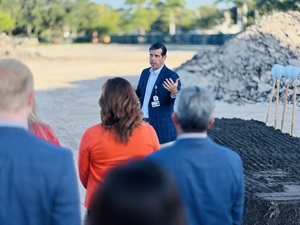
August 18, 2026 – HCA Florida Lawnwood Hospital today marked the groundbreaking of a new parking garage that will bring nearly 600 parking spaces to the hospital campus, supporting continued growth and improving access and convenience for patients, visitors and colleagues.

Hospital leaders, physicians and colleagues gathered at the future site of the parking garage Tuesday morning to commemorate the start of the project.

The new garage is part of HCA Florida Lawnwood Hospital’s continued investment in its campus as the hospital works to keep pace with the needs of a growing community. In addition to expanding parking capacity, HCA Florida Lawnwood Hospital is moving forward with a fifth-floor tower expansion that will add 32 patient beds, increasing the hospital’s capacity to care for more patients close to home.

The fifth-floor tower expansion is expected to open in early 2027, followed by the new parking garage in May.

“As our community continues to grow, we are committed to growing with it,” said Eric Goldman, CEO of HCA Florida Lawnwood Hospital. “The new parking garage and our fifth-floor tower expansion are important investments in the future of HCA Florida Lawnwood Hospital. Together, these projects will improve access to our campus and expand our capacity to care for the patients and families who depend on us.”

The new parking garage will help accommodate increased activity across the hospital campus while providing additional parking for patients, visitors and colleagues.

The planned addition of 32 beds on the hospital’s fifth floor further reflects HCA Florida Lawnwood Hospital’s ongoing efforts to strengthen access to healthcare services and prepare for the future needs of St. Lucie County and the Treasure Coast.

Tuesday’s groundbreaking brought together HCA Florida Lawnwood Hospital colleagues and leaders to celebrate the milestone and the hospital’s continued commitment to investing in the community it serves.

About HCA Florida Lawnwood Hospital
HCA Florida Lawnwood Hospital is a 497-bed, full-service acute care hospital accredited by the Florida Agency for Health Care Administration as a comprehensive stroke center. Specializing in emergency services, dedicated pediatric emergency services, Level II trauma services, maternity, Level III neonatal services, pediatric intensive care services, comprehensive stroke services, minimally invasive surgery and open-heart surgery, we provide high-quality, exceptional patient care to Fort Pierce residents and the surrounding communities. The hospital has been recognized as a Blue Distinction Center for cardiac care and is an American College of Surgeons Verified Level II Trauma Center. The hospital’s 24-hour emergency room provides specialized hospital services for adults and children of all ages. For more information on HCA Florida Lawnwood Hospital, please visit hcafloridahealthcare.com or call 772-461-4000.

About HCA Florida Healthcare
HCA Florida Healthcare, a part of HCA Healthcare, is one of Florida’s leading healthcare networks. Its 11,200 physicians and 80,000 colleagues work together to deliver evidence-based, collaborative care through nearly 12.8 million patient encounters annually. With more than 670 connected care sites—including hospitals, physician practices, urgent care centers and freestanding emergency rooms—across the state, HCA Florida Healthcare helps expand access to the specialized care patients need. HCA Florida Healthcare hospitals are annually recognized for excellence in patient experience and clinical outcomes, including three facilities ranked in the top 2% nationally for overall clinical excellence. A leader in healthcare education, HCA Florida Healthcare supports the next generation of healthcare workers through its 153 graduate medical education programs across 29 hospitals. In 2025, the network provided more than $1.1 billion in uncompensated care and contributed more than $3.5 million to community organizations across the state. Visit HCAFloridaHealthcare.com.


L to R – Larry Spiegelman, M.D., Medical Director of Women’s Health Care, Rachel Evers, AVP of Nursing, Baptist Hospital; Cassandra Pitter, Director of Nursing Services

August 18, 2026 – Baptist Health celebrated the completion of the first phase of a $120 million transformation of Baptist Health Baptist Hospital’s Lake Pavilion, a multi-phase renovation project designed to enhance the experience of care for women, infants and families throughout South Florida.

Phase 1 includes newly renovated clinical spaces across three floors of the east side of Lake Pavilion, including the Obstetric Emergency Department and Antepartum Unit, Labor & Delivery, and the Mother Baby Unit. The redesigned areas prioritize comfort, privacy, safety and family involvement while supporting an exceptional patient experience.

Among the enhanced services, the renovated Antepartum Unit supports patients with high-risk pregnancies who require additional monitoring or extended hospital stays, with nursing teams and emergency physicians nearby when needed. New Labor & Delivery rooms combine advanced clinical capabilities with a welcoming and intimate environment for family connection, while renovated Mother Baby rooms promote recovery and bonding by keeping families together and allowing a support person to stay with the patient.

“This renovation represents an important investment in the future of women’s and infant care at Baptist Hospital,” said Larry Spiegelman, M.D., Medical Director of Women’s Health Care at Baptist Health Baptist Hospital. “Every aspect of these new spaces was designed with our patients and families in mind, enhancing their overall experience while supporting the exceptional clinical care our team provides every day.”

The renovation is being completed in five phases, allowing patient care to continue uninterrupted throughout construction. Future phases will include private NICU rooms, additional Mother Baby rooms, dedicated lactation spaces and expanded family amenities.

The completion of Phase 1 marks an important milestone in Baptist Health’s ongoing investment in women’s and infant healthcare and its commitment to providing world-class care for the communities it serves.