By Jessica Walters, CannaMD, Chief Medical Researcher

As one of Florida’s largest networks of medical marijuana doctors, and the first physicians to certify for edibles in the Sunshine State, CannaMD is committed to advancing evidence-based discussion of medical cannabis research – which is why their latest work with the University of Florida (UF) and the Consortium for Medical Marijuana Clinical Outcomes Research should come as no surprise.

CannaMD first served as a recruitment site for UF in 2019. Results were later published in the peer-reviewed journal, Cannabis (see: “Health Outcomes Among Adults Initiating Medical Marijuana for Chronic Pain: A 3-month Prospective Study Incorporating Ecological Momentary Assessment”).

CannaMD reprised its role in 2020, with a second study on cannabis and PTSD, before recruiting participants for a separate project: the Consortium’s Contact Registry. Now, Florida’s favorite network of cannabis doctors is proud to serve as a recruitment site for the Medical Marijuana & Me (M3) Cohort Study – facilitating statewide research on medical marijuana outcomes among current and new patients.

In addition to advancing scientific literature, CannaMD is passionate about making sure patients understand these new developments – which is why the CannaMD blog is full of research-based articles, tips, and guidance. CannaMD’s free e-book is one of the most widely used patient resources in the state – and for good reason. CannaMD’s doctors are committed to not only certifying medical marijuana patients, but making sure that every step of the process makes perfect sense.

As CannaMD continues to seek out opportunities to advance medical cannabis research, patients are encouraged to capitalize on the network’s evidence-based resources by visiting CannaMD.com. Prospective patients are welcome to call (855) 420-9170 to learn more and see if they qualify, risk-free. (With close to 20 locations statewide, CannaMD offers a variety of convenient locations.) Current cardholders who aren’t experiencing the results they’d like are also encouraged to speak with CannaMD’s experienced team of medical experts.

To learn more about CannaMD’s developing research efforts, visit CannaMD.com.


By Dr. Jeff G. Konin

Just one month ago (February 25, 2022) the Committee on Competitive Safeguards and Medical Aspects of Sports (CSMAS), a component of the National Collegiate Athletic Association (NCAA), announced a major change in its cannabinoid testing policies. Most specifically the committee increased the threshold for a positive THC test and recommended a reconfiguration of the penalty structure for those student athletes that test positive under the new guidelines.

The CSMAS announced the new threshold for a positive THC test would be set at 150 nanograms per milliliter. This is a significant increase from the previous level of 35 ng/ml. This does, however, align the NCAA testing levels for THC equal to that of the World Anti-Doping Agency (WADA) which currently uses 150 ng/ml as a threshold. These changes will take place immediately and also apply to past THC tests from the fall of 2021 with retroactive penalties removed for those who tests over 35ng/ml but less than 150 ng/ml. In addition, the CSMAS stated that future changes could be reviewed and approved in an effort to respond accordingly to future WADA changes.

In addition to the threshold level being adjusted, a notable pivot will take place in how a positive THC test is being managed. Prior to this change, a positive test was treated from a punitive perspective. That is, on the first time recorded positive test a penalty equivalent to 50% of a playing season suspension was handed down to a student athlete. The NCAA has acknowledged that a more educational and wellness intervention approach better suits the needs of the individual, and this will be handled at the institutional level with programs in place to meet the needs of the overall health and well-being of the student athlete. This approach is also consistent with the recommendations of a select group of sports medicine professionals from major colleges and universities and feedback received from NCAA membership school surveys conducted this past fall.

The stakeholder recommendations agreed to the lack of evidence of cannabis as a performance enhancing drug but also took note to the importance factual education amidst a changing cultural shift that has seen greater acceptance overall toward cannabis in this country. As a result, an emphasis on education, health and wellness, and open communication will likely become part of adjusted campus cultures. Under the proposed new structure, penalties of loss of eligibility will only be implemented if a repeat offender is not compliant with a university-led education and management plan.

It is important to note that 2 important items of relevance remain following this announcement. First, cannabis was not removed from the NCAA’s banned substance list and therefore remains an illegal substance for student-athletes to use. The ruling change merely raised the threshold that equates to a positive test. No endorsement of cannabis is being made, and testing will still occur. Furthermore schools may want to establish their own internal policies whereby they adhere to a the same or different threshold levels and address cannabis use as it not only relates to a positive test of greater than 150ng/ml. For example, a school may decide that those testing at 100ng/ml are of a concern in that trending behaviors may want to be addressed. And while cannabis has not been shown to be a performance enhancer in sports, it may very well be a performance inhibitor if taken in inappropriate dosages at the wrong times.

The second important item to discuss is that no mention was made of any of the other cannabinoids aside from THC. This is of great interest in that while all cannabinoids are banned, only THC is tested for. Therefore, mixed signals are now being sent to student athletes. In the past, word on the street was that some were nervous about using any forms of CBD for example in fear of having a positive drug test show up. Now, with the threshold levels being raised so high, this fear may be alleviated and lead to a greater use of CBD. In the very near future, this will need to be addressed for clarity purposes.

For now, many will appreciate the modern decision-making of the NCAA committee to better align with societal and cultural shifts, as well as the scientific evidence to support the transitions that are occurring. The NCAA should be commended for acting in a timely and relevant manner to its member’s input.

Dr. Jeff G. Konin is a Clinical Professor in the Department of Athletic Training in the Nicole Wertheim College of Nursing and Health Sciences at Florida International University (FIU) where he directs the Global Initiative for Cannabinoid Research and Education. To learn more about FIU’s cannabinoid research and education initiative you can visit their website at go.fiu.edu/GlobalCannabis. Views represented in this column do not reflect that of Florida International University and are solely attributed to Dr. Jeff G. Konin.


By Jeff Greene

The Federal Farm Bill legalized hemp in 2018. It was a huge deal for those in the hemp space but most retailers, those not in the smoke shop world at least stayed oblivious. Creating products that are not the standard oils, creams and gummies was the logical next step in an industry that is expected to grow into the billions. However, large chain retailers are hesitant to accept any hemp products with any THC delta 9. Consumers are hesitant to try hemp products, especially those that have routine drug tests, are hesitant due to the trace amounts of THC delta 9. Lastly, Amazon remains bi-polar in their rules, allowing then not allowing, then allowing, and then allowing advertising, and then throttling it.

It’s time for the FDA to step up and give guidance on low dose cannabinoids and low-level THC products.

The FDA to its credit has been hesitant to pass rules without the science. And with a pandemic taking up most of the oxygen in the agency, the science has been slow. Our industry is also a bit bi-polar. We have GRAS (generally regarded as safe), fiber and cannabinoid products. Fiber is not being ingested so it is not subject to the same regulations as food. Alas, drug products, making medical claims, are facing their own challenges with an FDA that is racing to catch up with the science. And the traditional barriers to prevent new products in the building industry are slowly crumbling, with hemp-based wood and hemp-based insulation are slowly gaining acceptance.

Smoke shops are tending toward the legal psychotropic products rather than the healthier wellness products. That tracks, but it has definitely slowed the additional products that are coming out.

Smoke shops have been hesitant to bring products that focus on the minor cannabinoids because it requires salespeople to actually educate their customers. For many smoke shops, getting their employees to do anything other than make change can be challenging (and sometimes that is a challenge).

Over the next few years, the industry will continue to go through a consolidation. The big CBD companies are getting gobbled up by publicly traded companies, out of necessity more than anything. Scale is expensive. Growing into a brand is expensive. Growing a category is very expensive. All of these things are required for a good portion of the hemp industry.

The transition from smoke shop products to consumer-packaged goods has begun. We are seeing better packaging, better advertising, better products. The farmers have been the hardest hit. For those large companies that didn’t find a publicly traded company, bankruptcy occurred, both in Kentucky and Colorado. And the farmers in those states were the victims of visions gone amiss.

Trying to create products with long term strategy on pricing and demand continues to prove challenging because of the wide swings in biomass prices and the lack of readily accepted distribution and retail. The expectation is that this is temporary, and prices will eventually normalize at a level that farmers can accept, and manufacturers can rely on. Regulators will start to allow low levels of THC in blood and urine tests so that the health benefits of hemp can be realized by pilots and truckers and the like. It’s insane that a pilot can go out and drink the night before a flight and not have any issues, but if he takes a full spectrum hemp product he can be fired. This also applies to the trucking industry. These are the rules that are changing the slowest because public safety is perceived to be endangered. I would argue that public safety is actually better if truckers can ease their back pain or pilots can relax and focus on his controls.

Being a pioneer in any industry is a challenge, nobody ever said it would be easy and no industry that I have been in has been as inclusive and entertaining. Public opinion has shifted substantially on cannabis and arguably even the higher doses of THC should be Federally legalized and regulated now that we have exceeded 25 states that have legalized it. This country was founded on states’ experimentation and once that can be studied, the best results from each state are adopted and a Federal regulation is born. This is the standard way to do things, but cannabis has never been standard. This is apparent from the 1930s when it was used as a tool for racism and protectionism. And throughout the 1960s and 1970s, when it was used as a tool for search and seizure. And even today, the industry struggles with communication with law enforcement because it is a perceived we vs them dynamic. In general, most good hemp and cannabis companies reach out to law enforcement early and often to avoid any misunderstandings.

Finally, products are getting better. Good Manufacturing Practices (GMP) is becoming the baseline, and medical claims are not as prevalent in advertising because the industry is educating itself on what the FDA will allow and what it won’t. This does get more difficult due to the apparent civil war within the FDA, with one side feeling like the plant should have never been legalized and one side wanting to actually regulate it.

When will retailers and distributors catch up … when consumers demand it. Stress is at an all-time high in this country and the population is aging. Tobacco is killing them. There will come a time when truckers stand up to the Department of Transportation and demand change. Professional sports have already started changing and both the NFL and MLB have eliminated THC from their bevy of tests. If you are thinking about getting into the business, it’s not too late but it will be soon. Consolidation will increase the barrier to entry and costs will continue to rise due to inflation and the supply issues that are a reality due to the pandemic and will remain an issue for years. Hopefully, our Federal government will incentivize manufacturing not just in hemp but in every sector. If we have learned nothing from the last two years, it is obvious that we need to bring back American manufacturing.


By Vanessa Orr

On Feb. 23, Miami Mango’s popular cannabis strain, Mango Haze, was released for sale in 42 Trulieve Cannabis Corp. locations in South Florida. Now available exclusively to Trulieve medical patients in the area, the strain marks the first time that these two well-known companies have partnered to bring a product to market.

“Trulieve is the largest multi-state operator in the country, soon to be the world, and it’s operated by Kim Rivers, who is a very sharp lady,” explained Miami Mango CEO Alex Villegas. “She’s been partnering with the proper people in the traditional market to help bring our culture into the commercial cannabis space.

“By having an alliance with smaller farms that didn’t have the financial backing to be able to buy into the medical cannabis program, she’s been helping small farmers that do have a name or a following in underground traditional markets to get out there,” he added.

Miami Mango first acquired the Mango Haze strain in 2001, and made it available in the traditional market for the past 21 years. “We didn’t listen to the law back in the day; we were young and careless but very ambitious,” said Villegas, adding that the strain has since become a staple in the South Florida market and is very much in demand.

“When Trulieve reached out to see if we were interested in a partnership, they were looking for a strain that commercial companies didn’t have access to,” he added. “It had been kept very private.”

Trulieve is currently offering Miami Mango’s Mango Haze in pre-rolls, oils and concentrates and plans to later add flower.

According to Villegas, what sets Mango Haze apart is its flavor.

“It’s a very unique strain; the flavor is unmistakable,” he said. “When you process the flowers into a concentrate, that’s when it really becomes next-level. It not only looks like a mango puree smoothie, but smells just like a fully ripe mango cut from a tree.

“A sativa hybrid, Mango Haze is not overly potent with a high THC content,” he added. “It provides a great euphoric feeling and still lets the user function normally, which is why it’s great for medical reasons. Even though it’s a sativa, it’s good for people with pain or anxiety; the flavorful aroma of the terpenes is soothing and patients love the flavor and the feeling that it brings them.”

In addition to being a cannabis grower and consultant, Villegas also runs an online worldwide hydroponics store and designs and builds high-end cannabis facilities as well as large custom homes. He is currently in talks with Trulieve about possibly releasing more strains, and plans to release Mango Haze into the California market soon.

“Mango Haze is only going to get bigger, expanding into other states,” he said. “We’re not only getting a lot of messages on Instagram from people in other places in Florida wanting it in their Trulieve dispensaries, but from people in Boston asking if it will be available up there anytime soon.”

To learn more about Miami Mango, visit www.mangotech.store.


By Daniel Casciato

Trulieve is an industry leading, vertically integrated cannabis company and multi-state operator in the U.S. operating in 11 states, with leading market positions in Arizona, Florida, and Pennsylvania. The company is poised for accelerated growth and expansion, building scale in retail and distribution in new and existing markets through its hub strategy.
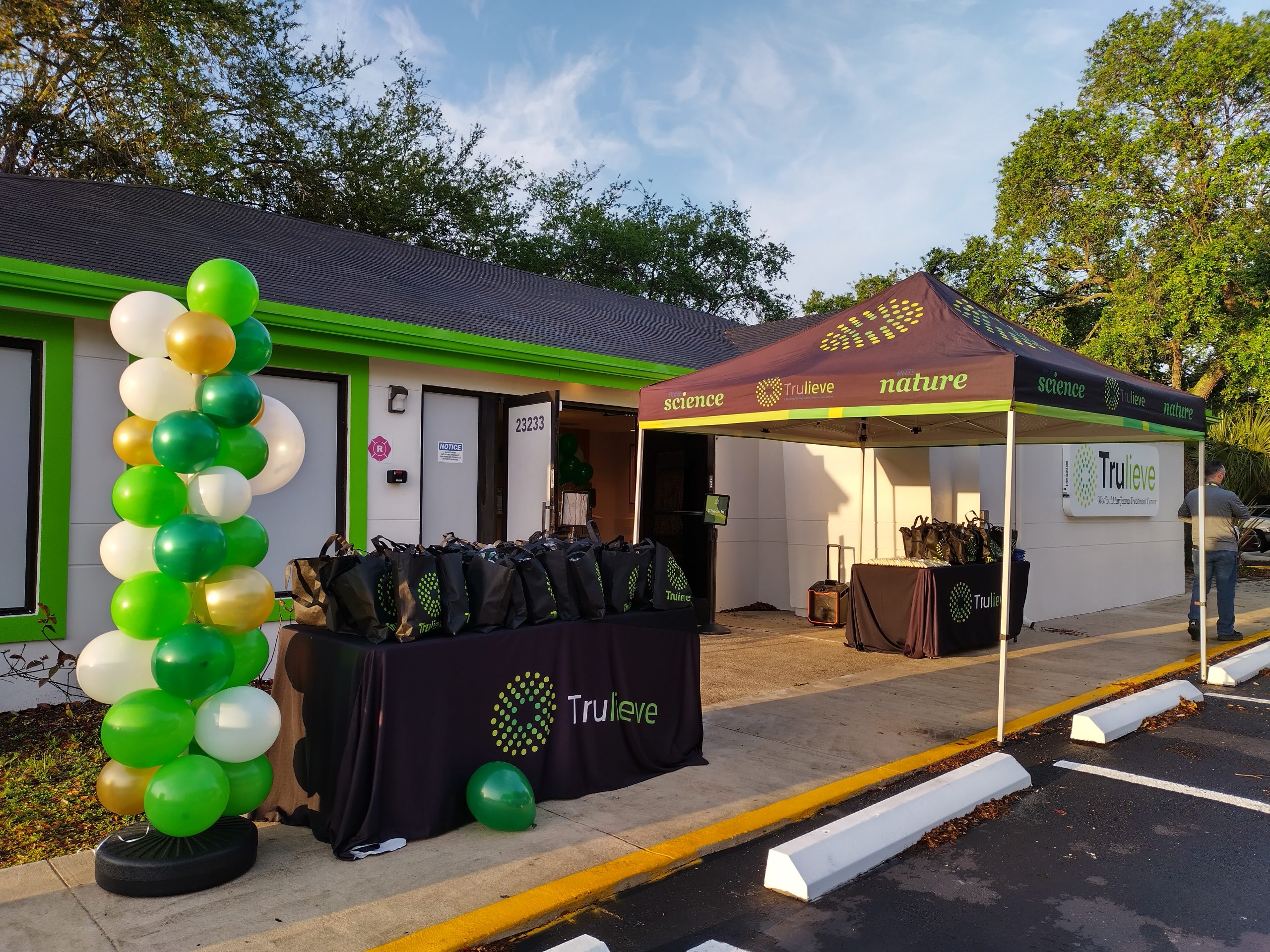
“By providing innovative, high-quality products across our brand portfolio, Trulieve delivers optimal customer experiences and increases access to cannabis, helping patients and customers to live without limits,” says Tim Morey, Trulieve’s Chief Sales Officer.

Trulieve, listed on the CSE under the symbol TRUL and traded on the OTCQX market under the symbol TCNNF, was founded in 2015 and is headquartered in Tallahassee, FL. The company was the first Florida licensed operator with initial sales in 2016.

They take pride in their exceptional retail and wholesale distribution model. Their footprint is across 11 states in 3 regional hubs (SE, SW, NE) with a robust retail network of 160+ operated or affiliated dispensaries. They are the market leaders in their cornerstone markets of Arizona, Pennsylvania and Florida.

According to Morey, Trulieve has accomplished many firsts in Florida, including:

  • Being among the first group of licensees to receive approval from the Florida DOH
  • first to receive approval to cultivate and dispense
  • first to make a home delivery
  • first to make a sale
  • first to sell smokable cannabis
  • first to sell edible cannabis
  • and more

Trulieve’s mission is to provide compassionate care patients can trust when traditional medicine is not enough. They strive to provide the highest level of cannabis products and customer experience through authentic and reciprocal relationships. Their vision is to be the leading customer-focused cannabis brand in the United States, with depth in the markets the company chooses to operate.

“We advocate for cannabis reform, provide top products, and work to educate the communities we serve,” notes Morey. “This includes creating jobs at our dispensaries with great benefits and contributing to and developing partnerships with local organizations in the community. Trulieve also grows, harvests and produces cannabis plants in an eco-friendly environment to reduce carbon footprint and protect the planet.”
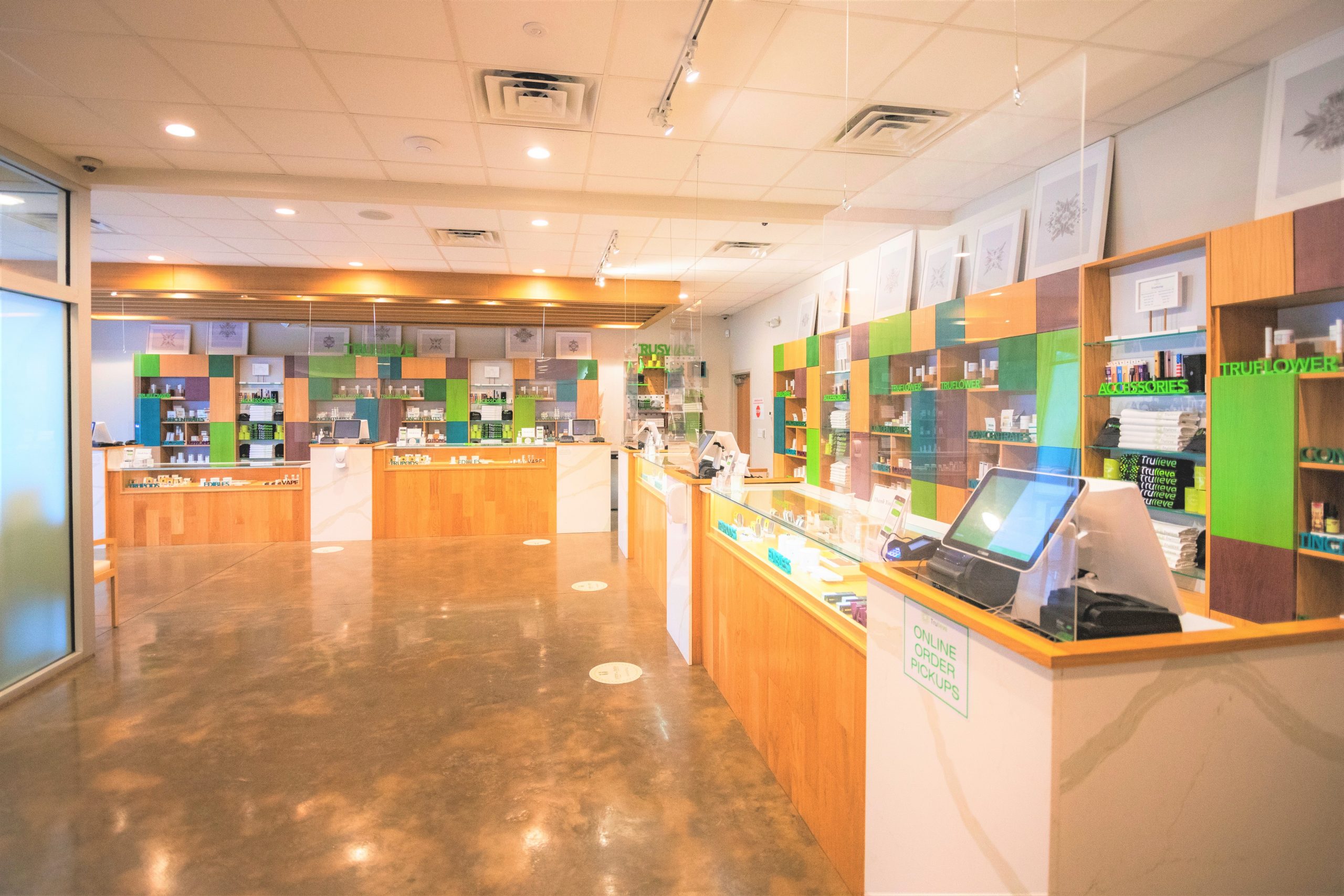
The company continues to focus on growing safe, quality cannabis and continually innovates to provide a wide variety of products for medical patients in Florida. Their patients across Florida can choose from the largest selection of THC and CBD prod-ucts (https://shop.trulieve.com/) available in a variety of consumption methods, including smokable flower, concentrates, edibles, capsules, syringes, tinctures, topical creams, vaporizers and more.

In addition to Trulieve’s proprietary brands, patients have access to beloved brands such as Bellamy Brothers, Bhang, Binske, Blue River, Black Tuna, Love’s Oven, O.pen, and Sunshine Cannabis, all available exclusively at Trulieve in Florida.

Trulieve is the market leader in Florida with more than 110 retail locations in the state. A full list of Trulieve’s Florida locations can be found at trulieve.com/dispensaries/florida.

Trulieve is excited to continue the expansion of access to medical and adult use cannabis from coast to coast.

“We’re driven by our commitment to providing tailored, high-quality patient care to as many patients as possible,” adds Morey.

Trulieve’s mission to promote well-being through cannabis allows them to create profound economic and social advancement opportunities within the communities they serve. Trulieve looks forward to cultivating additional local and national partnerships through their growing DEI (Diversity, Equity and Inclusion) team and showcasing how cannabis can create consequential, powerful change.

One way they are doing this is through 4/20, the marijuana holiday. For decades, 4/20 was widely celebrated underground by cannabis enthusiasts. The holiday has emerged from the shadows in recent years as legal cannabis becomes increasingly accessible and popular throughout the U.S.

“The day has now become a unifying experience for the cannabis community where consumers connect over their shared love for the plant and legal businesses host celebrity-backed concerts and activations,” says Morey.

Patients who visit their local Trulieve location on April 20 can expect live brand activations, giveaways, all day in-store promotional offers, and more. Stay tuned to Trulieve social media channels for details.

For more information, visit www.trulieve.com.
