
By Summer Westerbur

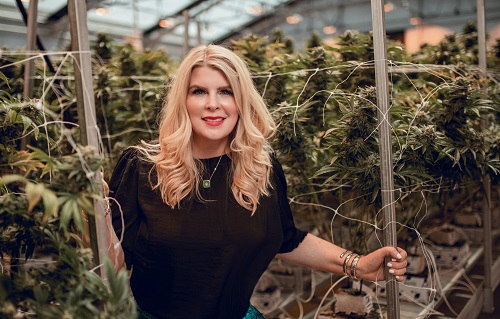
Like many readers of Cannabis News Florida, I just returned from MJBizCon 2021. It was wonderful to be with the cannabis community again, spending time with old friends and meeting new people. It’s been a long two years for all of us. The conversations I had with cannabis business owners around the country were about the struggle to hire and retain talented employees. The pandemic left many business owners overwhelmed, struggling to attract talent.

An important consideration for employees transitioning out of a pandemic is employee benefits packages. If your competition is offering a medical plan with a $5,000 deductible and you’re offering a $1,500 deductible, your offer is more attractive. Additionally, we now have carriers that will provide disability coverage to cannabis companies. This allows us to design a rich package including medical, dental, vision, disability, and more. Early in the pandemic, carriers were waiving hospital costs for Covid-related illness but that is no longer the case. Additionally, people are thinking about disability coverage now that they face the risk of disability caused by long Covid. Sometimes small improvements to an employee benefits package can make a difference. For example, most dental policies offer a $1,000 or $2,000 annual benefit, but there are plans available with a $5,000 annual benefit. Minor improvements to an employee benefits package can be the determining factor to an employee considering your employment offer. Rich benefits packages also help you retain these employees.

In April of this year, it was reported that 4 million American workers quit their jobs, representing 2.7% of the workforce. In August 2021, 2.9% of workers left their jobs, according to numbers from the U.S. Bureau of Labor Statistics. Hiring employees will likely remain a challenge.

As the weight of the crisis lifts, experts are anticipating a long-term impact on people’s mental health. For some people, feelings of anxiety and depression that emerged during the pandemic will resolve as routines resume — people go back to the office, social connections are reformed, the seeming danger of activities dissipates. Others will face mental health issues that persist or even appear down the road, a number that could be quite large given the magnitude of despair and disruption. This is the time to consider adding an additional mental health benefit. Some plans offer a significant number of visits, whether Telehealth or office. For employers unable to offer health insurance, these can be offered as a group plan.

This is the time of year to think about the physical and mental health of your employees. Reach out if you have any questions.

Summer Westerbur, founder of Kairos Insurance Group, is experienced in all types of insurance including employee benefit packages, product liability, general liability, professional liability and building insurance. Kairos also has expanded to include a Cannabis Division to address the unique challenges facing the cannabis industry and its employees. For more information, contact Summer@kairosinsurancegroup.com or call (719) 331-1832.


By Durée Ross, President of Duree and Company

It was just a few years ago that there was little presence in the public relations and marketing industries for cannabis and hemp. At that time, there was a great deal of uncertainty if cannabis or hemp was even legal. However, like many emerging industries, our agency recognized a growing need to help companies that were trying to establish themselves in the space. Durée & Company entered the cannabis, hemp and CBD market before the passing of the 2018 Farm Bill. Fast forward to today, and you’ll see an abundance of companies fully emersed in cannabis. This begs the question, in such a competitive landscape, what companies will thrive in the long run?

Recently, the Florida Department of Health (DOH) announced that it is expected to issue up to 27 new medical marijuana treatment center (MMTCs) licenses by July 1, 2023. According to Center Square, this more than doubles the availability of legal cannabis products that already support a $1.3 billion industry in Florida.

There is no better time than now to evaluate your marketing and public relations efforts. As the industry continues to evolve, we’re always brainstorming and working with clients on strategies and creative ways to showcase their products, services and overall brand. We always recommend starting with the three key areas below and building from there. We find these top three tips can provide a great deal of engagement and return on investment for a company.

1. Traditional Media

As CBD, hemp and cannabis have become mainstream, it’s important to cultivate key relationships with journalists, reporters and bloggers in these industries. They are a key to sharing the stories of brands in the space. Every brand needs a story or a mission. It also sets them apart from competitors. Media relations is a great vehicle to share these stories and also position a company as a leader in the space. Many companies offer a wealth of education or industry knowledge, and journalists are always looking for industry experts who can speak about laws being put into place or timely topics in the news. We regularly present our clients as thought leaders and this has resulted in interviews, bylined articles about topics where they possess expertise, or participation in a panel for a conference or trade show.

2. Social Media

Despite how big the cannabis, hemp and CBD industries have become, they are still excluded from many traditional advertising opportunities. While some of that is starting to change, social media is a vital platform to promote cannabis brands if done correctly. Our agency creates content for clients so that they are strategic about what they share, how they share it and to the appropriate audience. It’s important to create the right content by staying up to date on the latest trends and news, incorporating hashtag holidays, and referring back to the company’s story or mission. This is also a great vehicle to share any corporate social responsibility (CSR) efforts. Effective social media posts usually incorporate a call-to-action, encouraging the audience to learn, read more or share. Another tactic that has been successful for many companies is working with social media influencers. This involves building relationships with both micro- and macro-influencers that are appropriate for the brand. Influencers in cannabis, lifestyle, health and wellness, or food and travel, can help shape the perception of a brand.

3. Events and Speaking Opportunities

Industry events, expos and conferences have always been an important way for cannabis brands to get their name out there, and there is an event for every audience. From nationally-focused trade shows such as MJBizCon to local conferences, including South Florida-based CannabisLAB’s annual conference coming up in February 2022, it’s beneficial to carefully monitor and research these opportunities to determine the right fit – and audience – for a company. The results can bring great return, including the opportunity to promote a company’s spokesperson as a knowledgeable and influential thought leader in the industry.

For those who like to speak and partake in bigger conversations, podcasts are another great way to promote a brand. There are many podcasts covering an array of subjects from which to choose, and a greater number of opportunities as cannabis continues to become a mainstream topic.

Durée & Company, Inc. is an award-winning, full-service public relations, marketing and special events firm founded in 1999. The firm has offices in Fort Lauderdale, Florida, and Aspen, Colorado. Durée & Company serves the corporate, agency and nonprofit arenas for local, national and international clients. Services include public relations, social media, marketing, digital marketing, content development, advertising, special events, branding, radio promotions, affiliate marketing and more. To learn more, call (954) 723-9350; go to dureeandcompany.com; or visit its specialized cannabis site at cannabismarketingpr.com, or its new specialized psychedelics-specific site at psychedelicpr.com. Follow Durée & Company on FacebookInstagramTwitter, YouTube and LinkedIn at @DureeCoPR.


By Dr. Jeff G. Konin

While the campaign is progressively ongoing to educate the public, legislators, physicians, and all other healthcare providers about all things cannabis, one important group to be sure not to omit is the educators. This includes primarily those in college and university teaching environments, but also health educators in the secondary school systems.

Why is this so important? If we do not invest in the time to educate today’s students, we will continue to play catch-up with education, knowledge, and perception of tomorrow’s community. Here are a couple of facts gathered from recently published studies:

• A 2019 University of Pittsburgh study reported that only 62% of Pharmacy schools incorporate cannabis education in the doctoral level curriculums.

• A 2017 study from Washington University reported that only 9% of medical schools in the United States incorporate cannabis education in the curriculums. Furthermore, 89.5% of medical residents say they are unprepared to prescribe cannabis, and 35% say that they are unprepared to answer patient questions on the topic.

• A 2019 study we performed at Florida International University revealed that 75% of the students enrolled in healthcare degrees believe it is important to study cannabis in a formal curriculum

• A recent 2021 study that we performed revealed that only 38% of Athletic Training and Physical Therapy graduate education degree programs faculty report teaching cannabis in curriculum, and that 75% of these individuals state that they have no formal education on the topic themselves.

• A 2021 study in the Journal of Cannabis Research found that 49.9% of medical students are in favor of medical cannabis legalization. The respondents of this survey reported a strong desire for more cannabis education.

These findings come from just a sample of published studies and they come from the healthcare professions. Yet, as we have come to learn, cannabis use in society also has an impact on social determinants of health. The use of, dangers of, risk factors, medical benefits and all other aspects of cannabis should be incorporated and openly discussed in high school health education programs in every school. What we are seeing in our communities today is not a trend, but rather a reality. Maturing students and young adults should be taught the facts about cannabis by educated educators in an effort to debunk the many myths of the past and present surrounding the stigma of its use.

In a secondary school setting, the topic can easily be introduced in health education courses. Many students possess a familiarity with cannabis albeit from their own personal knowledge and perception around their community. Active learning lessons regarding cannabis data, its history, use disorders, risks and benefits, and societal impact can serve as valuable teacher-student interactions. With the significant increase in virtual classrooms primarily as a result of the pandemic, teachers do not need to possess immediate knowledge of cannabis as other facilitators can be invited to speak to classes online.

In a non-health degree college or University setting, cannabis can be introduced in content areas that range from philosophy to business to agriculture to law and so much more. In a University-level healthcare curriculum, courses such as anatomy and physiology can introduce the endocannabinoid system, course like pathology or disease can address cannabis use with medical conditions, a course in pharmacology can discuss dosing and application, and courses in medical and legal ethics can review case studies and vignettes of how cannabis use varies around the country and the world based upon individual laws and public policy.

In particular, degree majors such as Public Health, Medicine, Law, and others should more closely examine how to make current their curriculums and implement cannabis-based content to better prepare their graduates for future employment.

In fact, while already being done, Florida is ripe and should strongly consider with State Board of Governors Higher Education approval, a systematic approach toward the creation and granting of Bachelor level, graduate level, and certificate programs in Cannabis. Yes, a Bachelor of Science degree in Cannabis. Students can focus their interest in healthcare, business, agricultural, marketing, chemistry, and so many other areas. This would serve as a wonderful interdisciplinary degree that could meet the needs of tomorrow’s workforce and fall in line nicely with the cannabis initiatives that the state has committed to.

There are many positive reasons why it is imperative that cannabis education be implemented in curriculums at secondary and post-secondary school levels throughout Florida. There are no good reasons not to.

Dr. Jeff G. Konin is a Clinical Professor in the Department of Athletic Training in the Nicole Wertheim College of Nursing and Health Sciences at Florida International University (FIU) where he directs the Global Initiative for Cannabinoid Research and Education. To learn more about FIU’s cannabinoid research and education initiative you can visit their website at https://go.fiu.edu/GlobalCannabis. Views represented in this column do not reflect that of Florida International University and are solely attributed to Dr. Jeff G. Konin.


By Daniel Casciato

Founded in 2018, PūrWell is a company focused on providing organic hemp oil products that promote general health and wellness.

The company was started by Nick DiFrancesco who partnered with a farm in Pueblo, CO where their hemp is grown, cultivated, processed, and packaged. They created a line of safe and effective CBD products that physicians, pharmacists and other healthcare professionals could trust and feel comfortable recommending to their patients. Today, PūrWell’s medical-grade products are designed for and are sold exclusively through healthcare professionals and on its online store.

Joshua Hoffman, Chief Education Officer,

“Our proprietary formulations are crafted specifically, to meet the needs of the healthcare marketplace, offering a range of strengths and applications for seamless customized treatment,” explains Joshua Hoffman, Chief Education Officer, for PūrWell.

There are several primary benefits of using PūrWell CBD products, according to Hoffman.

“Our hemp-derived products focus on four main conditions and their associated symptoms: chronic pain/inflammation, anxiety, depression, and insomnia,” he says. “The benefits of taking our products include the potential for a reduction of inflammation throughout the body such as muscles, joints, organs, blood vessels, a sense of well-being and the feeling of being grounded, better sleep patterns, and more vitality and energy.”

What sets PūrWell apart from its competitors is that PūrWell is a vertically integrated hemp company that controls the entire process from end-to-end. This includes cultivation, harvest, extraction, purification, and bottling.

“Our farms are USDA certified organic and less than 1% of hemp farms in the United States have that designation,” Hoffman says. “Our formulations are proprietary and unique, and they cannot be duplicated, nor are there similar products on the market when comparing ours to the other lifestyle CBD brands.”

Another difference is that the company formulates its products for and markets them exclusively through medical professionals and other healthcare practitioners.

“Full panel 3rd party lab testing is another thing that sets us apart from the competition,” Hoffman adds.

Despite the gaining popularity and acceptance of CBD, there are still some key concerns of patients and providers today regarding its usage.

“Patients and doctors want to be reassured that they are not going to get ‘high’ when using our products,” says Hoffman. “They are also concerned with drug-on-drug interaction, and any

potential adverse drug reactions (ADRs), and they want to know that the product is safe for their patients to use. That ties in with our full panel 3rd party lab testing for all our products.”

Hoffman stresses that CBD is not created equal and that consumers need to be cautious when making a purchase.

“There are more inferior CBD products on the market than there are effective ones, so it is up to each consumer to know the basic questions they should be asking before purchasing any company’s CBD products,” he says.

Here is a short list of those questions, he notes:

1. Are your products made from organic hemp?

2. Do you have 3rd party lab tests for your products beyond the cannabinoid potency test? Was the product tested for mold, mycotoxins, etc.?

3. What is the shelf life or expiration date on the products?

4. Where is the farm or where does the hemp supply come from?

5. Any money-back guarantees?

For more information, please visit www.purwell.com or call 844-PUR-WELL (787-9355).


By Carol Newman

According to various polls, nearly 70 percent of Americans want cannabis to be fully decriminalized, and more than 90 percent want medical cannabis products to be available to patients and veterans. The States Reform Act, filed in the House by Rep. Nancy Mace (R-S.C.) on November 15, 2021, seeks to address some of these issues. Highlights of the bill include:

• Cannabis will be decriminalized at the federal level, and states will be free to make their own decisions about regulations; states and local governments will not be required to change their current cannabis policies

• Cannabis products will be regulated like alcohol products, e.g., under the USDA for growers, and under the FDA for medical use

• Veterans are guaranteed not be discriminated against in seeking positions at the federal level, or will not lose their VA healthcare, if they have been following their doctor’s advice to use cannabis for medical purposes

• Those under the age of 21 will be protected from cannabis products and nationwide advertising

• Medical cannabis will be protected for such usage as arthritis, cancer, HIV/AIDS, Post Traumatic Stress Disorder, chronic pain, sickle cell, and other medical uses, based on an individual state’s regulations

• A 3 percent federal excise tax will be established on those products to set up funding for law enforcement and small business programs

• Persons who have been convicted of nonviolent crimes at a federal level related to cannabis will be released and will have the offense removed from their record. This does not include those who have been convicted of driving under the influence, or cartel members or agents.

Rep. Mace referred to the States Reform Act as a compromise bill, saying parts of it represent ideas from previous Republican bills that have been filed, and other parts represent some reforms Democrats have previously proposed. However, overall, public opinion continues to favor descheduling cannabis and regulating cannabis commerce.

The Act has received support from various groups and individuals, including Dan Caldwell (USMC, ret.), Senior Advisor to Concerned Veterans for America; Robert Fellner, Vice President at Nevada Policy; Brent Gardner, Chief Government Affairs Officer at Americans for Prosperity; Lt. Diane Goldstein (Ret.), current Executive Director of Law Enforcement Action Partnership; and Jillian Snider, R Street Institute Criminal Justice & Civil Liberties Policy Director, and retired NYPD officer.