
Columbia Care Inc. and international superstar Pitbull announced the launch of N2P – a new line of high quality, full spectrum CBD products for those seeking to incorporate CBD into their health and wellness routines. N2P seeks to change the negative perception of CBD products and to shine a positive light on the potential of these products, which is what N2P stands for: negative to positive.

“We are committed to changing the conversation around CBD and providing a line of products that people can trust and expect that they’ll receive the best experience possible,” said Jesse Channon, Chief Growth Officer of Columbia Care. “We’ve partnered with Pitbull because of his passion for CBD and high-quality excellence. Together, we’re working to introduce premium, full spectrum CBD products for customers who are enthusiastic about health and wellness, but also for those who are curious about CBD and have been hesitant to try it – we want everyone to be able to change a negative to a positive.”

The N2P product line is formulated with quality in mind. Derived from natural, U.S.-grown hemp, these products are specially designed to tap into the plant’s full potential to help support everyday wellness, such as promoting recovery from exercise, soothing comfort from day-to-day stresses, and supporting natural sleep cycles. The initial product offerings will feature lip balms, salves, tinctures and sour gummies. Chocolate products will be released later in 2021.



Red White & Bloom Brands Inc. has initiated phase one of an aggressive three-phase development strategy for its two cultivation centers in Florida to ensure the Company produces sufficient inventory for the existing and several new dispensary openings planned for the first quarter 2022.

Red White & Bloom Florida LLC, a Red White & Bloom Brands subsidiary, acquired a 45,000 sq. ft. greenhouse with 4.7 acres in Apopka, Florida in July 2021. Phase one of the company’s initial plans for cultivation in Florida, the build-out of Apopka, is now complete. In addition, the site received regulatory approval to commence operations on Sept. 29, 2021. In anticipation of receiving the cultivation license, RWBFL had prepared mother stock in advance, and these plants arrived at the greenhouse the morning of Sept 30, 2021.

The flower production in the initial Apopka licensed area is capable of producing 85 g per plant, with projected annual revenue from this area is in excess of USD $10,000,000 and operations having commenced on Sept 30, 2021. Additionally, the newly designed grow will supply phase two of the Florida plans with the activation of thirty 16’ x 40’ customized, self-contained growing pods. With a targeted Q4 launch, the pods are anticipated to yield almost 10,000 pounds of dried flower per year representing a current medical market value of USD $30,000,000. Phase three of the Company’s initial launch in the State will be the activation of the 113,000 sq. ft. indoor grow facility in Sanderson, Florida.

Projecting a Q4 2021 harvest schedule in the Apopka facility, the company has added additional cultivation specialists specifically for the Florida project from the highly-talented local labor market.

“We brought this site into production ahead of forecast and ahead of budget and I’m very proud of our Florida team,” said Brad Rogers, CEO of Red White & Bloom. “Despite being relatively new players in the Florida market, I feel we have the most talented team of PhDs and horticulturalists, and an incredible grow infrastructure to bring the highest quality products, rich in terpenes and cannabinoid content, to some of the best retail locations in the state starting in Q1 2022.”


Verano Holdings Corp. announced the opening of its newest MÜV™ dispensary located at 7263 Park Boulevard North, Pinellas Park, Florida.

Verano’s 38th MÜV Florida dispensary is centrally located on the Pinellas Peninsula, in one of the state’s most densely populated counties. The new MÜV storefront is accessible from both Park Boulevard North and Belcher Road, as well as from 74th Street North through neighboring businesses. Patients can, based on preference, order ahead at muvfl.com for express pickup in-store, or take advantage of home delivery service that is available across the state within a 20-mile radius of MÜV storefronts.

“Pinellas County has a lot to offer, which explains why nearly one million residents have made their homes here and why it has been an area of focused development for us,” said John Tipton, President of Verano. “The opening of each new MÜV dispensary furthers our resolve to make premium medical cannabis and care available to all patients across the State of Florida.”

MÜV offers one-on-one consultations both in-store and virtually, at no cost to patients. MÜV’s comprehensive product selection includes chocolates and lozenges, flower, pre-rolls, an array of vaporizer pens, concentrates, metered-dose inhalers, topicals and oral sprays, along with patented encapsulation formulations in its EnCaps™ capsules, tinctures, 72-hour transdermal patches and transdermal gels.


Red White & Bloom Brands Inc. has appointed Christopher Ecken as its Chief Financial Officer.

“We welcome Chris Ecken as a key addition to the breadth and depth of our management team,” stated Brad Rogers, CEO of Red White & Bloom Brands. “Chris’ extensive experience as a financial executive at a major NYSE-listed player in the alcohol beverage industry – a highly regulated industry similar to cannabis — will be a tremendous asset. His rise through the ranks and track record of accomplishments at each level is testament to his financial acumen, visionary leadership and strategic mindset. We anticipate his specialized skills will help shape sustainable long-term growth, the shift to cannabis industry safe banking, and an upward trajectory toward a listed exchange for Red White & Bloom.”

Ecken brings decades of finance experience, including the last 25 in executive finance at Brown-Forman, a producer of some of the world’s most recognizable alcohol brands. Ecken has served in leadership roles overseeing and administering a full spectrum of finance functions, including strategy and forecasting, operational management, and execution, risk management and controls, revenue management, and M&A due diligence. Most recently he held the title of Senior Vice President, Director Global Analytics, after successful execution of the roles of SVP Director Global Financial Planning & Analytics/Commercial Finance; VP Director Global Business and Strategic Analytics; and VP Finance Director – North America; VP Finance Director Latin America; as well as other positions


By Michelle Weiner, DO, MPH, and Domenick Nicholas Maglione

In recent years, the use of cannabidiol (CBD) as medicine has risen at astronomical rates, providing medical patients with a more traditional approach to treating various health complications. In contrast to the progression of CBD use nationwide, there have been many concerns regarding CBD’s toxicity to the human liver. In an effort to mitigate public health risks brought upon by an increase in CBD use coupled with resulting potential liver toxicity, many research studies have been conducted to identify whether CBD is a safe alternative form of medication.

Unfortunately, a great deal of these studies have failed to conduct reliable research due to many protocol, experimental, and conclusive flaws. In April 2019, a study titled “Hepatoxicity of a Cannabidiol-Rich Cannabis Extract in the Mouse Model” was published in Molecules journal despite the numerous study flaws. In this study, extremely high doses of isolated Cannabidiol (CBD) extract were administered to six individual mice. The administered dose of CBD given to a small organism such as a mouse was notably high, more than 100 times the dose of Epidiolex, a CBD schedule 5 pharmaceutical indicated for infantile seizure disorders in children. CBD was administered as an isolate (contributing to heightened potency) and formulated with hexane, a Neurotoxin. The study reported that 75% of the mice had died (this would suggest that 4.5 of the six mice had died). This study had generated much attention from the media, resulting in a distribution of flawed science especially related to liver toxicity.

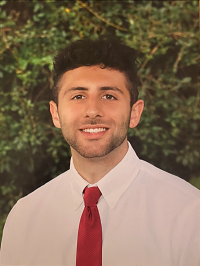
Domenick Nicholas Maglione

In addition to flawed publications, the current state of CBD use and administration is illogical and elementary. For instance, CBD is typically never dosed based on distinct properties such as genetics, meaning patients could be receiving far beyond a reasonable dose. This then poses yet another issue; CBD is inaccessible for many patients due to its cost. Some patients may be paying hundreds of dollars for a 1000mg CBD product like a tincture, when in reality, an ideal dosing system could reveal that those same patients may need less for sufficient treatment, therefore making CBD medication more affordable. Expensive CBD products may also be pushing patients away and more towards unregulated products, which poses the risk of E-cigarette or Vaping Use Associated Lung Injury depending on the route of CBD administration, product source and third-party lab testing.

It is important to acknowledge that CBD does provide health benefits to the human body. As misinformation begins to spread, the use of CBD for various health advantages will inevitably diminish out of fear for liver toxicity. The endocannabinoid system (ECS) is found in all mammals and consists of receptors (CB1 and CB2) endogenous cannabinoids, and enzymes that facilitate their production or break them down. The ECS is responsible for regulating many of our homeostatic control processes.

When the liver gets damaged, inflamed, or dysfunctional, the body starts to release more endocannabinoids to solve the problem. A healthy liver is correlated with a modest activity of the endocannabinoid system. In fact, this particular organ has a relatively low concentration of the ECS components. However, inflammation in the liver causes endocannabinoids to be very active in this area. Unfortunately, an overactive endocannabinoid system plays a role in the development of fatty liver disease (1). CBD modulates the CB1 and CB2 receptors by stopping particular compounds that make these receptors disrupt the liver. CBD ensures the proper functioning of a system that balances us. So while it won’t cure fatty liver disease, it can prevent its development. And should disease occur, it may be able to decrease inflammation to in the organ, protecting it against further damage.

Furthermore, CBD users are being presented with unreliable information, potentially causing some patients to turn to more conventional medication such as opioids. The untrustworthy nature of many CBD-related studies is tampering with lives, public health, the economy, business owners, the entire hemp industry, and so on. The spread of misinformation regarding CBD use is critically hazardous for two primary reasons; CBD users will be deterred by unreliable publications which express potential toxicity at abnormal doses, and the hemp industry will be shattered by a devastating drop in CBD use. Nevertheless, in order to combat such damaging circumstances, more research must be conducted to determine a more practical dosing system (potentially basing dosage on weight, height, gender, genetics, etc.) and at which dose CBD may pose a threat towards liver toxicity.

Dr. Michelle Weiner, Spine and Wellness Centers of America, can be reached at (305) 974-5533 or mweiner@spinewellnessamerica.com.