By Vanessa Orr
Approximately one in eight women will be diagnosed with breast cancer during their lifetime. Fortunately, since the institution of mammography, the death rate from breast cancer has been reduced by more than 40 percent. It is estimated that between half a million and 1 million deaths have been prevented between early detection with mammography and improved treatments since the technology was introduced.
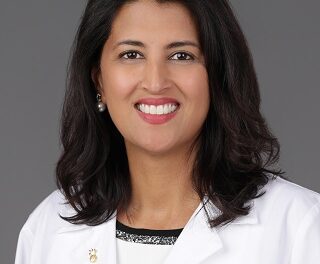
“The biggest message I have to women this October for Breast Cancer Awareness Month is the one that I have every October—early detection saves lives,” said Surya Vaidyanathan, M.D., Baptist Health South Florida.
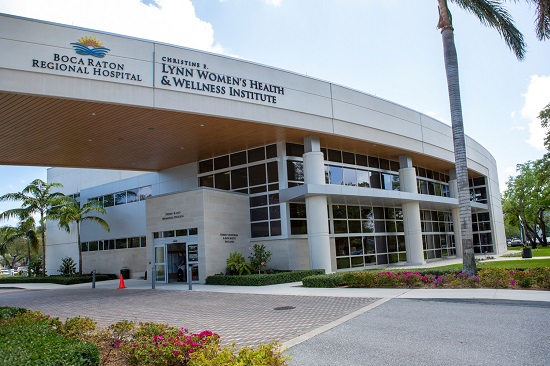
The health system’s Christine E. Lynn Women’s Health & Wellness Institute offers some of the most innovative, technological breakthroughs in the diagnosis of breast cancer available. This includes a 3-D, low-radiation mammography unit that allows increased visualization with minimum risk to the patient, and Prístina Dueta™, which allows the patient to be in control her own compression during a mammogram.
The Institute also offers high-definition ultrasound with elastography for increased detection and characterizations of lesions, and diagnostic breast MRI as well as abbreviated breast MRI, which increases breast cancer detection rates in addition to screening mammograms alone.
“Two of the greatest additions to our Women’s Institute over the past several years have been the addition of artificial intelligence (AI) as well as contrast-enhanced mammography,” added Dr. Vaidyanathan.
Contrast-enhanced mammography uses an iodine-based contrast agent injected into the vein. The machine takes two sets of images (dual energy mammogram) using different x-ray levels, which are processed by a computer. Cancers that have more blood flow show up brightly, which makes them easier to detect.
“With contrast-enhanced mammography, doctors are able to detect more invasive cancers than standard mammograms, especially in women with dense breasts,” said Dr. Vaidyanathan. “Breast cancer detection rates are similar to breast MRI, but contrast-enhanced mammography is more comfortable for the patient and is an easier, quicker, and less expensive alternative.”
The Institute has also been using contrast-enhanced mammographic biopsy to biopsy suspicious lesions, which provides as easier, more comfortable alternative to MRI-guided biopsy.
According to Dr. Vaidyanathan, the use of AI in breast imaging has allowed increased cancer detection by detecting subtle abnormalities and increasing the efficiency of mammographic interpretation. AI helps technologists by improving positioning techniques, creating a better quality mammogram for interpretation.
“The development and usage of AI, led under our director Dr. Kathy Schilling, has fundamentally changed how we as radiologists view and interpret mammograms,” said Dr. Vaidyanathan. “AI not only assists radiologists by improving accuracy and increasing cancer detection rates, but reduces false positives or unnecessary callbacks and biopsies by focusing on the suspicious findings and those that have a greater probability of malignancy.
“As far as breast cancer treatments, immunotherapy and antibody drug conjugates are among the newest and most effective systemic treatments we use for breast cancer, especially in challenging cases such as triple negative and metastatic situations,” he added.
The Women’s Center of Boca Regional/Schmidt Family Center has been treating women in south Florida since 1990. In 2015, it became the Christine E. Lynn Women’s Health and Wellness institute, which also has satellite locations in Deerfield Beach and Boca Raton.
The Institute offers a multi-modality approach to breast cancer detection including 3D mammography, contrast enhanced spectral mammography (CESM), breast ultrasound including sheer wave elastography, breast MRI, and molecular breast imaging (MBI). It also offers breast biopsies using stereotactic (mammographic) guidance, ultrasound guided breast biopsies, contrast, enhanced mammographic guided biopsies, and breast MRI biopsies.
“While our Institute is comprised of some of the most technologically advanced equipment available in the diagnosis of breast cancer, we are truly set apart by our extremely knowledgeable as well as caring and compassionate staff,” said Dr. Vaidyanathan. “Our doctors are comprised of predominantly fellowship, trained breast radiologists and our technologists have gone through additional extensive breast cancer specific training. In addition, our patient navigators are here to guide patients through whatever steps might be needed.”
The Institute also offers same day readings for screening mammograms and can provide same-day diagnostic imaging or ultrasound if the results require follow-up testing. Patients may also become involved in clinical trials; current trials include the Contrast-Enhanced Mammography Imaging Screening Trial (CMIST) to help determine whether contrast-enhanced mammography (CEM) improves breast cancer detection and reduces false-positive exams in women with dense breasts, and the FourLight Trial, looking at novel therapy with endocrine therapy in metastatic disease.
“Women who have a greater than average chance of developing breast cancer may also benefit from the high risk breast clinic, which offers individualized breast cancer risk assessments and clinical breast exams,” said Dr. Vaidyanathan. “Based on this risk assessment, they are offered personalized screening strategies, and if one has a personal or family history of breast cancer that may raise their risk, we offer genetic testing and counseling.”
The Institute also offers a Moving Forward program designed to aid women whose breast cancer treatment is complete. The program provides resources and support for challenges including fear, anxiety, depression, and side effects of treatment such as bone loss, body image issues, and lymphedema.