
By Georgi Pipkin
Thanks to the collaboration of physician scientists, patients with blood cancers are benefitting from rapidly evolving research, advances in immunotherapy and targeted molecular therapy. When some of the nation’s top experts gather in January at the Third Miami Cancer Institute Summit of the Americas on Immunotherapies for Hematologic Malignancies, it’s with the knowledge that sharing their findings will lead to even more options at the bedside.
Some 186,400 people in the U.S. are expected to be diagnosed with leukemia, lymphoma, myeloma and other blood cancers this year, according to the American Cancer Society. Thousands more are already in treatment.
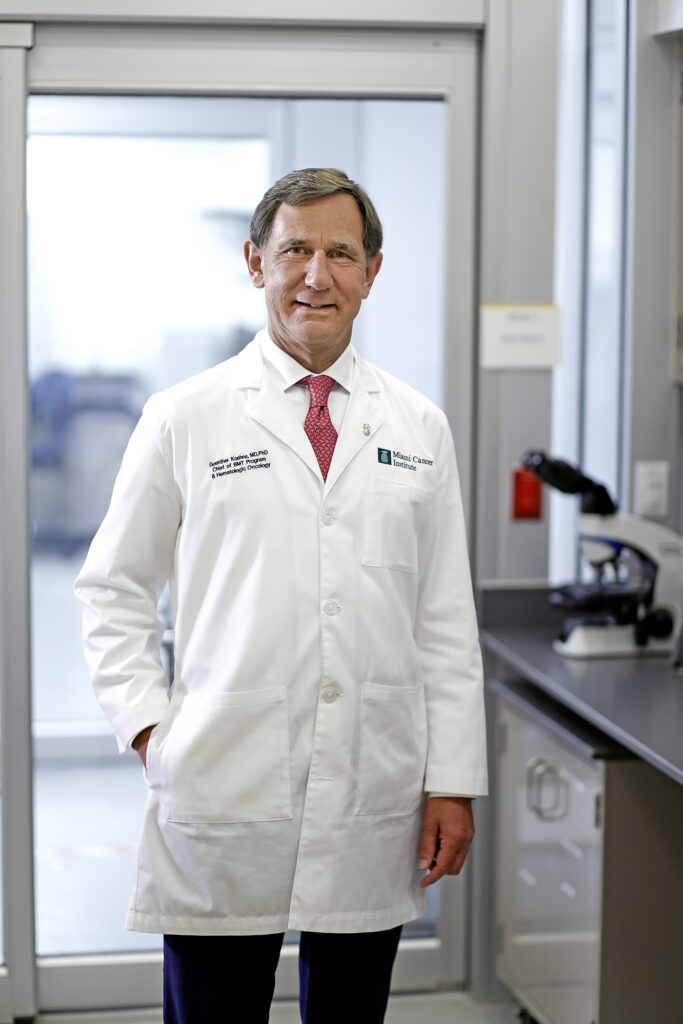
“The speed at which the field is advancing is very encouraging,” said symposium director Guenther Koehne, M.D., Ph.D., deputy director and chief of Blood & Marrow Transplant and Hematologic Oncology at Miami Cancer Institute, a part of Baptist Health. “But to maintain our forward progress we must not do our research in silos. We must share so that we can build upon what we have learned.”
The in-person program, Jan. 21 and 22, features a powerhouse faculty that includes physicians from Memorial Sloan Kettering, Harvard Medical School, Dana-Farber Cancer Institute, MD Anderson Cancer Center, Columbia University’s Herbert Irving Comprehensive Cancer Center, the Abramson Cancer Center at the University of Pennsylvania and other leading institutions. Approximately 300 physicians and other healthcare providers attended last year’s virtual Summit.
Dr. Koehne came to Baptist Health’s Miami Cancer Institute from Memorial Sloan Kettering Cancer Center in New York, where in 1973, the world’s first successful allogeneic transplant was performed. A pioneer in allogeneic stem cell transplantation and immunotherapies, Dr. Koehne believes the Summit offers a unique opportunity ― particularly for oncologists, hematologists, pharmacists, oncology nurses and other specialists ― to hear directly from those responsible for treatment breakthroughs.
“Treatments are becoming more sophisticated and every day we are learning more about how to target treatment to the individual,” he said. “By discussing the most recent research, we move science forward, ultimately offering more options to patients and improving their outcomes.”
Among the symposium topics are advances in immunologically and molecular based system therapies, new targeted diagnostic and therapeutic strategies for lymphoma, myeloma and leukemia, the role and timing of hematopoietic cell transplantation and the latest on CAR cell therapies.
Miami Cancer Institute’s Blood and Marrow Transplantation program was launched in July of 2019. It hit the 100-patient milestone in just 18 months. In addition, in July of 2020, as the program continued to expand, Hope Tower opened on the Baptist Hospital campus, adjacent to the Institute. With 39 private rooms on 6 Hope and 45 private rooms on 5 Hope dedicated tor bone marrow and immunotherapy patients, the new facility gives patients who face lengthy hospital stays because of their compromised immune systems a spacious accommodation that includes a refrigerator, microwave, large bathroom and even room to exercise.
At the Summit, Dr. Koehne will share his research and the Institute’s experience.
To register, or for more information on Miami Cancer Institute’s Third Annual Summit of the Americas on Immunotherapies for Hematologic Malignancies, held at the Ritz Carlton Coconut Grove, go to https://cmeonline.baptisthealth.net/immunotherapy-symposium.