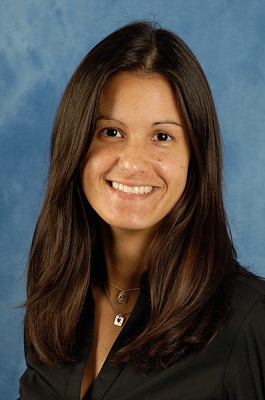
Jennifer Ruano
By Vanessa Orr
Over 80 percent of children diagnosed with cancer will be cured, though more than 70 percent of these childhood cancer survivors will have a chronic condition as a consequence of the therapy they received. Survive & Thrive—The Survivorship Program at the Helen & Jacob Shaham Cancer and Blood Disorders Institute at Nicklaus Children’s Hospital (NCH), was created to provide support and follow-up care for childhood cancer survivors.
Medical Director Matthew Ramirez, M.D., works to help pediatric cancer survivors optimize their health and quality of life. A childhood lymphoma cancer survivor himself, he became interested in the survivorship program as a result of his own experiences.
“I didn’t have any survivorship follow-up after treatment; it didn’t exist,” he explained. “Doctors would just say, ‘Oh, you’re a lymphoma survivor. Are you doing okay with that?’ and move on to the next thing.”
While screening guidelines had been created in the early 2000s by the Children’s Oncology Group—the research group that studies children’s cancer therapies—it directed survivors to their pediatricians for follow-up care. However, research later showed that pediatricians didn’t have the time to do all of the monitoring and research needed, which resulted in the creation of survivor clinics.

Depending on the treatment and therapy drugs received, a survivor could have different late-effect conditions, such as lung and heart complications, hormonal disorders, secondary cancers, learning disabilities, vision and hearing problems, and infertility.
“If we know that a child was given anthracyclines, for example, we would screen for heart issues,” said Dr. Ramirez. “Alkylating chemotherapy can affect hormones and puberty, so we monitor those areas more closely. Brain radiation may cause pituitary function problems and thyroid issues.”
Even patients who do not need long-term follow-up, such as those who had surgery, are still provided with the information they need to move forward. A patient who has had a kidney removed, for example, will receive instruction on how to protect their remaining kidney, such as limiting NSAID medications, monitoring their salt intake and keeping their blood pressure under control.
“This may be a one-time visit, especially if the child is older, or a visit each year for five to 10 years after surgery if a child is very young, just to remind them how they need to care for themselves as they grow older,” said Dr. Ramirez.
Guidelines for survivorship screening start at two years after therapy, and there is no cap on how long patients can participate in the program. Adults can still take advantage of screenings, though they will be referred to adult physicians if an abnormality is found and more treatment is required.
While research has shown that cancer treatment can lead to late-effect conditions, it is not always easy to determine if a patient’s issues are inherently tied to that treatment, according to Dr. Ramirez.
“We tend to find conditions that older people have; cancer treatments age children in a way,” he said. “If a child isn’t good at math, for example, I can’t say if that’s because of the brain radiation, or if they would never have been good at math. I can’t always find causality, though we know that exposure to radiation increases risk.”
Even if causality can’t be proven, having knowledge of these late effects is very powerful for parents. “If a child is having neurocognitive side effects and is struggling in school, we have identified through research that chemotherapy does result in neurocognitive side effects so we can get them testing, get a 504 plan in place, and provide help with counseling,” said Dr. Ramirez. “Children who have decreased bone density as a result of steroids can be given calcium and Vitamin D to reverse the process; patients with hormonal issues can be treated with birth control to regulate periods.”
He adds that being able to identify and treat the late effects not only helps survivor’s physical conditions but provides psychological benefits as well, helping children “fit in” with their peers who have not had cancer.
According to Program Coordinator Jennifer Ruano, R.N., one of the most unique things about the survivorship program is the multidisciplinary approach taken to screenings and healthcare. “A family can see the oncologist, endocrinologist, cardiologist, psychologist, social worker and school liaison all in one visit,” she said. “The whole team evaluates the patient and provides whatever education and screenings they need.
“If it is determined that a child may need to see the psychologist for more sessions, or if their labs raise some questions, we can set them up for return visits as well,” she added. “They can continue to see these providers after the clinic visit, branching off to receive whatever follow-up care they need.”
“With survivorship, we try to make the cancer experience like a speedbump on the road of life,” said Dr. Ramirez. “If there’s a late effect, like depression, we want to help the survivor overcome that through psychology or psychiatric therapy or medications. Once they get over that hump, they can put it behind them.
“Overall, our survivors are healthy, and we just try to keep them that way,” he added.