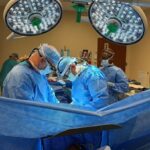
New state-of-the-art technology has been shaping the future of surgery in operating rooms across the nation. From a medical stand point, robotic technology has introduced us to less pain, shorter hospital stays and faster recovery times. However, the real medical breakthrough lies in the hope it has given many patients who, at some point, had few treatment options.
Mercy Hospital in Miami, founded nearly 60 years ago on the principle of compassionate and quality care, has prided itself on being at the forefront of offering the latest cutting-edge technology and services to its patients.
Mercy recently became one of the first hospitals in the city to acquire the superDimension i-Logic System, which broadens the reach of conventional bronchoscopes and provides minimally invasive access to benign and malignant lesions deep within the lungs. The superDimension Electromagnetic Navigation Bronchoscopy (ENB) procedure is giving physicians the capacity to make earlier diagnoses, thereby enhancing treatment options for patients and avoiding the need for higher-risk procedures.
“We are pleased to offer a minimally-invasive alternative for patients who have a lesion on their lung that is hard to reach or for those patients who cannot tolerate a more invasive procedure,” said Dr. Raul Moas, pulmonologist at Mercy Hospital. “This device is an incredibly effective instrument in the early detection of lung cancer.”
As an added benefit to patients, Mercy hospital houses one of Miami’s first hospital-based CyberKnife Robotic Radiosurgery Systems. The CyberKnife is a non-invasive alternative to surgery on both cancerous and non-cancerous tumors anywhere in the body, including the prostate, lung, brain, spine, liver, pancreas and kidney. In the case of lung patients, Mercy doctors are able to attack tumors with swift precision, first diagnosing them with the superDimension and then treating the tumors with CyberKnife. Because these key pieces of technology are under one roof at Mercy, patients are afforded the benefit of immediate care treatment options.
“The CyberKnife Institute at Mercy Hospital will position us at the helm of non-invasive radiation oncology,” said Dr. Manuel Anton, Mercy’s President and CEO. “With this new cutting edge technology, our physicians are able to provide quality care to patients who may otherwise have lost all hope.”
Mercy Hospital was also among the first in Florida and in the nation to acquire the da Vinci ® Si TM Surgical System. The robotic platform, designed to enhance the capabilities of surgeons, provides a new, minimally-invasive approach to as series of complex surgeries including hysterectomies, prostate and other urologic procedures as well as bariatric surgeries. Benefits to patients typically include less blood loss, less chance of infection, a shorter hospital stay, less pain, less scarring and faster recovery. Unlike its predecessors, da Vinci ® Si has incorporated the latest in 3D hi-def technology (1080i), essentially doubling visual clarity with up to 10x magnification. Its platform can also be upgraded periodically to integrate the newest advances in technology.
These technologies are examples of how hospitals nationwide are transitioning from traditional surgical tools (like scalpels) to cutting-edge robotically enabled interventions. Mercy Hospital’s commitment to deliver quality care comes with a vision that involves the latest in technology along with compassion for each person.