
APRIL 7, 2026 – Stanford Medicine is the first in the world to introduce ultracompact proton therapy that will make the advanced targeted radiotherapy more accessible to patients.
Stanford Medicine is opening a first-of-its-kind facility to deliver a form of radiation therapy that has been difficult for cancer patients to access.
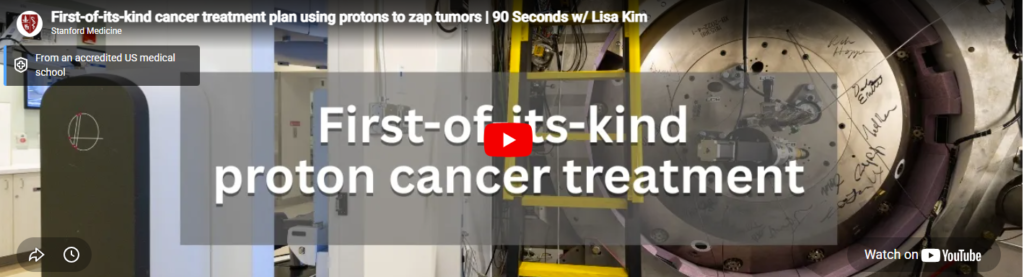
“For our patients, the key is being able to eliminate their cancer without causing unacceptable collateral damage,” said Billy Loo, MD, PhD, professor of radiation oncology and co-director of particle therapy at Stanford Medicine, who played a key role in the innovation. “Proton therapy helps us balance that equation by making radiotherapy more precise.”
By adjusting their energy, protons can be targeted to stop inside a tumor, with little to no exit dose. In contrast, photons used in conventional radiotherapy travel through a tumor and keep going out of the body, exposing tissues behind the tumor to radiation.
Meanwhile, Leo Cancer Care Inc. took a different space-saving approach, developing a system that positioned patients upright for treatment, in a specialized treatment chair.
“Once we brought the companies together, the light bulbs went on,” he said. Combining the world’s smallest cyclotron and the rotating chair would make a very small proton therapy setup. “They said, ‘OK, we will make this product,’ and Stanford Medicine agreed to be the first customer.”
Stanford Medicine is an integrated academic health system comprising the Stanford School of Medicine and adult and pediatric health care delivery systems. Together, they harness the full potential of biomedicine through collaborative research, education and clinical care for patients. For more information, please visit med.stanford.edu.