
By Daniel Casciato
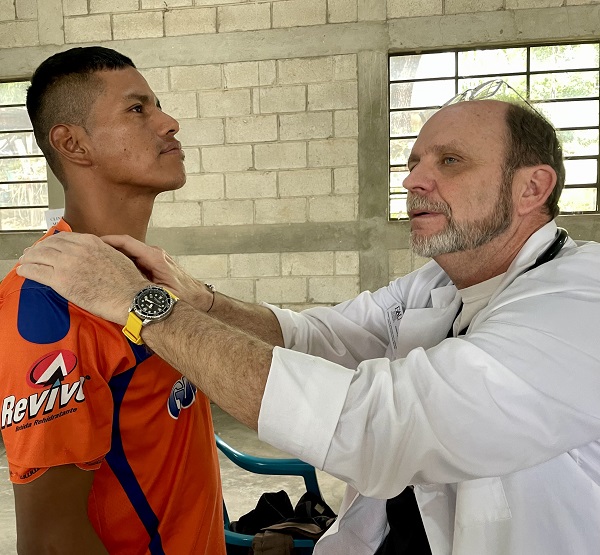
For over a decade, Florida Atlantic University Christine E. Lynn College of Nursing has been sending student teams to Guatemala to collaborate with Nursing Heart, a nonprofit organization dedicated to improving the health of underserved communities. This program, led by Nancy Harris, DNP, APRN-BC, offers nursing students a life-changing opportunity to practice their skills while providing much-needed healthcare in remote areas.
Dr. Harris shared the program’s origins and its ongoing mission: “Nursing Heart was founded on the belief that everyone deserves access to dignified healthcare. We are committed to ensuring that every family in Guatemala has the right to receive preventive care from compassionate professionals.”
Overcoming Barriers to Healthcare
Operating in Guatemala’s Sacatepequez, Chimaltenango, and Solota regions, the nursing teams encounter significant challenges. These areas face a lack of healthcare access, educational barriers, and limited infrastructure, all compounded by a history of marginalization.
“Our teams often meet families who haven’t seen a healthcare provider in years,” says Dr. Harris. Without access to labs or radiology, students rely on fundamental diagnostic skills to treat chronic conditions like diabetes and hypertension, as well as illnesses less common in the U.S., such as chickenpox and dengue fever.
One particularly memorable moment from a recent trip involved a group of expectant mothers who had never seen a doctor. “Using a fetal Doppler, our students measured fetal size and allowed the mothers to hear their babies’ heartbeats for the first time. The joy on their faces was unforgettable,” Harris shares.
Guatemala’s diverse cultural and linguistic makeup also presents unique challenges. While Spanish is the official language, many patients speak Kaqchikel, a Mayan language. Nursing Heart provides interpreters, but the students often find that human connections transcend words. “Our students always come home with a few new Kaqchikel words and an even greater appreciation for cultural differences,” Harris adds.
Hands-On Learning and Lasting Impact
The program immerses nursing students in real-world challenges that strengthen their clinical skills and broaden their perspectives. “This is a back-to-basics approach,” Harris says. “Without advanced technology, students must rely on their foundational knowledge of pathophysiology and diagnostics, which solidifies their medical application skills.”
Beyond technical expertise, the program fosters cultural sensitivity and a deep commitment to patient-centered care. These lessons resonate with students long after they return to the U.S., influencing their professional practice and advocacy for global health equity.
For Dr. Harris, the most rewarding part of leading these trips is witnessing the profound transformation in her students. “Our students are changed,” she says. “They work incredibly hard, embracing every challenge we throw at them, and it’s inspiring to see how much they grow—not just as medical providers, but as individuals.”
These experiences create lifelong bonds between students and faculty, while also fostering a heightened sense of responsibility. Dr. Harris hopes the lessons learned in Guatemala will inspire her students to advocate for underserved communities in the United States, shaping their practice as nurse practitioners and motivating them to influence policies that promote equitable healthcare for all.
Addressing Serious Health Issues
In November 2024, the nursing team screened nearly 300 patients, identifying several cases of cervical cancer. This underscores the importance of the women’s clinics, which operate alongside acute care clinics. Led by Dr. Paty de Baiza of Faith in Practice, the teams use the VIA method (visualization in acetic acid), a cost-effective diagnostic tool used in low-resource settings.
Patients with precancerous lesions receive immediate treatment with thermal ablation, eliminating the risk of invasive cervical cancer. “This approach removes the need for follow-ups, which can be challenging in remote areas,” Harris explains. Patients with chronic conditions like diabetes and hypertension are supported by Nursing Heart’s community healthcare program, which trains local individuals to provide ongoing care.
Compassion and Cultural Considerations
The program is grounded in the Christine E. Lynn College of Nursing’s philosophy of caring. “We recognize culture as a gift brought into every nursing situation,” says Harris. “It’s inspiring to see our students embrace this opportunity with compassion and dedication, reflecting the core values of our profession.”
Looking ahead, Dr. Harris envisions continued growth for the program. “Our students describe this experience as transformative. It’s truly life-changing, both professionally and personally,” she said. With strong support from the College of Nursing, the program plans to expand its reach, bringing more students to Guatemala and providing broader care to underserved communities.
The next trip is scheduled for mid-February, with 12 eager students ready to make a difference. As the program evolves, it remains a shining example of how education and service can intersect to create meaningful change for both students and the communities they serve.
For more information, visit health.fau.edu.