
By: Daniel Casciato
In a time of evolving healthcare needs and heightened demand for nurses, the Nursing Consortium of Florida is a unifying force helping to shape the future of nursing across the state. With nearly 80 organizational members—including hospitals, schools of nursing, and other nurse employers—the Consortium bridges the gap between academia and practice to address critical workforce challenges and spark innovation.
A Legacy of Collaboration
Founded in the wake of Hurricane Andrew in 1992 and formally established in 1997, the Consortium was born from nurse collaboration. “There were no systems back then, hospitals were independent, and most executive nurse leaders were transplants that didn’t know one another,” explains executive director Ralph Egües, now in his 20th year as the organization’s executive director. “In the aftermath of the hurricane, these leaders came together to address community needs and that spirit of unity gave rise to what we are today.”
Initially serving South Florida, the Consortium has expanded statewide in recent years. “It was our work during the pandemic that first attracted organizations across Florida to join,” Egües says. “We held a conference in Orlando last summer and our next conference will take place this June at St. Pete Beach. Our board has directed that we take programming to where our new members are.”
Building the Pipeline: Clinical Placements and Professional Support
One of the organization’s most celebrated achievements is its innovative approach to student nurse clinical scheduling. “We were asked in 2006 to bring in a tech solution to facilitate the matching of placement needs to unit availability,” Egües recalls.
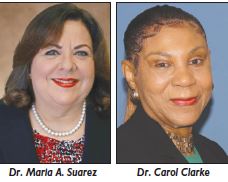
Today, the latest version of that centralized clinical placement system, the CCPS, allows schools and hospitals to efficiently coordinate clinical placements, improve compliance tracking, and facilitate recruitment efforts. “It’s been a game-changer,” says Dr. Carol Clarke, Director of the School of Nursing at Palm Beach State University and a board member of the Consortium. “With more than 400 RN students, the system helps us manage placements seamlessly.”
Clarke also points to the system’s role in recent reaccreditation success. “Our accreditors were impressed with our ability to show in real-time how we manage clinical placements electronically,” she says. “We received no recommendations for improvement.”
Tackling Retention and Onboarding Challenges
Beyond logistics, the Consortium is deeply invested in professional development and retention. One key area of focus is graduate nurse transition to practice—a critical gap often underfunded in healthcare.
“There’s no expectation that a new med school grad is ready to practice—they go through years of residency and fellowships that are federally and state supported,” notes Egües. “But in the case of nurses, hospitals are expected to absorb that cost. We’re looking to better leverage our 501(c)(3) status to bring in funding, including through a novel approach to apprenticeships that won’t require hospitals to change their residency programs for onboarding graduate nurses.”
Recruitment and retention are recurring challenges, particularly in high-cost areas like Miami. Vicki D. Caraway, Chief Nursing Officer at the Miami Cancer Institute, and president-elect of the Consortium knows the struggle firsthand. “When I arrived, turnover exceeded 30 percent,” she recalls. “Now it’s under seven percent. It took multiple strategies—rounding, strong onboarding, visibility—but what really helped me was the network of support available through the Consortium.”
That support is rooted in openness and shared goals. “We’re all competitors,” Caraway admits, “but the Consortium brings us together as colleagues. We learn from one another and celebrate each other’s wins.”
For Dr. Maria A. Suarez, AVP at Miami Cancer Institute and Consortium past-president, the group’s inclusive approach is what sets it apart. “This is the only organization that brings together nurse leaders, educators, staff nurses, and students,” she says. “Everyone has a voice—and that diversity of thought leads to real solutions.”
The Consortium’s impact reaches future nurses, too. Programs like Day in the Life of a Nurse™ introduce high school and middle school students to the profession. During the pandemic, the program went virtual, expanding its reach from one thousand students to more than six thousand middle and high school students in Monroe, Miami Dade, Broward, and Palm Beach counties.
“There’s been a renewed focus on caregiver mental health. So many topics of conversation including team building, workforce retention, disaster recovery, and workplace incivility have led back to mental health,” Egües says; “that’s what inspired the theme of the next Consortium conference on St. Pete Beach in June which features national thought leaders like Brian Sexton from Duke Health and Rocky Hauch from BayCare Healthcare System.
For Caraway, the choice of venue resonates personally, “I spent 30 years in the Tampa Bay area and lost my home on Treasure Island in a recent hurricane,” she shares, “This conference is our way of extending a hand to a community that’s still rebuilding and reaching out to nurses that were most affected with a great program that will also be a celebration of nursing. It’s about our saying, ‘We see you, and we’re here to support you.’”
New Members, Lasting Impact
As the Consortium grows across Florida, it welcomes new members with a strong sense of inclusion and purpose. One of those is Cape Coral Hospital, part of the Lee Health system on Florida’s Gulf Coast.
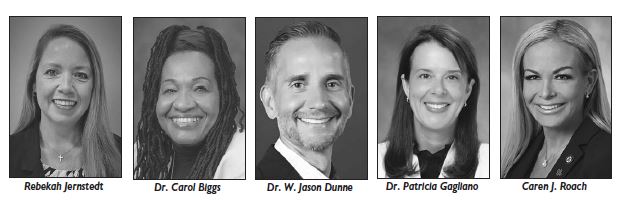
“Cape Coral Hospital’s experience as a relatively new member of the Nursing Consortium has been incredibly positive and welcoming,” says Rebekah Jernstedt, Vice President of Operations and Chief Nurse Executive. “From the beginning, the hospital never felt like a newcomer. Several staff members quickly became involved in committee work, and within six months, our leaders were already spotlighted on conference panels.”
That early involvement laid the foundation for deeper engagement. “My predecessor was elected to the board, and I’ve since been elected as well,” Jernstedt adds. “These leadership roles reflect our commitment to supporting nursing as a whole and contributing to the Consortium’s growth.”
Jernstedt emphasizes the value of connection and collaboration. “Through the Consortium, nurses at all levels and from across specialties can share ideas, learn from others outside their immediate systems, and grow professionally. It’s a vital resource for advancing the nursing profession.”
Expanded Perspectives from Statewide Leaders
As the Nursing Consortium of Florida continues to grow and evolve, leaders across the state are echoing the value it brings to their organizations, communities, and the nursing profession as a whole.
Dr. Carol Biggs, Chief Nursing Executive at Jackson Health System, highlights the Consortium’s role in driving advocacy, education, and collaboration.
“The Consortium’s efforts in advocating for policies that strengthen nursing practice and education have been instrumental,” she says. “It also fosters academic-practice partnerships, encourages nurses to serve on community boards, and offers invaluable educational conferences that promote growth and leadership.”
Board President Dr. W. Jason Dunne emphasizes the importance of long-term infrastructure.
“The Consortium brings academic and healthcare leaders together to assess workforce needs and design scalable solutions,” says Dunne. “Sustainability means predictable investment, data-informed policy, and inclusive pathways into the profession—ensuring that the nursing workforce is well-resourced, adaptable, and centered on improving health outcomes.”
On Florida’s Treasure Coast, Dr. Patricia Gagliano, Dean of Nursing at Indian River State College, and newly elected Consortium director saw great alignment between the Consortium’s mission and her college’s commitment to community transformation. “I hope to serve as a catalyst for transformative partnerships that advance wellness and grow our local workforce,” she says. “I’m eager to expand educational programming and help propel nursing into the next generation.”
Board member Caren J. Roach, Chief Nursing Officer at HCA Florida Woodmont Hospital, agrees. “The NCOF cultivates a culture of collaborative leadership. From ‘A Day in the Life of a Nurse™’ to reactivating the Advocacy Committee, the Consortium empowers members at all levels to be part of healthcare transformation through dialogue, education, and action.”
Strategic Vision for Nursing in Florida
Looking ahead, the Nursing Consortium of Florida has launched a strategic planning process with ambitious goals. These include a presence in Tallahassee, growing their financial capacity to support member initiatives, and increasing nursing presence on community and foundation boards throughout Florida.
“Too many boards are making healthcare decisions without a nurse at the table,” Suarez notes. “We’re changing that through active membership in national organizations like the Nurses on Boards Coalition and regional ones like the Greater Miami Chamber of Commerce.”
In an era when nursing challenges can seem overwhelming, the Nursing Consortium of Florida offers a rare mix of pragmatism and hope.
“During the pandemic, a New York Times Magazine writer told me that I was the only person she had interviewed who was hopeful about the future of nursing,” Egües recalls. “And I continue to be. Because, as I told her, through the Consortium, we long ago realized that we get to better together.”
For more information about the Consortium or about their upcoming conference, visit www.nursingconsortium.us.