While the healthcare landscape has changed dramatically over the past three decades, one thing has remained the same: The Nursing Consortium of Florida, Inc. has been working to strengthen the field of nursing through collaboration, communication, and education.
Incorporated as a not-for-profit in 1997, the Consortium started as an informal network of nurse leaders who first came together to address community needs following Hurricane Andrew. The Consortium now has more than 70 member organizations, including schools of nursing, hospitals and other providers of nursing services such as hospice organizations, nurse staffing agencies, and more. Consortium membership has grown through the Treasure Coast counties and the Florida Gulf Coast and new organizational members from throughout Florida are welcomed.
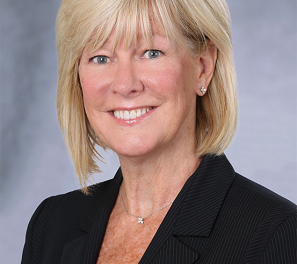
“Our conferences, held twice a year, focus on an aspect of nursing with broad appeal to practicing nurses, new graduates, advanced practice nurses, educators, and executives, said Board President Jean Seaver, MSN, RN, Associate Vice President, Learning & Development, Broward Health. “We provide this continuing education not just for contact hours, but as a way for members to connect with other members of the Consortium for networking, information sharing, and collegiality.”
The Consortium has a recruitment and retention committee to identify, share and build upon initiatives that are helping members reload their COVID-depleted nursing workforces.
“There isn’t really a nursing shortage, per se, in Florida—there is a nursing retention problem and a nursing image problem,” said Seaver. “A lot of people enter the profession based on what they’ve seen on TikTok and what they’ve heard on YouTube, and that’s not really what the profession is about. So we really like to focus on what nursing is.”
The Consortium has developed Day in the Life of a Nurse™; a nationally recognized program that shows high school and middle school students the real work that nurses do. The program offers both in-person experiences and curated and interactive virtual content that engages thousands of students each year; nurturing early interest in healthcare careers.
“The virtual program came about as COVID transformed how we lived, worked, and learned; it forced us to go online to continue creating interest among young folks regarding the nursing profession,” said Board President-Elect W. Jason Dunne, DNP, MN, RN, CNE, Vice President, Operations, Arizona College of Nursing. “In the first year that we launched it, we reached more than 5,000 Miami Dade, Broward, and Palm Beach county school students, introducing them to nursing careers.
“Nurses work in many different aspects and parts of the globe and in general, community members don’t truly understand what a nurse does,” he continued. “I think people believe that nursing is only someone at the bedside administering medication, but nursing is so much more than that. The program and its online modules expose students to all the different types of nursing from hospital-based to community-based to academia and more.”
The Consortium is also starting nursing summer camps to further expose area youth to the nursing profession. The organization’s advocacy committee helps members engage policy leaders on matters of importance to nursing, and its community engagement committee helps connect nurse leaders to opportunities to serve on community and foundation boards.
Another of the Consortium’s strengths is its ability to bring various entities together to collaborate on major issues facing the profession, such as the fact that 1 million nurses nationwide are expected to retire by 2030.
“This is going to exacerbate filling positions locally and nationally and will create challenges in terms of recruitment in other parts of Florida,” said Dunne. “That’s why it’s important that we reach across the state to bring together practice and education partners, to share our signature programs with them and their communities, and to learn about their innovations and best practices, too.”
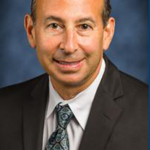
One of the keys to the Consortium’s success, according to Ralph Egües, Jr., Executive Director,
Nursing Consortium of Florida, is that unlike some nursing organizations that focus on a particular practice specialty or exclusively on leaders or educators, at the Consortium, everyone at the table is an equal partner. As a result, major changes are able to take place with the input of many.
“For example, there has been a tremendous evolution in the way that we are onboarding new nurses today,” said Egües. “In the past, when we hired a large number of nurses, we also had a large number of very experienced nurses in units who could integrate new hires into the culture and organizational practices. During COVID, we lost many of our experienced nurses, so now we have to be more intentional with our onboarding programs. It helps to have multiple organizations sharing what’s working and what’s not.
“By convening nurse leaders from different organizations to share what each is trying, all gain greater insights into what is needed to radically transform an aspect of what they’re doing,” he added. “The Consortium is fertile ground for bringing leaders in nursing practice and academia together to assess and address our biggest challenges, which, frankly, is unique among nursing organizations.”
The Consortium will hold its next conference Caring Connections; Discovering Magic at the Intersection of Technology & Nursing in late June at Walt Disney World near Orlando, and is exploring venues in other parts of Florida for future conferences as well.
To learn more about all that the Nursing Consortium of Florida does, please visit www.NursingConsortium.us.