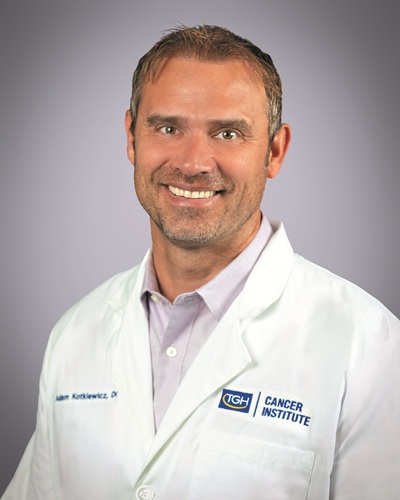
Dr. Adam J. Kotkiewicz
For patients with suspected or confirmed urologic cancers, including prostate, bladder, kidney and testicular cancers, the handoff between urologist and oncologist is one of the most consequential moments in their care. Delays in that transition, caused by fragmented records, incomplete referral packets or scheduling gaps, directly affect treatment timelines and outcomes. Tampa General Hospital (TGH) has built its South Florida network specifically to eliminate those friction points.
Tampa General’s integrated network of urology and oncology specialists across the Palm Beaches and Treasure Coast creates an innovative pathway between specialties. Urologists at TGH Urology Group of Florida coordinate care easily with TGH Cancer Institute | Cancer Center of South Florida (CCSF), with shared access to Epic electronic medical records (EMRs). Pathology reports, imaging, operative notes and lab results are visible to both teams in real time; no faxing, no chasing records and no gaps in the referral packet before an oncology consult.
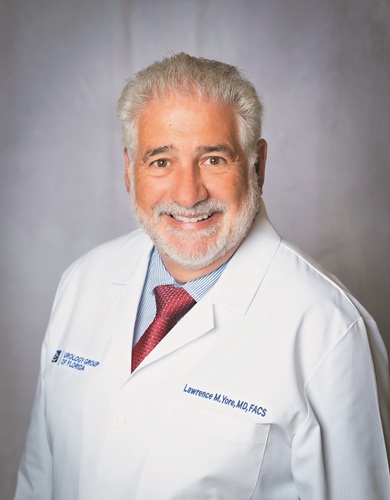
Dr. Lawrence Yore
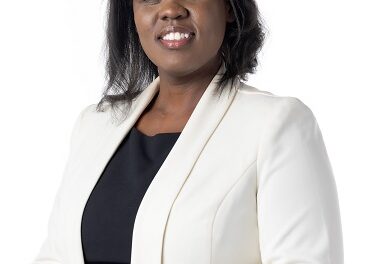
“Patients facing a potential urological cancer diagnosis are already navigating a stressful and uncertain time,” said Dr. Adam J. Kotkiewicz, medical oncologist with TGH Cancer Institute | CCSF. “Tampa General has reinvented multispecialty collaboration between its urology and oncology teams, helping us streamline referrals and accelerating patient access to treatment. This can make all the difference in a patient’s outcome.”
These virtual shared EMRs also change what’s possible before the first oncology visit. Oncologists can review urology workups in advance, compressing the time to disease-staging confirmation and earlier initiation of therapy, which is critical for time-sensitive cancers, like bladder or high-risk prostate cancers.
Nurse navigators further accelerate this process. Rather than simply routing information, they proactively verify pathology, imaging and staging data before consultations, as well as manage scheduling and ensure that required labs are completed in advance. What is typically a fragmented workflow becomes a continuous one, with physicians spending less time on logistics and more on clinical decision-making.
Another key differentiator is the use of multispecialty case review within the network. Complex urological cancer cases, particularly those involving advanced or ambiguous staging, can be discussed collaboratively among urologists, medical oncologists, radiation oncologists and radiologists. This team-based approach helps alignment on the most appropriate treatment strategy earlier in the care continuum, reducing variability and ensuring that each patient benefits from a consensus-driven plan. Rather than waiting for sequential referrals to unfold, providers can make more informed decisions upfront, improving both efficiency and confidence in the chosen course of care.
The network’s regional footprint across the Palm Beaches and Treasure Coast further supports continuity for patients who might otherwise face geographic or logistical barriers to specialty care. With multiple access points for both urology and oncology services, patients can move through diagnosis, staging and treatment without unnecessary travel or disruption. This accessibility, combined with standardized workflows and shared clinical protocols, reinforces a consistent experience regardless of entry point into the system. For referring physicians, it means greater certainty that their patients will be guided through a coordinated process that prioritizes timely intervention and clear communication at every transition.
Tampa General’s academic partnership with USF Health Morsani College of Medicine adds another dimension for physicians: access to breakthrough treatments, evolving clinical guidelines and clinical research infrastructure through the TGH-USF Health Office of Clinical Research. Continuing medical education (CME) lectures hosted within the network allow urologists and oncologists to meet, align and build the working relationships that make multimodal cancer care, which includes surgery, radiation, systemic therapy and immunotherapy, function as a coordinated sequence rather than as a series of disconnected handoffs.
“When cancer is suspected, every day counts,” said Dr. Lawrence Yore, urologist with TGH Urology Group of Florida. “Our goal is to give patients access to the right specialists at the right time, with a care team that’s communicating every step of the way.”
For physicians looking to practice within a system built for collaboration, with shared infrastructure, academic resources and a growing regional footprint, Tampa General offers a compelling model.
For more information about Tampa General’s expanding network of specialized services in the Palm Beaches and on the Treasure Coast, visit TGH.org/ThePalmBeaches.