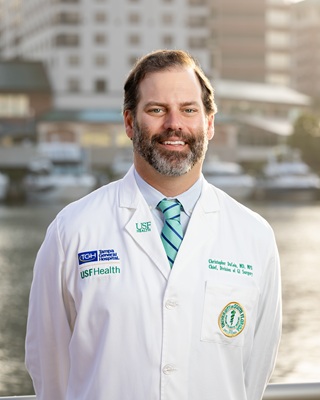
Tampa General Hospital is one of just three hospitals in the country — and the only one in the Southeast United States — offering the per-oral plication of the esophagus (POPE) procedure. The treatment is a minimally invasive, endoscopic alternative for patients with end-stage achalasia and severe gastroesophageal reflux disease (GERD) who have exhausted conventional surgical options.
The procedure recently gave Palm Beach County resident Phillip Epps, 78, relief from nearly six decades of achalasia, a rare motility disorder in which the esophagus loses its ability to push food into the stomach and the lower esophageal sphincter fails to relax and open.
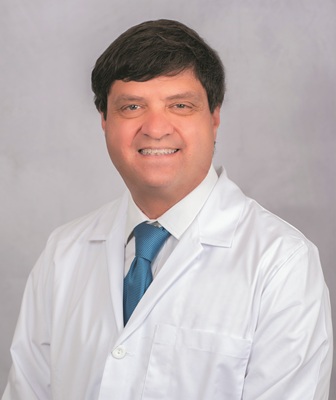
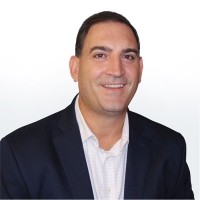
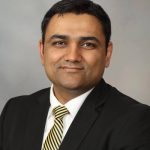
Dr. Jeffrey Garelick
“The POPE procedure makes it easier for food to go down into the stomach, helps reduce trouble swallowing and helps stop food from coming back up,” said Dr. Christopher DuCoin, chief of the TGH Digestive Diseases Institute, who performed Epps’ surgery alongside Dr. Salvatore Docimo, vice chair of surgery.
Achalasia is rare, affecting an estimated one in 100,000 people annually, and its progressive nature means many patients cycle through multiple interventions over decades without achieving durable symptom control. For referring physicians, Epps’ case illustrates the diagnostic and treatment pathway Tampa General offers patients with this kind of complex, long-standing esophageal disease. Diagnosed with achalasia in his early 20s while living in the United Kingdom, Epps was initially managed with antacids. After relocating to the United States, his disease progressed despite a Heller myotomy, then later, a Nissen fundoplication. These procedures failed to provide lasting relief and left him at an elevated risk for esophageal cancer, requiring an annual surveillance endoscopy.
Epps’ care was eventually transferred to Dr. Jeffrey Garelick, a gastroenterologist with the TGH Digestive Health Center, following a change in insurance and the loss of his previous GI specialist. Garelick first trialed Voquezna, a newer potassium-competitive acid blocker, to manage Epps’ GERD symptoms before referring him to Dr. DuCoin for surgical evaluation. Epps was able to meet with Dr. DuCoin remotely via telemedicine.
To confirm the diagnosis and stage of disease, Dr. DuCoin ordered an EGD with EndoFLIP (endoluminal functional lumen imaging probe), a catheter-based tool that uses balloon distension to measure esophageal diameter, distensibility and pressure in real time. The study confirmed end-stage achalasia and a severely dilated, poorly functioning esophagus, with food pooling near the gastroesophageal junction.
Rather than repeat prior surgical approaches or proceed to esophagectomy, Dr. DuCoin recommended POPE. The endoscopic, suture-based technique places triangular stitches along the esophageal wall, which are then cinched to reduce luminal diameter. It straightens the esophageal axis and improves peristaltic clearance, addressing the dilation and food stasis characteristic of end-stage disease, without the morbidity of an open or laparoscopic resection.
“POPE would reduce the dilatation of Phillip’s lower esophagus, help food pass smoothly and prevent pooling,” Dr. DuCoin said.
While POPE is typically performed as an outpatient procedure under general anesthesia, Dr. DuCoin’s team elected to admit Epps overnight for a swallow study, confirming the absence of structural leaks and evaluating the reshaped esophagus’ handling of food and liquid before clearing him to resume a regular diet.
Nearly six weeks post-procedure, Epps has returned to a normal diet and reports significant improvement in his quality of life. “I am so grateful to Dr. DuCoin, Dr. Docimo and Dr. Garelick for their care and compassion,” he said. “Now I can get back to enjoying my life.”
Epps’ case reflects the coordinated care model connecting the TGH Digestive Health Center’s East Coast providers with the TGH Digestive Diseases Institute’s advanced surgical and endoscopic capabilities in Tampa. Through telemedicine consultation and shared clinical records, Palm Beach County-based gastroenterologists like Dr. Garelick can refer patients directly to Dr. DuCoin’s team for complex esophageal motility evaluation, including EndoFLIP-guided diagnostics, the POPE procedure, and revisional surgery for patients who have failed prior interventions such as Heller myotomy or Nissen fundoplication. This connectivity provides patients across Florida’s East Coast with seamless, coordinated access to one of the few POPE-capable teams in the country.
To learn more or to refer a patient, please call (561) 739-4TGH.