For decades, heart surgery often meant a large incision, opening the breastbone and a lengthy recovery. Today, robotic-assisted surgery is helping reshape that experience, allowing highly trained surgeons to perform increasingly complex procedures through small incisions while giving appropriate patients the potential for less pain, shorter hospital stays and faster recoveries.
Baptist Health Heart & Vascular Care’s Center for Robotic Heart & Vascular Surgery has quickly developed into an important platform for innovation, collaboration and increasingly personalized heart care.
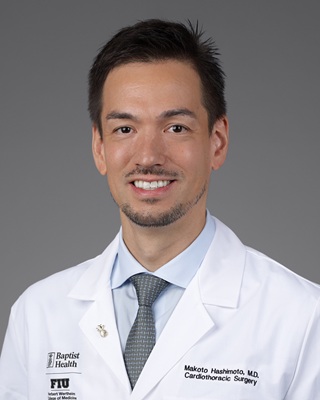
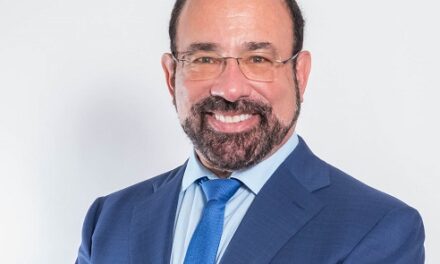
Dr. Makoto Hashimoto
Baptist Health Heart & Vascular Care launched its robotic cardiac surgery program in January 2025. Makoto Hashimoto, M.D., cardiac surgeon at Baptist Health Miami Cardiac & Vascular Institute and professor and director of robotic cardiac surgery at Florida International University Herbert Wertheim College of Medicine, was recruited from Japan to establish the program. An internationally experienced robotic cardiac surgeon, Dr. Hashimoto had previously developed a high-volume robotic program in Japan.
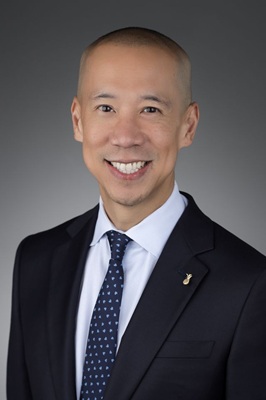
Dr. Tom C. Nguyen
Robotic surgery enables surgeons to work through small incisions between the ribs using highly specialized instruments and a magnified, three-dimensional view of the heart. The technology provides enhanced dexterity and precision while avoiding a traditional sternotomy in appropriately selected patients.
“With the robotic surgical system we use, the surgeon’s hand movements are seamlessly translated into precise, real-time movement of instruments,” Dr. Hashimoto said.
The program grew rapidly. By November 2025, Dr. Hashimoto had completed his 100th robotic cardiac surgery at Miami Cardiac & Vascular Institute just months after the program’s launch. The program encompasses procedures ranging from valve repair and replacement to coronary bypass surgery, treatment for atrial fibrillation, congenital heart defect repair and tumor removal.
For Tom C. Nguyen, M.D., system chief executive of Baptist Health Heart & Vascular Care, chief medical executive of Baptist Health Miami Cardiac & Vascular Institute, and chair and professor of the Department of Cardiovascular Sciences at FIU Herbert Wertheim College of Medicine, the program represents an important foundation for the future of cardiac care.
“We’ve done a lot and the best is yet to come,” Dr. Nguyen said following the 100th-case milestone.
Taking on Rare and Complex Cases
The program’s impact can also be seen in highly complex cases.
When 73-year-old Carlos Perez developed atrial fibrillation, physicians discovered he had lived his entire life with cor triatriatum, a rare congenital defect in which a membrane divided one of his heart’s upper chambers, effectively creating a five-chambered heart.
The unusual diagnosis brought together experts from Baptist Health and Nicklaus Children’s Hospital Heart Institute. Drs. Nguyen and Hashimoto collaborated with David Kalfa, M.D., chief of cardiovascular surgery and co-director of Nicklaus Children’s Hospital Heart Institute, and professor of surgery and pediatrics at FIU Herbert Wertheim College of Medicine.
The team used robotic-assisted surgery as part of a multidisciplinary approach to treat the condition without a traditional open-chest procedure.
“The biggest advantage of robotic surgery is doing a very precise operation,” Dr. Hashimoto said.
That collaboration ultimately helped create another major milestone.
In 2026, Baptist Health Miami Cardiac & Vascular Institute and Nicklaus Children’s Hospital Heart Institute completed Florida’s first robotic-assisted atrial septal defect repair in a pediatric patient. The procedure allowed the team to repair the congenital heart defect through small incisions while avoiding a sternotomy.
“Small incisions make a big difference, especially in children,” Dr. Nguyen said.
The accomplishment reflected a broader collaboration among Baptist Health, Nicklaus Children’s Hospital and FIU, bringing together adult and pediatric cardiac expertise, advanced surgical technology and academic medicine.
Looking Toward an AI-Powered Future
The next evolution of robotic cardiac surgery may increasingly involve artificial intelligence.
Baptist Health physicians are exploring how AI, advanced imaging and robotic technology can work together to help surgeons better understand a patient’s anatomy, plan complex operations and personalize surgical approaches.
“We are entering an era where technology doesn’t just assist the surgeon’s hands, it enhances the surgeon’s mind,” Dr. Hashimoto said.
In less than two years, Baptist Health’s robotic cardiac surgery program has progressed from its launch to more complex adult procedures, groundbreaking pediatric collaboration and the emerging integration of AI.
Together, those accomplishments signal a larger transformation in heart care: not simply finding ways to perform complex surgery successfully, but finding ways to make that surgery more precise, less invasive and less disruptive to patients’ lives.
For Baptist Health Heart & Vascular Care, robotic cardiac surgery is helping make that future a reality. For more information about Baptist Health Heart & Vascular Care, visit BaptistHealth.net/Heart.