By Daniel Casciato
Mental and behavioral health care does not begin when a patient enters a psychiatric unit. It can surface in an emergency department, rehabilitation center, outpatient clinic, school, correctional facility or virtually anywhere else nurses encounter patients.
That reality has implications for how the next generation of nurses is educated.
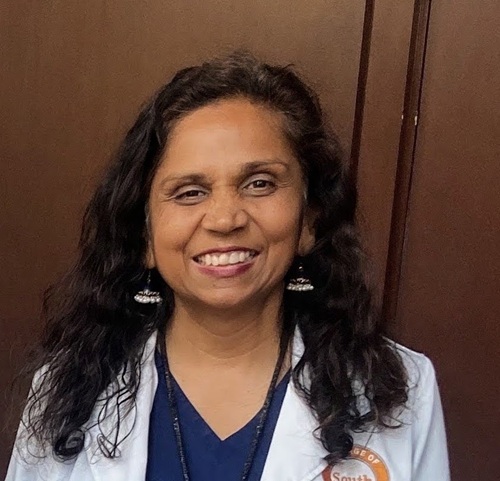
For Dr. Sharon Ramjohn, PhD, RN, CNE, nursing faculty at South University’s College of Nursing, preparing students for those encounters starts well before they take a dedicated mental health course. Students begin learning therapeutic communication, caring and professionalism early in their nursing education, building skills they will eventually apply to patients experiencing a wide range of psychiatric and behavioral health conditions.
“Mental health matters and the patients are not seen as a ‘room number’ or a ‘disease’ but rather as a unique individual,” says Dr. Ramjohn.
It is a principle she wants students to carry throughout their careers, regardless of the setting in which they eventually practice.
Building Skills Before Entering the Clinical Setting
Dr. Ramjohn teaches “Caring for Persons with Psychiatric and Mental Health Disorders,” a comprehensive course offered during the senior year of South University’s undergraduate nursing program.
Students learn to perform assessments, intervene during crises, monitor and treat substance abuse, assess suicide risk, de-escalate difficult situations, administer medications and assist with short-term stabilization.
The course does not rely solely on lectures. Simulation, interactive online modules and role-playing give students opportunities to work through situations before encountering them in clinical practice. A laboratory and clinical component further develop those skills. At clinical sites, students partner with nurses and other healthcare professionals while participating in the care of patients with various mental health diagnoses.
The preparation matters because students may enter the course with considerable apprehension.
“Nursing students experience intense fear and anxiety before the mental health course due to safety concerns, the inability to communicate effectively with the patients and deep-seated stigmas from their own personal values and attitudes towards patients with a mental health illness,” Dr. Ramjohn says.
Some questions are immediate and practical: “Will I get hurt; How will I handle an angry, agitated or violent patient?”
Education provides a setting where those concerns can be discussed rather than ignored.
Students learn therapeutic communication and strategies for reducing stereotyping, fear and social distancing. Classroom instruction, lab work and clinical experiences expose them to mental illness, treatment and psychotherapy while giving them opportunities for meaningful interaction with patients.
Just as importantly, Dr. Ramjohn encourages students to examine what they themselves bring into those interactions.
Students are asked to recognize their own feelings and personal biases before caring for people experiencing mental health challenges. That self-awareness is part of learning to provide nonjudgmental care.
“Nursing is indeed an art and a science, and that the patient’s well-being is paramount,” Dr. Ramjohn adds.
Assessment, intervention, evaluation and patient education remain essential nursing responsibilities. But Dr. Ramjohn emphasizes that they should be delivered through holistic, empathetic and compassionate care regardless of a patient’s diagnosis.
Mental Health Care Is Everywhere
A nurse does not need to specialize in psychiatric nursing to encounter a patient struggling with depression, anxiety, substance use, suicidal thoughts, agitation or another behavioral health concern.
Nurses care for patients with mental health needs in outpatient clinics, emergency departments, rehabilitation centers, community programs, schools, correctional facilities and crisis centers, among other settings.
That makes mental health preparation relevant across nursing education.
“The nursing program equips nursing students with the knowledge, skills and attitudes needed to provide competent nursing care for any patient and to use therapeutic communication, to promote patient safety and coping skills that are required for recovery,” says Dr. Ramjohn.
The broader lesson is that physical and mental health cannot always be neatly separated at the bedside. A patient admitted for a medical condition may also be frightened, depressed or experiencing a psychiatric disorder. Nurses are often among the healthcare professionals spending the most time with patients, putting them in a position to recognize changes, communicate concerns and respond appropriately.
Caring for the Caregiver
Preparing students to address patients’ mental health needs also requires nursing schools to acknowledge the emotional demands placed on students themselves.
Nursing education is rigorous. Dr. Ramjohn says students may experience stress, anxiety, fear and helplessness before clinical experiences. Laboratory and clinical preparation can build confidence, but institutional support also matters.
At South University, students have access to mental health counseling through a 24/7 support line and wellness hub. The College of Nursing also offers a mentoring program connecting students with peers in upper classes.
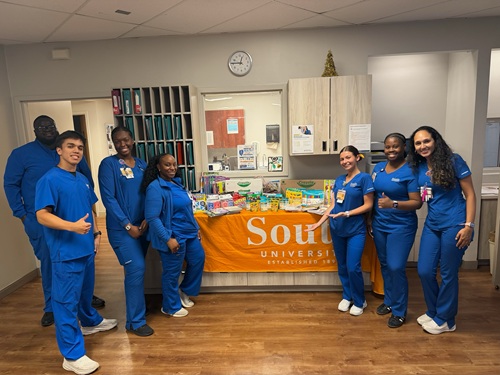
Students involved with the National Student Nurses Association provide academic and emotional support to classmates while participating in community outreach. Each year, the organization partners with students in the mental health course to donate items to patients at clinical sites.
Dr. Mary McMullen, Program Director of the College of Nursing in West Palm Beach, sees that service as beneficial to students as well as the community.
“This act of giving back to the community helps students fill their emotional reserves,” Dr. McMullen says.
She adds, “Nursing schools hold a distinct opportunity to help students mitigate the fear, anxiety and emotional stress of caring for patients and themselves at the same time.”
Developing that capacity may become increasingly important as students transition into a profession where burnout and emotional exhaustion can affect both nurses and the organizations that depend on them.
Learning Across Disciplines
Dr. Ramjohn would also like nursing education to place greater emphasis on collaboration.
Mental and behavioral health care rarely belongs to one profession. At South University, graduate students and faculty from the Clinical Mental Health Counseling Program collaborate with nursing students taking the mental health course, providing additional learning resources on mental health topics and disease processes.
Nursing students also work with community leaders through outreach activities.
“Collaborating with different disciplines should be part of every nursing program to prepare the next generation of nurses to care for mental health patients,” she states.
That preparation is not only about recognizing psychiatric symptoms or knowing how to respond during a crisis. It involves learning how to communicate, challenge assumptions, work alongside other professionals and recognize the humanity of someone whose behavior or diagnosis may initially make a student uncomfortable.
It also means teaching future nurses to extend some of that same attention to themselves.
“Promoting a culture of self-care and support can decrease emotional exhaustion in nursing students, thereby safeguarding the pipeline of the next generation of nurses,” Dr. Ramjohn says.
For students who may eventually practice in vastly different corners of healthcare, the specialty may change. The need to understand mental health will not.
For more information, visit southuniversity.edu.