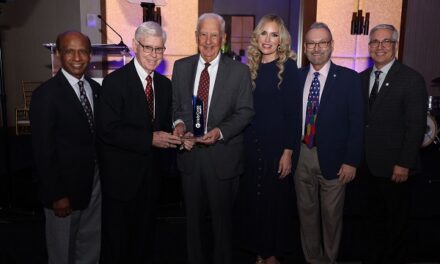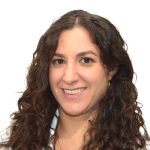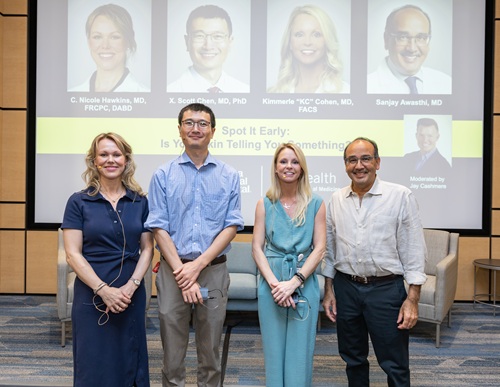
(l-r) Dr. C. Nicole Hopkins, with the USF Health Morsani College of Medicine, and Dr. X. Scott Chen, Dr. Kimmerle “KC” Cohen and Dr. Sanjay Awasthi, all with the TGH Cancer Institute | Cancer Center of South Florida, shared insights on skin cancer at a recent community panel held at Loggerhead Marinelife Center.
At a recent community panel, three TGH Cancer Institute | Cancer Center of South Florida (CCSF) specialists — Dr. Sanjay Awasthi (medical oncology), Dr. X. Scott Chen (radiation oncology) and Dr. Kimmerle “KC” Cohen (surgical oncology) — as well as Dr. C. Nicole Hawkins, a dermatologist with the USF Health Morsani College of Medicine, laid out how skin cancer management has shifted in ways that affect referral timing and destination, not just patient counseling. For referring physicians, several of these shifts are worth building into practice now.
Sentinel lymph node biopsy threshold moved
For years, a tumor depth of 1 mm was the cutoff for recommending a sentinel lymph node biopsy in melanoma — a procedure that checks whether cancer has begun spreading to nearby lymph nodes. Dr. Cohen noted that TGH surgical oncology now uses a lower threshold, 0.7 mm, based on updated research building on Dr. Donald Morton’s original studies. In practice, that means some melanomas that used to be treated with excision alone are now candidates for node staging. Tumor depth remains the most useful detail to flag at referral, along with whether the tumor is ulcerated. The depth factor now carries more weight in staging than the older mitotic index measurement.
Combined treatment expands what’s operable
Dr. Chen presented a case of basal cell carcinoma growing near the corner of the eye, where surgery risked damaging the eyelid. Instead of extensive reconstructive surgery, the case was managed with a targeted oral medication combined with radiation, preserving eyelid function with minimal visible change three years later. For skin cancers in hard-to-treat spots — around the eyes, nose or ears — this is a reason to bring in radiation and medical oncology early, rather than assuming surgery is the only option, especially for patients who aren’t good surgical candidates.
Immunotherapy given earlier in disease course
According to Dr. Awasthi, immunotherapy given after surgery — to lower the risk of recurrence — is now standard for stage III melanoma and increasingly used for stage II. This treatment is a real shift from just a few years ago. Giving immunotherapy before surgery is also gaining ground for larger or harder-to-remove tumors, ideally starting within about 12 weeks of diagnosis. For any melanoma at stage II or higher, bringing in medical oncology earlier rather than waiting until after surgery can provide options that aren’t available once the recovery window has closed.
The treatment tool kit has genuinely expanded, according to Dr. Awasthi, which matters most for patients who’ve stopped responding to first-line therapy or who fall into rare subtypes:
- Melanomas with a BRAF gene mutation can now be treated with targeted pills that produce strong, sometimes lasting responses even in stage IV disease. It’s reasonable to request genetic testing at diagnosis rather than waiting until standard treatment fails.
- A newer class of drugs (including tebentafusp) offers an option for patients whose cancer has stopped responding to standard immunotherapy. Included in this drug class is the first approved treatment for metastatic ocular melanoma, which is a rare form most community practices infrequently see, if ever. Familiarity with these newer drugs is a real reason to consider a practice affiliated with an academic health system.
- Side effect management has also come a long way since the earliest immunotherapy drugs. Hormonal, digestive and liver-related side effects are now well understood and managed proactively rather than caught after the fact.
Dr. Cohen mentioned that when it comes to referrals, straightforward basal and squamous cell cancers in easy-to-reach locations remain well within a dermatologist’s normal surgical care. The cases worth an earlier, more deliberate referral to a comprehensive, multidisciplinary cancer program are those with a melanoma depth of 0.7 mm or more, a difficult or cosmetically sensitive location, stage II disease or higher, a prior treatment that’s stopped working, or a rare subtype (such as ocular melanoma, Merkel cell carcinoma or skin lymphoma). These scenarios illustrate where the gap in experience and drug access is largest between community and academic health settings.
For more information about the referral process at TGH Cancer Institute | CCSF, please call (561) 253-3980.