As South Florida continues to climb out of the deep recession caused by the economic crash of 2008, more and more people are looking for ways to reinvent themselves and create a new career path that will give them the financial security to provide their families with a bright and stable future. While this creates a great opportunity for the rapidly growing healthcare fields, it does not come without its challenges.
According to a report developed by Georgetown University’s Center on Education and the Workforce, the number of healthcare jobs available will expand by three million positions over the next decade. In response to this growth, the demand for postsecondary education and training in healthcare will also continue to rise. By 2020, 94% of professional and technical occupations will require postsecondary accreditation, second only to STEM and education degrees. In other words, it will become more difficult for people to enter this workforce with the appropriate accreditation because of the heavy time commitment required to attain these degrees.
South Florida in particular, is seeing the shift, due to its dense and growing senior population. To be able to meet these needs, educational institutions will have to take a look at their current models and figure out ways to adjust to better serve the community and the industry. Specifically, learning institutions will need to start implementing flexible options like open enrollment, availability for morning and night classes, more degree start options and a defined track that allows students to know exactly when they will graduate.
Today, Dade Medical College (DMC) stands as one of the only educational institutions in the South Florida region that offers this type of flexibility and its students and the local healthcare industry have reaped the benefits.
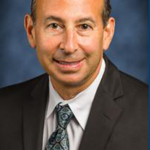
.jpg) “There is definitely something to be learned by just looking at the demographics of our student body,” says Ernesto Perez, Dade Medical College, president and CEO. “Right now, the majority of our students are choosing DMC because it allows them to manage their lives while working towards attaining something better. Similar to today’s healthcare workforce, a vast majority of our students are female with a medium age of 32, and many are also single moms.” Perez adds, “This alone signals that the needs of these students are going to be very different than those of a younger demographic, and as a result, the community is going to have to offer them different options to help them achieve these goals and help the industry fill the gap.”
“There is definitely something to be learned by just looking at the demographics of our student body,” says Ernesto Perez, Dade Medical College, president and CEO. “Right now, the majority of our students are choosing DMC because it allows them to manage their lives while working towards attaining something better. Similar to today’s healthcare workforce, a vast majority of our students are female with a medium age of 32, and many are also single moms.” Perez adds, “This alone signals that the needs of these students are going to be very different than those of a younger demographic, and as a result, the community is going to have to offer them different options to help them achieve these goals and help the industry fill the gap.”The numbers show that the desire of the students and the talent in our community is there for us to cultivate. Last year alone, DMC boasted a retention rate of 91%, a job placement rate of 85%, and accredited over 825 students, making it one of the most successful healthcare education programs in the region. Additionally, DMC has been able to avoid turning away students at enrollment time due to lack of space. Through its rolling admissions policy, DMC motivates potential students to pursue their new careers as soon as possible while providing local area hospitals and doctors with the talent that they need on an ongoing basis.
As we move forward, these types of programs are going to be in greater demand. A growing Millennial generation that is fueled by instant gratification and short attention spans will begin to gravitate towards educational models that allow them to achieve their goals in a short amount of time. “While the core of our student body is still composed of non-traditional students, we are already starting to see an increase in enrollments from recent high school graduates and students in their early 20s,” says Perez. “This gives us confidence that DMC is on the right track to filling a void in the community and the healthcare profession.”