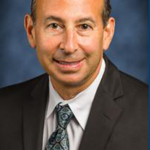
Mother Nature is never shy about testing human nature. Just ask Anthony M. Degina, Chief Executive Officer of Plantation General Hospital, and Earl H. Denning, Chief Executive Officer of Westside Regional Medical Center.
Their health systems in Plantation, Florida escaped the back-to-back punches of Hurricane Katrina and Hurricane Rita. But because of past experiences with Mother Natures unwelcome visits from the seas, Degina and Denning and their staffs were well prepared “just in case.” “You can never predict what Mother Nature will do,” Degina, who served as CEO of Deering Hospital in Miami before coming to PGH nine years ago, said. “From my experience at Deering I learned there is always a plan to accommodate the victims, but there needs to be a plan to accommodate the hospital when it becomes a victim.” Degina was CEO at Deering when Hurricane Andrew brought devastation to southern Florida on August 24, 1992, so he knows first-hand what can happen even thought all preparations have been made. “You cant predict the effect that a hurricane will have,” he said. “Deering originally wasnt supposed to be hit directly by Andrew and received patients from other hospitals that thought they were going to be hit harder.” So powerful was Andrew that Deering was shut down for nine months following the storm, and it took a few years to rebuild everything. During the storm the roof of the hospital was ripped off, windows were blown out, electrical power was lost, and floors were flooded. ICU patients had to be hand bagged for nine hours. “They all survived,” Degina said. “We had 152 patients that night and everyone survived. They were successfully transferred with their complete medical records and current medications. Considering everything was done in the dark and with no roof, windows or power, it is pretty remarkable the way the staff went beyond heroic measures.” Denning is a native of New Orleans and also knows about the havoc of hurricanes “While I lived in New Orleans I never had to evacuate the city,” he recalled. “However, while I lived in central Louisiana, I was visiting New Orleans and had to evacuate the city. This was in the early 1980s. There were a lot of issues with the evacuation, primarily crowded highways leading out of the city, availability of gasoline and no place to stay along the exit routes.” Those memories returned when Katrina struck along the Gulf Coast and wiped out New Orleans. “Watching the devastation of New Orleans has broken my heart,” Denning said. “For many nights and weeks I would go to bed extremely upset. It reached a point where I could no longer watch the news. I have many friends still living in the city who all have damage to their homes. Many are without jobs. Their children are going to schools in other parts of the state and, in some cases, other states. My closest family to New Orleans is in Baton Rouge and areas north of New Orleans. They all have multiple families living with them for indefinite periods of time.” Denning emphasizes that providers and politicians “must be held accountable” for the devastation and displacement caused by disasters such as Katrina. “Florida hospitals do better planning and are much better prepared than at least the hospitals in Louisiana,” he said. “Our state and community realize the importance of emergency preparedness. I do not think it is the federal governments responsibility to take the lead on these issues.” Degina offered a similar sentiment and pointed out that there are “physical and human resource limitations to what can be done” by hospitals and healthcare systems. “Individual hospitals are responsible to prepare for the hurricanes, and the government should be prepared to assist afterwards,” Degina said. Denning, who has worked in healthcare for 31 years, said that while his medical center was not impacted by the recent hurricanes it “activated our plan, calling in our pre-hurricane staff.” “No evacuees were brought to Westside,” he said. “Katrina was uneventful (in Plantation), as was Rita. But we have to be diligent in our planning and preparations, taking nothing for granted. It is better to be overly cautious. Predicting the outcome of a hurricane is impossible.” Denning said limits as to what hospitals can do “might be related to the physical plant and the damage is experiences during a hurricane.” He said some of the hospitals in New Orleans had water up to the second floors after Katrina. “When something like that occurs you are extremely limited in what your hospital can offer the community in the form of healthcare services,” Denning said. Denning also agrees that it is the responsibility of the hospitals and local community to be prepared for a hurricane. State and federal governments “are there for additional support,” he added. He also wonders if the Federal Emergency Management Agency (FEMA) should be militarized, calling it a “question worthy of further discussion.” Degina and Denning are solid advocates of hospitals working together to plan and prepare for natural disasters and terrorist or biological attacks, particularly in the time since 9/11. “We had plans in place prior to 9/11, but since then they have been heightened and the focuses have changed,” Degina said. Plantation General Hospital and Westside Regional Medical Center participate in monthly meetings with other Region 7 facilities in Broward County, Degina said. “We have joined forces to standardize our practices and policies in order to prepare for all man-made and natural disasters,” he said. “On a yearly basis the committee plans a community wide drill and it includes other facilities and local officials. The drill is based on a terrorist attack or a biological event. The drills are planned to allow each facility to focus on their objectives. Each facility is responsible to contact their area fire department and EMS and obtain their own volunteers to act as patients, visitors, media, etc. Our hospitals test the response phase of their emergency management plans twice a year, either in response to an actual emergency or in planned drills.” Denning also pointed to the annual mass casualty drills in Broward County and said every year the emergency agencies and healthcare providers “improved on the effectiveness in these drills.” “I will say we still have room for continued improvement,” he said. Westside Regional Medical Center has specific sites to treat bioterrorism patients presenting themselves to the hospital based on their diagnosis. There is an area adjacent to the Emergency Department, outside the hospital, for decontamination treatment. At Plantation General Hospital, a grant of over $101,000 from the federal Health Resources and Services Administration is being used to purchase personal protective gear and decontamination equipment. This will include Level C coverall style PPE suits, PARHood respirators, a Decon Shower System which two people can set up in 30 minutes or less with water running, patient decontamination kits, and other items. “Currently our facility can handle victims of a bioterrorism event, but the grant and further education for our staff will allow us to better serve our community,” Degina said.


Recent Posts