By Dr. David Wolinsky and Dr. Emad Hakemi
Although heart surgery is never an easy procedure, the combination of empathetic, state-of-the-art care, physician collaboration and personalized assistance before, during and after treatment, has helped it become much more manageable than in the past.
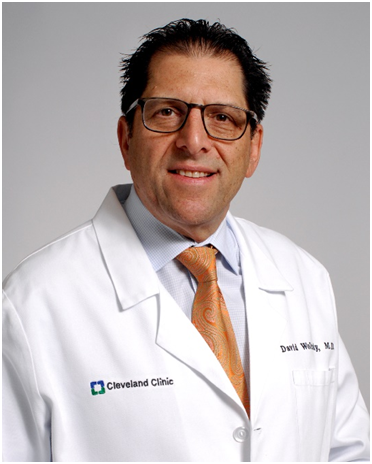
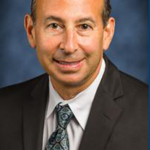
Dr. David Wolinsky
This approach made treatment much simpler and as easy as reasonably possible for patient Leslie Berk from Sarasota, Florida, who was diagnosed with cardiac amyloidosis. Cardiac amyloidosis is a condition in which abnormal proteins build up in the heart and ultimately cause heart failure. This occurs because protein build up changes the structure of the heart and interferes with its ability to pump blood, manifesting in biological abnormalities like thickening of heart walls, disruptions in the heart’s electrical system, and amyloid buildup. The most common type of amyloidosis is TTR of which 15% is caused by a genetic and familial abnormality. The rest of patients have wild-type amyloidosis, which is most common in men over the age of 70 due to an age-related change in gene function. Most cases of amyloidosis are treatable at Amyloid Center of Excellence.
After also detecting a heart murmur – a whooshing or swishing sound heard through a stethoscope when blood flows abnormally over heart valves – Berk’s cardiologist referred him to Cleveland Clinic’s Weston Hospital. His care team reviewed Berk’s test findings to select the appropriate treatment plan.
Leslie was diagnosed with severe aortic valve stenosis, so his team recommended minimally invasive therapy, including transcatheter aortic valve replacement, as part of his plan. TAVR is a minimally invasive procedure in which a catheter is used to deliver a new valve to the heart. The procedure is done under moderate sedation and the patient generally stays one night in the hospital. Its use has increased significantly in the past few years, making it now the most common way to replace the aortic valve.
Before undergoing TAVR, patients are typically subjected to diagnostic testing, including echocardiograms, electrocardiograms, various imaging tests, and left heart catheterization.
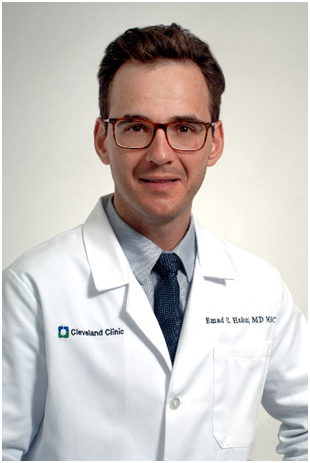
Dr. Emad Hakemi
In contrast to more traditional aortic valve replacement, current research suggests this procedure is safer on average with similar or even better outcomes, so long as personal health and circumstances are taken into account. Since its first performance in 2022, more than 400,000 patients nationwide have undergone TAVR.
Throughout Leslie’s care at Cleveland Clinic’s Weston Hospital, he was provided assistance by patient navigators, who coordinated all of his tests and appointments for the day before his procedure. This way, everything was able to fit into his two-night stay. The patient navigators also answered any and all of his questions before and after the procedure, helping to put him at ease throughout his entire experience.
Following his procedure, both Leslie and his wife, Joyce, had glowing testimonials for the care team and for the treatment itself, since they were “utterly amazed” that after just a few days at home, Leslie was walking around, happy, and no longer had any shortness of breath.
Having had a long career as a nurse, Joyce cited that she was impressed with the coordination of effort between all team members and the compassion and sense of caring that she and her husband felt at Cleveland Clinic’s Weston Hospital. To Joyce, quality is the combination of professionalism and human touch – both of which she and Leslie experienced.
“This has been miraculous,” said Leslie Berk. “And the people here really care about you.”
Dr. Emad Hakemi is a surgeon at Cleveland Clinic’s Weston Hospital who received his medical degree from Ain Shams University in Cairo, Egypt and completed his internal medicine residency at John H. Stroger, Jr. Hospital of Cook County.
Dr. David Wolinsky is a graduate of Columbia University where he received his undergraduate and medical degrees. In 2011, Dr. Wolinsky joined Cleveland Clinic Florida where he is a leader in nuclear cardiology, Section Head of Nuclear Cardiology and Director of the Cardiac Amyloid Clinic.