Removing polyps from the colon is standard practice to reduce the chance of colorectal cancer. But for polyps that are large or hard to reach, their removal during a colonoscopy is a challenge.
Though many patients have traditional surgery for these “complex polyps,” Cleveland Clinic gastroenterologists are using new tools and techniques that require no stitches or long recovery times. It’s a procedure called “endoscopic mucosal resection,” or EMR. An endoscope is a thin flexible tube with a tiny camera, through which small surgery tools are passed. “Mucosal” refers to the tissue of the colon, and “resection” means surgical removal.
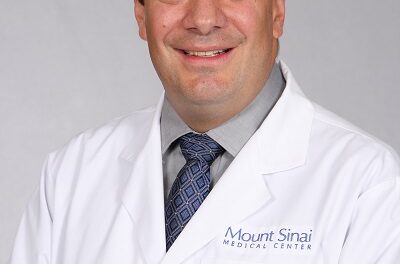
“Many patients and physicians may not be familiar with EMR or do not have access to it locally, so these polyps are often removed using traditional surgery,” says Cleveland Clinic gastroenterologist Tolga Erim, D.O., who specializes in advanced endoscopy techniques. “But EMR gives patients another choice. With experienced specialists performing it, there is low risk of bleeding and perforation, and there is minimal recovery time compared to surgery. There is no pain and it feels like just another colonoscopy to the patient.”
During the procedure, Cleveland Clinic physicians employ several standardized procedures to reach and remove the polyps. “For example, by injecting saline into the tissue, they can raise the polyp in order to resect it completely,” says Dr. Erim. “In addition, newer snares, or metal loops, and tools to cauterize (seal) blood vessels make removal very efficient.”
According to reports from the National Institutes of Health, patients with large or complex polyps should be referred for EMR to a specialty facility such as Cleveland Clinic Weston Hospital, so they can avoid unnecessary surgery.
“We’ve treated patients from as far away as South America,” says Dr. Erim. “Because of our expertise and experience with EMR, this is the appropriate place to come for hard-to-treat polyps. We’ve become a referral center for it.”
Once the procedure is over, the patient should avoid strenuous activity that day and can resume normal activity and exercise the next day. The patient will need to eat soft foods and drink fluids the day following the procedure and have a follow-up appointment six to 12 months afterward.
To schedule an appointment with Dr. Erim or another gastroenterologist at Cleveland Clinic Weston Hospital, call (877) 463-2010 or visit ClevelandClinicFlorida.org/Access.