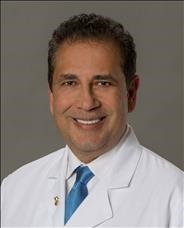
By Adrienne Sylver
It doesn’t seem like an outrageous stretch for a kid whose father taught chemistry to decide his own interest in science might be best used in the medical field. But for a young Minesh Mehta, who grew up in a tiny village in Uganda with no electricity or running water, becoming a physician seemed beyond the realm of his imagination.
“We had a rain tank to collect water and a mud stove in the kitchen,” he says. “My parents emigrated from India to East Africa to teach in the first school in Mbarara.”
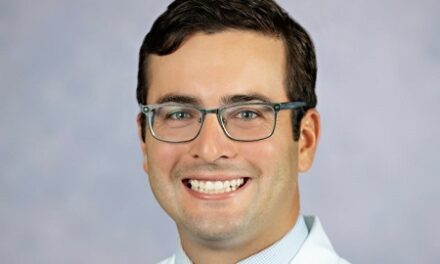
It was a long journey from Uganda and medical school to the forefront of research and publishing. Today, Dr. Mehta is deputy director, chief of radiation oncology and the John and Mary Lou Dasburg Endowed Chair in Radiation Oncology at Baptist Health Miami Cancer Institute. He was also recently named the most prolific and cited author over a lifetime in the field of brain metastasis by Highly Ranked ScholarsTM.
The Highly Ranked Scholars accolade is a list of the “most productive (number of publications) authors whose works are of profound impact (citations) and of utmost quality (h-index)” in a lifetime.
“I look at my work as an evolution of ideas based on the work of many people and in collaboration with many,” he says humbly of his publishing accomplishment. “I don’t see it as a race where you finish first, second or third in a measurable way.”
Much of Dr. Mehta’s current research is focused on discovering better treatments for brain metastasis patients, whose cancers are particularly challenging. He is working to improve traditional approaches to decrease the rate of side effects and to develop novel technologies and new uses for existing technologies.
“All of my research begins with a testable hypothesis,” Dr. Mehta says. “I reverse engineer solutions. And while each of my publications may seem like an isolated work to someone who doesn’t know the end goal, they are really like the steps of a ladder. Each paper is a rung.”
Dr. Mehta graduated from the University of Zambia School of Medicine with high honors and completed a residency at the University of Wisconsin. He had originally planned to return to Zambia, but his growing interest in research and technology, particularly in the area of radiation therapy, wasn’t a match for country that didn’t have a single radiation machine.
He stayed at the University of Wisconsin where he eventually grew the University of Wisconsin Cancer Center and headed its brain tumor program. Prior to joining Miami Cancer Institute, Dr. Mehta helped launch and was medical director of the Maryland Proton Treatment Center in Baltimore.
Early in his career, Dr. Mehta led research that helped reduce cognitive toxicities from radiation on the hippocampus. He also began studies using reduced radiation doses for whole brain radiotherapy, as well as combining whole brain radiotherapy with medications that help preserve the function of the hippocampus.
Prior to joining Miami Cancer Institute, Dr. Mehta helped launch and was medical director of the Maryland Proton Treatment Center in Baltimore. Under Dr. Mehta, Miami Cancer Institute became South Florida’s first proton therapy program and is the most experienced in the region. The Institute was also the first center in the U.S. to pair the latest-generation proton delivery platform with pencil beam scanning, which delivers more-precise treatments that improve outcomes and reduce side effects.
Dr. Mehta was co-principal investigator for the METIS (EF-25) trial using stereotactic radiosurgery with or without tumor treating fields (TTFields) for patients with one to 10 brain metastases from non-small cell lung cancer to delay disease relapse. Initial findings, which he presented at the American Society of Clinical Oncology meeting, showed that the median time to intracranial progression with best supportive care was 11.3 months, while the median time to intracranial progression with best supportive care plus TTFields was 21.9 months. The work at the Institute has led to its approval as the first site in the U.S. to use the technology in metastatic lung cancer, based on results from a prior trial.
In addition to his work on brain metastasis, Dr. Mehta is also widely published on gliomas and meningiomas.