By Vanessa Orr
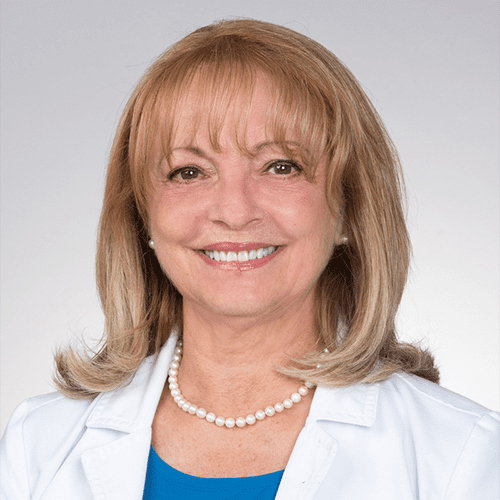
When Dr. Mislen Bauer first started the Neurofibromatosis Program at Nicklaus Children’s Hospital 40 years ago, little did she know that she would develop a reputation as “the spot lady”—a moniker she proudly shares.
“I see a lot of kids with spots,” she says of one of the main symptoms of neurofibromatosis, a group of genetic disorders that cause tumors to grow on nerves throughout the body. “This condition is not as rare as people think; it affects one in 3,000 babies.”
Children with neurofibromatosis often develop flat, brown birthmarks on their bodies before age two, as well as freckles in areas not exposed to the sun, like the armpit or groin.
“A lot of people can have similar spots, but if a child has more than six spots with well-defined borders that are very flat and café-au-lait colored, in time, they may develop tiny little nodules that appear wherever they have a nerve,” explained Dr. Bauer.
While these tumors can be benign, if they develop on the optic nerve, it can cause severe damage to a child’s vision. Approximately 4 percent of children with neurofibromatosis develop facial deformities, and tumors can also form on the extremities, as well as in the brain, chest and abdomen.
“Another issue that these children face is that 70 percent of them with normal IQs have learning disabilities,” Dr. Bauer added. “A lot of them are bullied and don’t finish high school, so I’ve dedicated my life to helping them not fall through the cracks.”
Dr. Bauer, who serves as the director of both the Craniofacial Center and the Neurofibromatosis Program at Nicklaus Children’s Hospital, first became interested in neurofibromatosis when she was introduced to a child with an unusual tibia fracture that would not heal who showed café-au-lait spots.
“No one had realized that because she had neurofibromatosis, this fracture had to be handled very differently than a regular fracture,” she said. “I later realized that while growing up, there was a little girl in my neighborhood with a deformed face and learning disabilities who had neurofibromatosis. No one would play with her, though we got to be friends. I realized that I needed to help these families. I made it my mission.”
As part of KIDZ Medical Services—a private, physician-owned multispecialty healthcare organization dedicated to neonatal, pediatric, and women’s healthcare—Dr. Bauer treats these children with a number of therapies, including a new oral therapy called Koselugo® (selumetinib) that attempts to control the growth of these lesions. Clinical trials showed that over 70 percent of children treated with selumetinib experienced tumor shrinkage, along with improvements in pain, function, and quality of life.
Dr. Bauer has also started a foundation to bring more awareness of the condition to the general public with the hope that children with neurofibromatosis can be identified early on and guided to the help, resources and medications they need.
“Many don’t want to follow these children as they age, which happens to a lot of children with genetic problems,” she said. “It is a huge concern, transitioning them from childhood to adult medical care.”
She is also hoping to work with other South Florida doctors as these patients grow past the pediatric stage.
“These new therapies are promising, but they need to be taken for several years because the lesions keep growing,” said Dr. Bauer. “KIDZ Medical Services is following teens and young adults through treatment to monitor their care, as well as to provide more education on the disease.”