By Ruelle Champion
Jackson Heart Institute, led by Jackson Health System’s Chief of Cardiac Surgery Dr. Hari Mallidi, is now offering a specialized surgical procedure for patients with chronic thromboembolic pulmonary hypertension (CTEPH). CTEPH is a rare condition caused by blood clots in the lungs, known as pulmonary emboli.
“In 3 to 5 percent of cases of acute pulmonary embolism, the condition progresses to a chronic problem,” said Dr. Priyanka Gosain, medical director of heart failure at Jackson Heart Institute. “The blood clots become part of the blood vessel, causing pressure in the lungs to rise and placing strain on the right side of the heart. Over time, this can cause heart failure.”
Challenges with diagnosing CTEPH
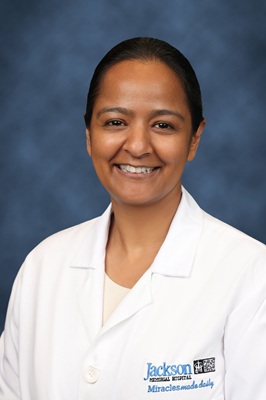
Dr. Priyanka Gosain
While most acute pulmonary embolisms dissolve with blood thinners, some patients progress to CTEPH months or even years later.
Symptoms include leg swelling, worsening fatigue, and shortness of breath with little activity. According to Dr. Gosain, many patients don’t know it’s required to follow up with their doctors after an acute pulmonary embolism, and even fewer know that surgery can be a potential cure.
Some develop CTEPH without ever being diagnosed with an acute pulmonary embolism.
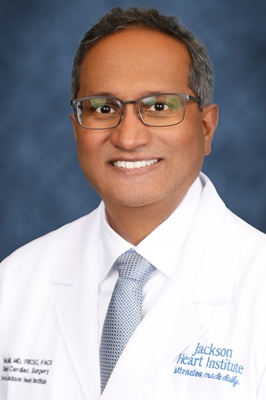
Dr. Hari Mallidi
“These patients are gradually having more shortness of breath,” Dr. Mallidi said. “Their doctors may struggle to figure out why.”
Other patients at risk include those with pacemakers, defibrillators, or catheters, which can form small clots that travel to the lungs.
“Recognizing the condition, correctly diagnosing, and understanding that surgery is the gold standard treatment are some of the biggest challenges,” Dr. Gosain added.
Symptoms can also mirror other lung diseases or the effects of aging.
Identifying patients for surgery
Once CTEPH is suspected, patients are placed on or restart blood thinners. Doctors evaluate lung pressure and heart function.
“This is the only type of pulmonary hypertension with a potential curative treatment,” Dr. Gosain said.
Diagnosis is confirmed through advanced imaging and heart pressure measurements. Doctors evaluate whether the patient is a candidate for pulmonary thromboendarterectomy (PTE), the surgical cure for CTEPH.
“We only offer surgery when we’re confident the benefits outweigh the risks,” Dr. Gosain said. “That confidence comes from a comprehensive, team-based approach.”
What the surgery involves
PTE is a major open-heart surgery where surgeons remove the hardened, scar-like lining formed by chronic blood clots.
“It’s essentially removing an inner lining that has thickened over time,” Dr. Mallidi explained. “Once it’s gone and the underlying issues are treated, there’s a chance the disease never returns.”
The surgery involves cooling the body to protect other organs, and opening the lungs to remove the clots. This restores blood flow to the lungs and relieves pressure on the heart.
“With the right expertise and support systems in place, we can deliver excellent outcomes,” Dr. Mallidi said.
Comprehensive heart care at Jackson Heart Institute
Jackson Heart Institute’s multidisciplinary team provides comprehensive care for CTEPH patients who may need support before or after surgery.
“Performing this operation without access to advanced mechanical support is like walking a tightrope without a safety net,” Dr. Mallidi said.
If needed, patients have access to extracorporeal membrane oxygenation (ECMO), a specialized life support treatment that acts as an artificial heart and lungs, or even a heart or heart-lung transplant through Jackson Heart Institute’s partnership with Miami Transplant Institute — a collaboration between Jackson Health System and UHealth University of Miami Health System.
“We’re the only hospital in the region that can offer everything a patient might need in one location,” Dr. Mallidi said.
PTE surgery can greatly improve a patient’s quality of life. Breathing is easier, exercise is less tiring, and there’s less strain on the heart.
“The surgery doesn’t just help patients feel better,” Dr. Mallidi said. “It helps them live longer.”
With this specialized surgical option now available at Jackson Heart Institute, patients in South Florida no longer need to travel for care. The PTE surgery brings hope and a clear path to recovery for those with a rare, but curable, condition.
To learn more about Jackson Heart Institute or to make an appointment, visit MiamiHeartLeader.org or call (305) 585-4564.