By Vanessa Orr
When a child is diagnosed with cancer, it can be devastating news for the whole family. Fortunately, pediatric cancer survival rates have improved significantly over the last few decades, and with the introduction of new technologies, mortality rates continue to improve.
Sixty years ago, if a child was diagnosed with acute lymphoblastic leukemia—the most common childhood cancer—it was probable that he or she wouldn’t survive six months. In 2026, national studies show that traditional treatments, including chemotherapy and radiation therapy, in conjunction with immunotherapy, resulted in a 95 percent chance of the child being cured.
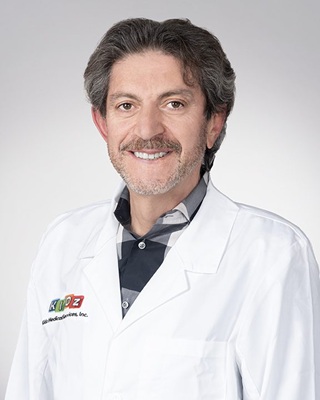
“In the past, we’ve treated patients with “general” drugs, including chemotherapy,” explained Doured Daghistani, M.D., a pediatric oncologist with KIDZ Medical Services. “Now we have drugs that specifically target cancer cells.”
This is especially important as previous treatments for some types of cancer, including brain cancer, not only killed malignant cells, but the healthy cells around them as well.
“In a child with a maturing brain, this can cause significant problems in the long term,” said Dr. Daghistani, noting that brain cancer is the second most common cancer in children. “But we now have a new technology, proton therapy, that lets us precisely target the treatment to the volume and space of the tumor, saving all of the healthy cells around it.”
Proton therapy uses highly precise radiation beams to target pediatric tumors, sparing healthy tissues better than traditional X-ray therapy.
“In the past, children could survive brain cancer treatment, but often paid a high price in brain development and delay,” he added. “But with this new modality, we can spare the brain’s normal cells, and even give a higher dose, which can better affect survival.”
Advancements have been made in other areas as well, including immunotherapy, which uses the body’s immune system to not only attack cancer cells but detect them before cancer occurs.
“It’s like a police cell in the body; if a normal cell could become tumorous, immunotherapy can attack and kill it before cancer happens,” said Dr. Daghistani. “Before, we could not detect this defect in the system.”
With targeted therapy, oncologists may also be able to develop drugs that attack gene and chromosomal mutations without affecting healthy cells. A form of precision medicine, targeted therapy helps identify cancers with specific genetic/biologic markers and uses drugs to attack specific genetic changes (mutations) in childhood tumors.
“Right now, we’re running phase one and phase two trials of targeted therapies to see if we can improve survival rates for diffuse intrinsic pontine glioma (DIPG), a brain cancer with a survival rate of zero,” said Dr. Daghistani. “Once we have a good survival rate, we’ll look to minimize toxicity—any place we can decrease side effects without compromising survival.”
He notes that this was successfully done in acute lymphoblastic leukemia, which now has a survival rate of 95 percent, and Hodgkin’s lymphoma, which now has a survival rate of 90 percent—the result of advances in research over the past few years.
While science can move slowly, the good news is that advancements happen every day. The National Cancer Institute began mapping human genomes back in the 1990s, which cost hundreds of millions of dollars and took five to six years to complete.
“With the advancements in technology, today we can map genomes for a couple thousand dollars and get the results in one week,” said Dr. Daghistani. “Now that we’re researching cancer genomes, we’re trying to discover medications that can attack that specific cancer and that specific genome.
“We still have a ways to go,” he added, noting that chimeric antigen receptor (CAR) T‑cell therapy—the most advanced research treatment underway—might someday allow doctors to take a cancer cell from a patient, study it in vitro, and sensitize the patient’s immune cells to attack it. Those immune cells would then be returned to the body to fight the disease from within.
Today’s advances in targeted therapy, immunotherapy, and precision radiation mark a turning point in how pediatric cancers are understood and treated. As research continues, so does the promise of safer, more effective care — and the hope that tomorrow’s discoveries will transform outcomes for even the rarest and most challenging childhood cancers.
Dr. Daghistani cares for pediatric patients at Nicklaus Children’s Hospital, Baptist Health Herbert Wertheim Cancer Institute (formerly the Miami Cancer Institute), and KIDZ Medical’s multispecialty practice in Naples, FL. KIDZ Medical Services is a private, physician‑owned multispecialty healthcare organization whose team of more than 400 clinicians and team members care for patients and families across dozens of hospital partner sites and medical practice locations throughout South Florida.