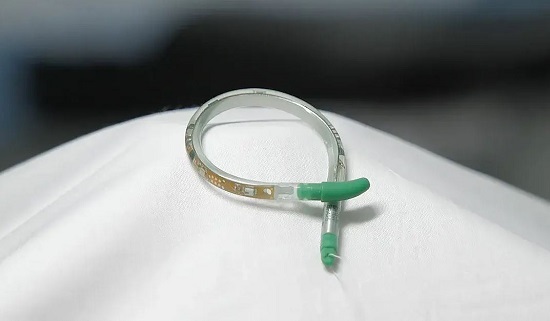


Cleveland Clinic is the first to use the Glean™ Urodynamics System, the first wireless, catheter-free method of urodynamic monitoring following 510(k) clearance from the U.S. Food and Drug Administration in March.
Leveraging foundational technology generated from research conducted by Cleveland Clinic, Bright Uro created the Glean Urodynamics System which offers more comfortable, accurate testing and the ability to monitor bladder activity during normal daily activities.
Cleveland Clinic identified this critical unmet need in response to conventional urodynamic assessments (tests that demonstrate how well the bladder, sphincters, and urethra hold and release urine to determine the source of leaks or blockages), which have several limitations.
The FDA clearance is a prime example of a clinical innovation advancing from inception to reality and now being offered to patients, as researchers in Cleveland Clinic’s Department of Urology and Lerner Research Institute in collaboration with researchers at Louis Stokes Cleveland VAMC and Case Western Reserve University invested more than a decade developing the original technology.
“After observing standard urodynamic testing over the past 20 years, our vision for this device was to address the shortcomings in current bladder testing,” said Margot Damaser, Ph.D., leader of the research team and a staff member in the Biomedical Engineering Department of Cleveland Clinic’s Lerner Research Institute. “We wanted to invent a novel solution that would take the monitoring out of an artificial setting and eliminate the need for a catheter, which can be painful and embarrassing.”