An estimated 15,000 people in the United States are diagnosed with trigeminal neuralgia each year – a condition that causes recurrent, shock-like facial pain. These symptoms can be debilitating for some, with around 25-40 percent of patients choosing surgery within two years of the onset of symptoms.
The team at Cleveland Clinic Florida’s Headache and Facial Pain Center implemented an innovative standard of care, called the enhanced recovery after surgery (ERAS) protocol, to help patients undergoing surgery for TN experience faster recovery and relief. Today, the hospital is able to discharge patients in less than 24 hours with minimal pain and no hearing impairment.
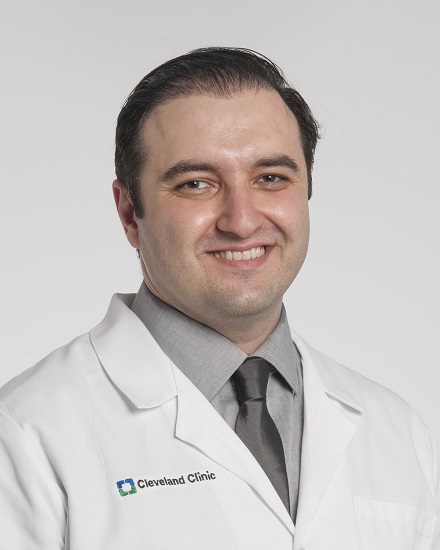
Dr. Hamid Borghei-Razavi, MD
TN is a chronic neuropathic disorder caused by pressure on the trigeminal nerve. Of the three types of TN – classic, secondary and idiopathic – classic TN accounts for about 80% of cases. Microvascular decompression (MVD) is the most effective and durable treatment for classic TN. Ninety percent of patients at Cleveland Clinic Weston Hospital achieve pain relief for as long as 10 years with this procedure.
A study by Cleveland Clinic Florida researchers published in Neurosurgery highlights the success and impact that implementing the ERAS protocol has on TN patients undergoing MVD surgery.
The study looked at patients who received MVD for classic TN at Weston Hospital between January 2018 and January 2023. A total of 240 patients were initially included, with 65 patients receiving the ERAS protocol and 175 receiving conventional perioperative care. From the conventional care group, 65 patients were matched to the ERAS group to allow for the most accurate comparative analysis possible.
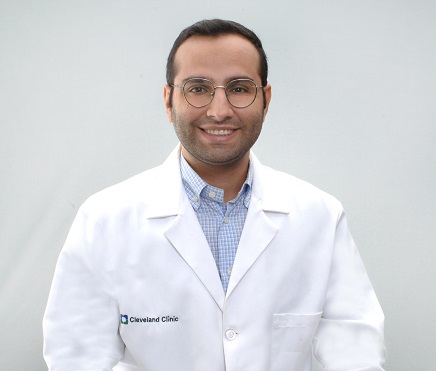
Dr. Mohammadmahdi Sabahi, MD, MPH
Just over half of the patients in the ERAS group was discharged after one day, and no patients stayed in the hospital more than two days. In terms of pain control, the study found ERAS patients had significantly lower verbal pain scores. Additionally, none of the patients in the ERAS group reported experiencing muffled hearing.
ERAS was first developed for colorectal surgery and later adapted for other surgical specialties, including spine surgery. Cleveland Clinic Florida’s study demonstrates there is broader potential for this approach, which is not commonly used for cranial procedures.
The ERAS protocol for patients with classic TN undergoing MVD surgery was first introduced in June 2020 at Weston Hospital, one of the highest volume centers in southeast Florida. It was developed by a multidisciplinary team of neurosurgeons, anesthetists and nurses and consists of nearly a dozen components. The keys to Cleveland Clinic’s success include preoperative patient counseling, opioid-sparing pain management strategies, smaller incisions and immediate postoperative imaging to rule out surgical complications.
While future large-scale, multicenter randomized controlled trials are needed to further validate the benefits of ERAS protocols in the context of MVD for trigeminal neuralgia, it is clear this is a promising new standard for care.
Learn more about the protocol implementation and study in Consult QD.
Read more about the Headache and Facial Pain Center at Cleveland Clinic Weston Hospital: https://my.clevelandclinic.org/florida/departments/neurological/depts/headache-facial-pain
Authors:
Dr. Hamid Borghei-Razavi, MD, director of Minimally Invasive Cranial and Pituitary Surgery Program at Cleveland Clinic Weston Hospital.
Dr. Mohammadmahdi Sabahi, MD, MPH, postdoctoral research fellow in the Department of Neurosurgery at Cleveland Clinic in Florida.