.jpg) When assessing your healthcare facilities have you taken the sonic environment into account? This may prove to be the low hanging fruit for improving your real estate portfolio, and your bottom line.
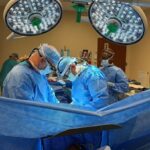
When assessing your healthcare facilities have you taken the sonic environment into account? This may prove to be the low hanging fruit for improving your real estate portfolio, and your bottom line.The sonic environment impacts all critical areas of healthcare operations, from admitting (HIPAA), to diagnostics (CT/MRI), to treatment (OR), to recovery (HCAHPS – Quiet at Night). Long term health care facilities require a quiet, comfortable dining room for important social communication. Positive patient outcomes, and financial success, can depend on having good acoustics in the facility. Providers know that the patient experience is a vital part of their business. A significant percentage of a provider’s total Medicare payments are on the line, based on their HCAHPS patient exit survey scores. Can your building meet that challenge?
A program to improve the sonic environment for patients has three pillars: operational practices, administrative policy and facility improvement. Are care givers cognizant of the sounds in their area? Are policies in place to reduce noise? Are facilities as quiet as they can be?
Good acoustics for facilities begins with site planning. Keeping facilities away from major transportation noise sources is a good start. Next, architectural programming will help to avoid “unfortunate adjacencies”, such as patient rooms or doctor’s offices under imaging centers. Further, scheduling is critical. For example, do not plan noisy hallway renovations next to the NICU! Plan for speech privacy when required, and good speech intelligibility where needed. In operating rooms, ERs, post-op rooms and patient rooms, precise verbal communication is essential and mandatory. Awareness of acoustical issues at all stages of facility planning is key, from land acquisition to the detailing of each operational area.
While much can be done to improve acoustical problems, it is important to conduct regular assessments that take into account a facility’s strengths, weaknesses and where improvements can be made. These assessments should not wait for rating inspections, but should be integrated into a facility’s maintenance budget or capital improvement plans, so that there is less need to retrofit. Also, if sound is not considered in the building planning stages, then acoustical problems may not be immediately apparent until a facility is fully operational. No one wants a new facility that sounds terrible.
The principles of good acoustics apply to all types of healthcare properties, including hospitals, imaging centers, doctors’ offices, teaching colleges and universities, and retirement and assisted living facilities.
The first step toward a great sonic environment, is planning for new or renovated facilities and an assessment of the acoustics in existing areas, with a comprehensive acoustical audit. Evaluation of this data provides actionable knowledge, which improves patient outcomes. A commitment to a better sonic environment begins with the acoustical audit, and continues with incremental improvements as opportunities are identified. The results are healthier patients, satisfied caregivers and happier stakeholders.