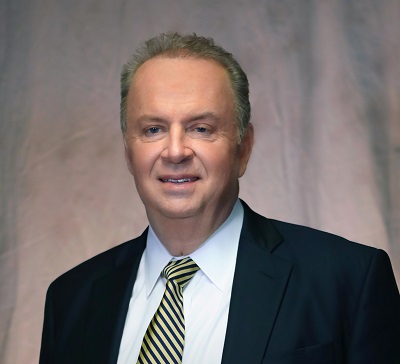
South Florida Hospital News & Healthcare Report sat down with Wayne Brackin, President & CEO of KIDZ Medical Services and longtime South Florida healthcare executive, to discuss what he refers to as “a disturbing trend” affecting maternal care in the United States.
Q: Wayne, you’ve been a healthcare leader for more than four decades, leading hospitals, centers of excellence, health systems, and private physician groups. What concerned you about trends in maternity care specifically, and why are you calling it “a silent crisis?”
Yes, you’re right that I’ve been doing this longer than I care to remember, but it does allow me to provide some perspective. I started my healthcare administration career in the mid-80s, and I’ve worked with incredible teams that have built well-run programs and services that have directly impacted the health and well-being of our communities. Those of us who have stayed in healthcare all this time, we’ve survived and overcome a lot of challenges over the years—including payer reimbursement reductions, clinical staffing shortages, medical malpractice changes, natural disasters, and even a global pandemic.
Despite that, I remain deeply concerned about a growing trend impacting hospitals across the country, and that’s also impacting us here in Florida. This certainly didn’t happen overnight, but we’re witnessing a disturbing trend of closures of labor and delivery services at hospitals. These closures are creating maternity deserts where access to adequate OB-GYN care is simply unavailable. This issue is complex, but at its core, it identifies a weakness in our healthcare systems to prioritize maternal care.
Q: What do you attribute as the root cause of these closures?
The reality of the situation is complicated because it isn’t simply a consequence of economic or operational shifts within hospitals. Healthcare operators are used to supporting “loss leader” services that feed other more profitable services. We do this because they meet a critical need, and it helps keep a complex healthcare ecosystem operational. But what we have here is a perfect storm.
First, nearly half of all births in this country are paid for by Medicaid, which we know is significantly less than the average commercial insurance reimbursement rate. And that percentage gets even higher when we move into rural areas. So, it’s not difficult to see why most labor and delivery units stay underfunded and end up closing. To add insult to injury, these low reimbursement rates and underfunded programs are then driving talented doctors and nurses away. Students and residents see what’s happening and are reluctant to specialize in obstetrics and gynecology, exacerbating an already difficult recruitment problem that will only worsen over time if something doesn’t change.
If you don’t have a solid labor and delivery program infrastructure in place, or specialized providers to provide care, you won’t be able to sustain that program. But this isn’t only a problem within hospital walls. It’s become incredibly difficult for independent OB-GYN providers to practice out in the community. They need support, too.
In South Florida, we’re seeing previously underserved areas—like in South Miami-Dade for example—
experience a population boom because of the availability of more affordable housing. Young couples and families moved south, but we also saw OB-GYN providers retiring without new providers coming into the area to take care of those patients. This is why we opened the MOMZ OB-GYN practice in Homestead nearly two years ago. We’re already so busy that we’ve had to bring in more doctors. We’re also looking to expand our office space to meet the demand.
And then there’s the politics of it all, of course.
Q: Yes, you’ve spoken about some of the issues that are impacting this perfect storm, as you call it. And we want to touch on the political aspect as well, but what does this look like in Florida, specifically?
We know from a recent March of Dimes study that over 35% of counties across the U.S. are considered maternity care deserts; in Florida alone, 19.4% of counties fall into this category. Unfortunately, these numbers are particularly concerning for underserved areas. Hospitals like Hialeah, North Shore, and Lake Shore have already closed their labor and delivery units, and these closures disproportionately affect our most vulnerable populations.
Also, the political climate in Florida is a battleground over the very concept of having a baby. Debates about reproductive rights are ongoing, but what’s missing from the conversation is how this indirectly contributes to the decline of labor and delivery services at hospitals. This isn’t just a matter of politics or philosophy; it’s about healthcare infrastructure—and nobody is addressing its impact on this important care.
What can be done to address, and eventually fix, the problem?
I know we can turn this around by implementing creative solutions. It can’t be up to the hospitals alone. We have to start at the education level to encourage more medical students to pursue OB-GYN as a career—similar to how we addressed primary physician and nursing shortages in the past. We also have to work together alongside nonprofit partners, community and government entities and elected officials, and private healthcare organizations to tackle the issue. We need to work together to ensure that expectant moms in our communities receive adequate perinatal care, and over time, we’ll see this very meaningful investment affect other future health outcomes in a positive way.
If we force women to travel farther to access care before and after giving birth, we will only continue to see increases in the already troubling health disparity statistics.
We can’t ignore this. We need to build community collaborations and support legislation that prioritizes maternal health and ensures that all families have a safe and supportive space to welcome their children into the world.