With the advent of the Affordable Care Act (ACA), the amount of patients seeking health care is expected to increase. To meet this demand, Larkin Community Hospital (LCH), a 146-bed medical/surgical teaching hospital in South Miami, is making plans to grow as well.
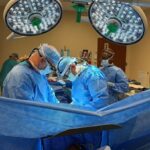
One of 12 designated statutory teaching hospitals in Florida and the largest teaching hospital for osteopathic physicians in the U.S., Larkin offers training in 30 different specialties, as well as sponsors an allopathic residency degree in psychiatry. In addition to a nursing school, the hospital is home to the Miami Neuroscience Center at Larkin, which specializes in gamma knife radiosurgery, and the Center for Advanced Orthopedics at Larkin, which offers the latest multimodal perioperative pain management modalities and state-of-the-art technology and instrumentation with advanced robotic technology.
In 2015, Larkin plans to expand its services even further with the construction of Larkin Health Sciences Institute, which will be located in the Naranja Lakes area, about 10 miles south of its South Miami campus. Larkin’s nursing school will be relocated to the new site, which will also include a College of Pharmacy, a College of Osteopathic Medicine, and eventually, a College of Dentistry.
“As a result of the Affordable Care Act, there is a lot of pressure to train more health care professionals to care for new patients coming into the system,” explained Dr. Jack Michel, president and chairman of Larkin Community Hospital. “We wanted to answer this need by creating a world-class training facility.”
Larkin plans to invest approximately $68 million over 10 years into the 48-acre campus. Construction will begin in 2015, with the first class of students enrolling in August 2016. Approximately 100 students will be enrolled in each area of study.
.jpg) “We expect to enroll students from across the country because there is not only a substantial need for trained medical professionals, such as doctors, pharmacists and dentists, in Miami and Florida, but throughout the rest of the country,” said Dr. Michel. “This new ACA-era has created a great demand as far as workforce goes.”
“We expect to enroll students from across the country because there is not only a substantial need for trained medical professionals, such as doctors, pharmacists and dentists, in Miami and Florida, but throughout the rest of the country,” said Dr. Michel. “This new ACA-era has created a great demand as far as workforce goes.”The Institute’s innovative College of Pharmacy program is expected to garner a lot of attention from prospective students, as it enables them to receive a degree in three years instead of four. “Finishing a year early will allow students to be more competitive,” said Dr. Michel, adding that it will also reduce the cost of training.
Larkin is also looking to partner with Miami-Dade Schools to put a middle school and high school on campus as a way to encourage local students who want to pursue careers in the health professions. “The health sciences high school students could share space with our students, which would provide a good opportunity for mentoring,” Dr. Michel explained. “Miami-Dade has a 35 percent Hispanic population and a 30 percent African-American population, yet only 8.8 percent of doctors are Hispanic and only 3 percent are African-American.
“These groups are substantially underrepresented, and it is our goal to be inclusive of these minorities,” he added. “While a program like this is unprecedented, we’re excited about the chance to make a dent in the underrepresentation of minorities in health care.”
By creating a campus that caters to a wide range of students, Dr. Michel also hopes to encourage health professionals to stay in the South Florida area. “One of the big issues in health education is that to complete their training, a lot of people have to leave where they live to do it,” he explained. “By having everything here on one campus, they can do all of their training in Miami, and not have to leave the state unless they want to.
“A middle-school student on campus could end up going to medical school here, and go on to become a cardiologist or dermatologist,” he said.