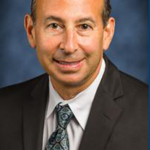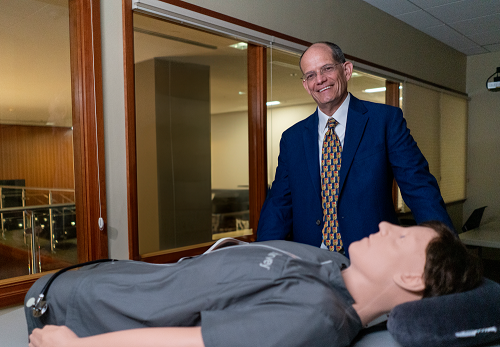
January 29, 2024 – Barry Issenberg, M.D., director of the Gordon Center for Simulation and Innovation in Medical Education at the University of Miami Miller School of Medicine, has been named the 2024-2025 president of the Society for Simulation in Healthcare. Under his leadership, the Gordon Center has become a national leader in simulation technology, providing real-world training experiences to nearly 20,000 health care professionals, students, service members emergency responders annually.
“My journey with the society has been enriching, encompassing various roles that have provided me with a comprehensive understanding of its mission,” said Dr. Issenberg, who is also professor of medicine, the Michael S. Gordon Chair of Medical Education, and senior associate dean for research in medical education. “This experience has fostered my commitment to servant leadership, ensuring a holistic view and a team-based, consensus-building approach essential for effectively serving our membership.”
The society aims to enhance patient care by leveraging simulation to boost performance and minimize errors in medicine. Established in 2004, the society encompasses a diverse global community, including physicians, nurses, allied health and paramedical personnel, researchers, educators, and developers. It actively supports the advancement and utilization of simulation-based modalities such as human patient simulators, virtual reality, standardized patients, and task trainers.
“We need to examine how simulation centers can serve the academic missions of medical schools and hospitals,” he said. “How do we get out of being a silo and becoming more integrated within the health system? That’s when simulation will have a greater potential to make a wide-scale impact on patient care.”
Dr. Issenberg hopes to leverage his position to expand the use of simulation and teach more practitioners. So far, simulation has been difficult to scale; training 400 people is far more challenging than training 40. In addition, not everyone has space for intensive training.
“We need to think about the busy nurse or physician, who probably doesn’t have time for an eight-hour training session,” said Dr. Issenberg. “They may only have a half hour or an hour. How do we design that session to be more efficient to their needs?”
Dr. Issenberg and colleagues also want to integrate simulation more seamlessly into health professions education, to ensure learners have greater access to the technology.
“In a world of increasing complexity and dynamic challenges, we must play a pivotal role in addressing and solving issues identified over the past quarter-century,” he said. “This includes exploring how simulation can lead to improved patient safety and health care quality.”’