By Daniel Casciato
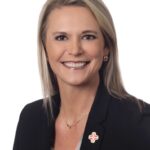
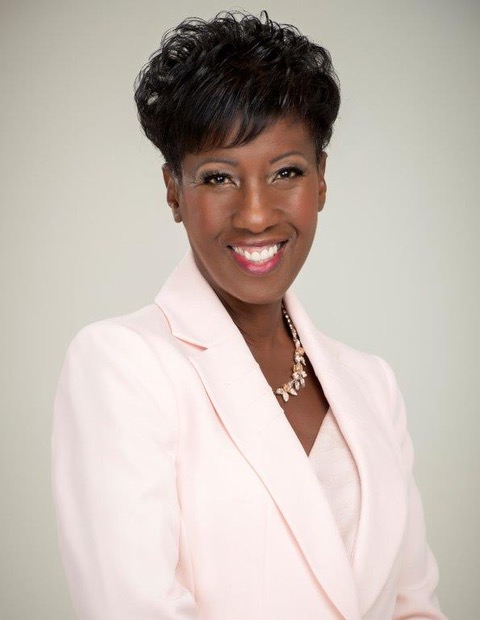
As the Vice President of Ambulatory and Community Services at Memorial Healthcare System, Melida Akiti manages a network of primary care practices and urgent care centers that impact the delivery of medical care and treatments to residents in South Broward and beyond.
Akiti says she has always been community minded and is mission driven. Previously, she served as Chief Administrative Officer of the Jackson Mental Health Hospital, overseeing Ambulatory Services and Primary Health Centers and the Correction Health Services. She was drawn to the position at Memorial Healthcare System because she loved its mission.
“The position available at Memorial was able to transform the primary care in light of the Affordable Care Act (ACA) coming up—how we were able to impact individuals who were uninsured into becoming insured,” she says. “That was basically the reason why I accepted the position because I saw it as transformational. There were a lot of assumptions made about how the ACA was going to be the cure-all, do-all for everyone in regard to health care insurance.”
Akiti notes that Memorial is an organization that believes in the mission of taking care of the community.
“We’re community minded, meaning that Memorial invests in the South Broward district, not only financially, but by getting involved as well,” she says. “The staff are all volunteers in different organizations. We know the pulse of the district and we know their areas of need and inject ourselves in those areas of needs.”
Akiti lived in Panama before migrating to the United States. In Panama, she served as a clerical administrative staff at the Panama Canal Department – a U.S. Army unit for the defense of the Panama Canal Zone. She earned her Master of Social Work from Barry University and her Master’s Degree in Psychology at Saint Mary University. She did her clinical psychology rotations at Matías Hernández hospital Psiquiatrico de Panama.
“My short term goal is to be able to develop self-equity among all individuals, regardless of one’s ability to pay and regardless of their ethnic composition or sexual orientation,” she explains. “Self-equity means that people will be able to live longer because they have access to health insurance and, more than just insurance, quality health care. My long term goal is to be able to eventually come to a place where we will not be talking anymore about health equity or even inequity in regard to obtaining health care.”
The most important lesson that Akiti has learned in her career to date has been consistent since she first started working in healthcare.
“The most important lesson has been to listen to everyone,” she says. “Everyone has a thought, feelings, and needs to be heard.”
Akiti has always held a passion for helping vulnerable communities, and part of that passion expands to her work in identifying and breaking down the barriers of social determinants of health that often impede access to healthcare and other services. She’s a board member for ChildNet, the nonprofit that protects abused, abandoned and neglected children in Broward and Palm Beach Counties, and Board Emeritus for Hispanic Unity of Florida, an organization that empowers immigrants and others to become self-sufficient, productive and civically engaged. In addition, she was appointed to the Broward County Homeless Continuum of Care Coalition.
Earlier this year, Akiti was named as the new board chair of the Health Foundation of South Florida, the region’s largest philanthropic organization focused on achieving health equity in historically disadvantaged communities. Akiti has served on the Health Foundation board since 2014.
“The foundation’s goal is to ensure health equity among all individuals in Miami-Dade,” she says. “We offer grants of over six to eight million dollars throughout the year to all health care related, not-for-profit, organizations in order to advance the health care of individuals. My goal as a board chair is to be able to dive into the community in the three surrounding counties and be able to work with their influencers. Many times, we tend to bring things to underserved communities instead of working with them for their advancement. What we plan to do this year is something called impact investment in which we plan to bring billions of dollars into these counties and work with their influencers to improve the health of the communities.”
For more information, visit www.mhs.net.