

By Daniel Casciato
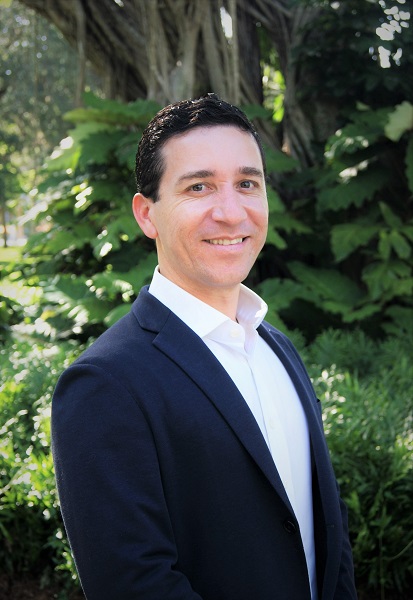
Dr. Hudson Santos, an internationally renowned nursing researcher and educator, is the new dean of the School of Nursing and Health Studies at the University of Miami, effective June 1. With a deep commitment to inclusion, innovation, and excellence, Santos is set to lead the school into a new era of growth and distinction.
Early Inspiration
Santos’s journey into nursing began in his childhood when he was influenced by his mother, a licensed practical nurse in northeastern Brazil. Frequently accompanying her to the hospital, young Hudson absorbed the healthcare environment.
“I would hang out with the pharmacist where nurses would get their prescription orders filled, and at the end of the shift, I’d meet my mom in the nursing station,” Santos recalls.
These early experiences planted the seeds of his future career. After his mother passed away when he was a teenager, Santos faced limited career options in his small town. Driven by necessity and inspired by his mother’s legacy, he obtained his LPN license to support himself.
Santos’s passion for nursing grew, leading him to pursue further education. He worked as an LPN to fund his college studies, focusing on psych-mental health and urgent care, and he fell in love with it.
Nursing Education and Research
Santos’ research career began early in his academic journey. As an undergraduate, he joined a program that allowed students to work with Ph.D.-prepared nursing professors on research projects, which earned him a scholarship.
“After I finished my bachelor’s in nursing, I had 10 scientific papers published, which was very unusual,” Santos says. He also received a minor in pedagogy while in nursing school.
His research focuses on understanding how early life adversity affects bodily functions and health outcomes. Focusing particularly on maternal and child health, Santos is proud of his work leveraging information presented during pregnancy to predict risks for childhood developmental delays.
“We can identify high-risk child development early in life and connect them with early intervention programs like early steps, ideally preventing or minimizing developmental problems,” he notes.
In his educational career, Santos taught across all nursing programs as well as public health programs, from undergraduate to PhD levels. He emphasizes teaching nurses and other healthcare professionals to become independent thinkers.
“It’s fantastic that we learn technical nursing skills, how to do phlebotomy, and how to read labs. But I am so fascinated by teaching students how to interpret those things and become independent decision-makers,” he says.
Enhancing Academic and Research Programs
Santos plans to leverage his extensive research on early life stressors and prenatal health to enhance the academic and research programs at the School of Nursing and Health Studies. One of his primary goals is to create a supportive environment that fosters the development of specialized programs in various areas of expertise.
“We have large grants at this point, which bring a lot of resources to the school. My goal is to create the infrastructure and the environment where concentrated areas of expertise can be further developed,” Santos explains.
For instance, the school already has a strong foundation in Health Disparities and Latino and Hispanic health studies, supported by a dedicated center. Santos aims to build on this by creating similar programs in other areas. One key area of focus is implementation science.
“Implementation science is basically about speeding up the process of bringing research interventions into real-life application and scaling them up for use. It can take five to over ten years to develop and implement a clinical intervention. By partnering implementation scientists with nursing researchers early on, we can accelerate this process so that people can benefit from these developments sooner,” he says.
Santos’s vision includes expanding successful maternal and child health platforms to other areas within the school. These focus areas will include health equity, Hispanic and Latino health, oncology, aging, and healthcare innovation.
Goals for the Miami-ECHO Program
Santos spearheads an ambitious National Institutes of Health (NIH) study known as the Miami-ECHO program. This study aims to establish a comprehensive cohort of mothers, their children, and, when possible, fathers, to understand the long-term impacts of the environment on maternal and child health.
“It will be the first time in Miami to establish a cohort of mothers and children. If the father or expecting father is available, they will also be enrolled,” Santos explains.
The program enrolls mothers early in their pregnancies (less than 20 weeks gestational age). It follows the children for seven years, extending to subsequent pregnancies to understand the continuum from preconception to early childhood.
The primary outcomes of the Miami-ECHO program include understanding how Miami and South Florida’s changing environment impacts maternal and child health outcomes. Santos states, “We want to enroll about 1,500 families into the study and be able to keep them for seven years.”
Promoting Diversity and Inclusion
Santos emphasizes that promoting diversity and inclusion within the School of Nursing and Health Studies fundamentally revolves around fostering an environment conducive to growth for individuals from all backgrounds.
“For me, it all boils down to inclusion. We have to have an environment that is prone to growth of individuals independent of the background,” he states. This inclusive approach extends to students, faculty, staff, and healthcare partners.
Santos believes innovation thrives in a setting that embraces diverse ideas and ways of thinking. “I want to make sure that the school is inclusive of diverse ideas and ways of thinking, and I believe that is where innovation kicks in,” he says.
Goals and Priorities as Dean
As the new dean, Santos builds on the solid foundation his predecessor, Cindy Munro established. “I am very fortunate to know Cindy. I was a vice-dean under her deanship. So I think this school is really strong. We have outstanding clinical and educational programs and a fantastic research portfolio.”
Santos’s primary goal is to elevate the school nationally to the top echelon of nursing and health studies programs. “We want to become the prominent school of nursing and health studies in the nation, and we will stop nothing short of that. Of course, it will take work and time, but that is what we want to become,” he says.
His immediate objectives include connecting with faculty, staff, students, community partners, and donors to understand their needs and provide the necessary support during this transition. Strengthening relationships with UHealth, Jackson Health System, and other Florida health systems is also a top priority.
Santos envisions a deeply interconnected relationship between the School of Nursing and Health Studies, UHealth, and Jackson Health System. He emphasizes creating a strong, enduring bridge between these institutions.
“We need to create a hardwired bridge where it doesn’t matter who is in the leadership of those institutions; the connection between the health systems and the school is in place,” Santos says.
His goal is for the School of Nursing to become a home for every nurse in these health systems, fostering a sense of belonging and collaboration. “The School of Nursing is their home, and they can come to us, and we can go to them routinely. We are #Cane Nurses!” he says. This connection is vital for providing the training, support, and resources nurses need to excel in their clinical roles while enabling the school to develop effective and innovative programs.
To achieve this, Santos plans to establish a close partnership with chief nursing officers and other leaders through regular conversations. “We need to have a seat at the leadership table. I would love to have some of the CNOs sitting in the school’s leadership and vice versa to be more synchronous in our decisions and strategic approach.”
For more information, visit www.sonhs.miami.edu.