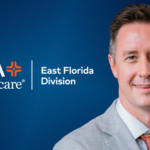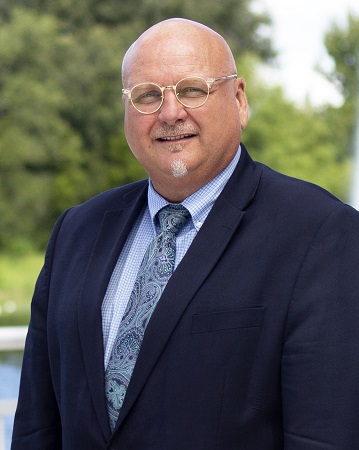
Dr. Timothy Novak
By Carol Newman
The healthcare industry in the U.S. currently represents 20% of the National Gross Domestic Product (GDP) and is increasing with our aging population. Physicians, in addition to delivering patient care, also provide the majority of healthcare requests for diagnostic testing, lab orders, patient care plans, pharmaceutical scripts, home health care, specialty care referrals, facility admissions and major procedure authorizations. Yet surprisingly, very few medical schools offer their students any formal education in understanding “the business of healthcare.”
The Lake Erie College of Osteopathic Medicine (LECOM), the largest medical college in America by number of enrolled students, realized this shortfall and integrated an innovative healthcare business curriculum into their third- and fourth-year medical students required education. Courses are delivered on-line using the Canvas learning management system to accommodate all geographic areas where students may be rotating.
This 3-course series is spread out over a total of 15 weeks and was designed and delivered by LECOM’s School of Health Services Administration. The business series serves as a foundational work to develop practical skills in operations management for rising health care leaders and physicians. Concepts reviewed in the text tend to highlight operational issues particular to the hospital provider organization with examples presented in the text that can generally be applied to other health care provider entities.
The issues of efficient production of patient care services, management of labor costs and supply chain, pharmaceuticals, and translation of operational performance improvement to financial sustainability are no different in a physician clinic, home health agency, community health center, or ambulatory care facility. Basic introductory content on items such as the third-party payment system, the physician as the patient agent for purchase of health care services, and the general definition of an output in the health care system are presented but aimed at facilitating correlation of the operations management discipline with other parts of the health care management milieu.
Also, the review of basic health system concepts is provided as a means of setting forth a motivation for the students new to the field of health care operations management to understand its value in the management of a successful health care provider organization.
Since the program’s implementation in 2016, over 4,600 LECOM Osteopathic Physician graduates have completed this business education. Dr. Timothy Novak, Dean of the LECOM School of Health Services Administration, created and has served as course director since inception. “Our medical students have and continue to demonstrate a tremendous aptitude for healthcare business curriculum with nearly a 90% overall didactic testing performance since the program began,” states Dr. Novak. He continues, “It is often said that ‘physicians are not good businesspeople’ which is incorrect at its core … we have simply failed to teach them the business of healthcare!”
Dr. Novak notes that the medical students enrolled have also shown a strong desire to learn and understand the business side of the profession they are entering. “Over the past seven years and the many thousands medical students taught, I have not received a single student complaint or question as to why business curriculum is being taught, which I find amazing and inspiring.”
It is essential that our healthcare providers are good fiscal stewards, as there is a diminishing pool of financial resources available to care for the rapidly growing and aging population. LECOM has taken a bold step to formally integrate business knowledge and skills education during medical school, so it can be applied during medical residency and beyond.
For those medical students interested in earning a more formal business degree while in medical school, they may enroll as a concurrent student in one of the four LECOM School of Health Services Administration master’s degree programs during the final two years of their medical education. The offerings include: Master of Health Services Administration, Masters in Public Health, Master of Science in Biomedical Ethics and Master of Science in Medical Cannabinoid Therapeutics.
The LECOM School of Health Services Administration offers four separate master’s degrees and one doctorate program in the field of healthcare administration. For more information, visit https://lecom.edu/school-of-health-services-administration/.